National Programmes for Non-Communicable Diseases
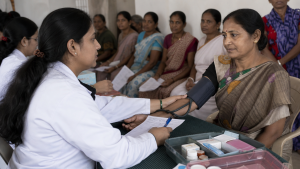
Non-communicable diseases such as diabetes, hypertension, cardiovascular diseases and cancer form a major part of India’s public health burden. To address them in a structured way, the Centre runs dedicated screening, treatment and digital monitoring programmes through the public health system.
Evolution and Funding Architecture
- NPCDCS to NP-NCD: The National Programme for Prevention and Control of Cancer, Diabetes, Cardiovascular Diseases and Stroke (NPCDCS), launched in 2010, was restructured and renamed as the National Programme for Prevention and Control of Non-Communicable Diseases (NP-NCD) in 2023.
- Administrative role: The Union Department of Health and Family Welfare provides technical guidelines, clinical protocols and financial support to States and Union Territories.
- Funding route: Programme funds are channelled through the National Health Mission (NHM) NCD Flexi-Pool, which is the main budgetary mechanism for state-level implementation.
- Cost-sharing pattern: The funding ratio is 60:40 for general category states and 90:10 for North Eastern and Hilly/Himalayan States.
Programme Coverage and Target Diseases
- Main focus: The NP-NCD targets hypertension, diabetes, stroke and cardiovascular diseases to reduce morbidity and premature mortality.
- Cancer screening: The programme supports early detection and management of oral cancer, breast cancer and cervical cancer.
- Expanded disease set: It also covers selected conditions such as Chronic Kidney Disease (CKD), Non-Alcoholic Fatty Liver Disease (NAFLD), ST-Elevation Myocardial Infarction (STEMI) and Chronic Obstructive Pulmonary Disease (COPD).
- Age-based screening: Standardised screening is carried out for all citizens aged 30 years and above to detect chronic diseases early.
Healthcare Infrastructure Network
- District-level care: The programme includes 770 District NCD Clinics for diagnosis and follow-up.
- Cancer treatment centres: There are 524 dedicated Day Care Cancer Centres (DCCCs) for localised treatment support.
- Community-level services: NCD clinics at Community Health Centres (CHCs) provide intermediate access to care, with 6,410 such clinics operational.
- Cardiac care: Critical cardiac emergencies are managed through 233 Cardiac Care Units (CCUs) at secondary and tertiary levels.
- Primary screening base: More than 1.86 lakh Ayushman Arogya Mandirs serve as the first point for screening, prevention and referral.
- Large-scale screening data: Through this network, 41.5 crore individuals have been screened for hypertension, 41.3 crore for diabetes, 35.3 crore for oral cancer and 16.5 crore for breast cancer.
- Cervical cancer screening: As of March 2026, 8.73 crore women were screened for cervical cancer, leading to the clinical diagnosis of 93,062 cases.
Digital Architecture and the 75/25 Initiative
- 75/25 initiative: Launched in May 2023, this initiative aims to place 75 million people with hypertension and diabetes under standard care protocols by December 2025.
- Progress status: By March 2025, the initiative had achieved 89.7% of its target trajectory, covering 42.01 million hypertension patients and 25.27 million diabetes patients.
- National NCD Portal: The central repository for patient data is the National NCD Portal, earlier known as the CPHC NCD IT system.
- ABHA linkage: The portal had 76.94 crore enrolled beneficiaries by June 1, 2026, of which 12.46 crore profiles were linked or generated through Ayushman Bharat Health Account (ABHA) IDs.
- State integration: Thirty-one States and Union Territories use the portal directly for patient tracking, while five States and Union Territories use custom APIs to send aggregated NCD data.
Exam fact: Standard NCD screening under NP-NCD applies to all persons aged 30 years and above.
Key Prelims Takeaways
- NP-NCD: The revised national programme for prevention and control of non-communicable diseases.
- Funding channel: Implemented through the NHM NCD Flexi-Pool.
- Sharing pattern: 60:40 for general category states and 90:10 for North Eastern and Hilly/Himalayan States.
- Priority diseases: Hypertension, diabetes, stroke and cardiovascular diseases.
- Cancer coverage: Oral, breast and cervical cancer are specifically targeted.
- Service delivery base: Ayushman Arogya Mandirs act as the primary screening and referral platform.
- Digital tracking: National NCD Portal and ABHA IDs support longitudinal patient monitoring.
Current General Studies comprises current-affairs-based, General Studies-rich study material on policies, laws, institutions, economy, science, environment, governance, international relations, and other varied but important topics for UPSC and State PSC Prelims examinations.
Fortnightly PDF compilations: Available here
Originally written on
March 29, 2026
and last modified on
September 5, 2026.
| Related | |
|---|---|