National Policies on Non-Communicable Diseases
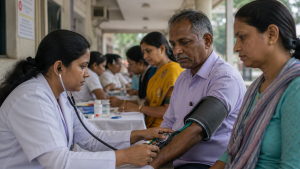
Non-communicable diseases are now one of India’s biggest public health concerns, driven largely by changing lifestyles, tobacco use, poor diet, inactivity, and metabolic risks. India’s response combines national targets, screening programmes, treatment access, and regulations aimed at reducing preventable deaths from chronic diseases.
National Policy Frameworks and Targets
India’s policy approach aligns domestic health goals with global commitments to control chronic diseases. The emphasis is on reducing premature mortality, cutting risk factors, and strengthening early diagnosis and treatment across public health systems.
- National Health Policy (NHP) 2017: Aims to reduce premature mortality from cardiovascular diseases, cancer, diabetes, and chronic respiratory diseases by 25% by 2025.
- Tobacco reduction target: Seeks a 30% relative reduction in current tobacco use by 2025.
- Physical activity target: Aims for a 10% relative reduction in insufficient physical activity.
- Metabolic risk control: Focuses on curbing raised blood pressure and preventing further rise in obesity and type-2 diabetes.
- National Action Plan for Prevention and Control of NCDs: India was the first country to adopt specific national targets and indicators based on the WHO Global Action Plan.
- Global alignment: The action plan includes 10 national targets, including one on household air pollution.
- Multi-sector approach: Policy coordination extends beyond health ministries to Agriculture, Food Processing, Urban Development, and Youth Affairs.
National Programme for Prevention and Control of NCDs
The main operational framework for NCD control is the National Programme for Prevention and Control of Non-Communicable Diseases (NP-NCD). It was originally launched in 2010 as the National Programme for Prevention and Control of Cancer, Diabetes, Cardiovascular Diseases and Stroke (NPCDCS), and later renamed to reflect a wider disease spectrum.
- Expanded coverage: Includes diabetes, hypertension, stroke, cardiovascular diseases, oral cancer, breast cancer, cervical cancer, Chronic Kidney Disease (CKD), Non-Alcoholic Fatty Liver Disease (NAFLD), and Chronic Obstructive Pulmonary Disease (COPD).
- Institutional structure: Dedicated NCD cells function at the national, state, and district levels.
- Service delivery: NCD clinics are established at District Hospitals and Community Health Centres (CHCs) under the National Health Mission.
- Digital tracking: The National NCD Portal, earlier known as the CPHC NCD IT system, is used for digital records, risk assessment, and follow-up.
- Target group: The portal and screening systems focus on people aged 30 years and above.
Exam fact: India was the first country to integrate Non-Alcoholic Fatty Liver Disease (NAFLD) into its national NCD programme.
Population-Based Screening and Early Detection
Screening is a core part of the prevention strategy. Under Ayushman Bharat Health and Wellness Centres, now Ayushman Arogya Mandirs, India conducts Population-Based Screening (PBS) for adults to detect common NCDs early.
- Coverage: Applies to all citizens aged 30 years and above.
- Frontline role: ASHAs carry out community enumeration and fill the Community Risk Assessment Checklist (CBAC).
- Primary screening areas: Hypertension, diabetes, oral cancer, breast cancer, and cervical cancer.
- Public health purpose: The model is designed to shift detection from late-stage treatment to early identification at the community level.
Access to Treatment and Affordable Medicines
Along with screening, India uses institutional schemes to strengthen tertiary care and improve access to medicines and implants. These measures are particularly important because NCD treatment is often long-term and costly.
- Pradhan Mantri Swasthya Suraksha Yojana (PMSSY): Sets up new AIIMS institutions and upgrades super-specialty blocks in government medical colleges for tertiary NCD care.
- AMRIT Outlets: Run by HLL Lifecare Ltd.; provide low-cost cardiovascular and oncology drugs and implants at discounted prices.
- Pradhan Mantri Bhartiya Janaushadhi Pariyojana (PMBJP): Through Jan Aushadhi Kendras, supplies affordable generic medicines for NCD management.
- 75/25 Initiative: Aims to provide standard care to 75 million people with hypertension and diabetes by 2025.
Tobacco, Diet, and Lifestyle Regulation
India’s NCD strategy also includes regulatory action on major risk factors such as tobacco consumption, unhealthy food habits, and lifestyle-related exposure. These measures are essential for reducing the long-term burden of preventable disease.
- Cigarettes and Other Tobacco Products Act (COTPA), 2003: Prohibits smoking in public places and restricts direct and indirect tobacco advertising.
- Pictorial warnings: Tobacco packaging must carry specified pictorial health warnings covering 85% of the principal display area.
- Youth protection: Sale of tobacco products to minors and within a 100-yard radius of educational institutions is banned.
- E-cigarettes ban: The Prohibition of Electronic Cigarettes Act, 2019 criminalized the production, manufacture, import, export, sale, and advertising of e-cigarettes.
- Trans fat elimination: FSSAI capped industrial trans fats in food fats and oils at 2% by weight under the “Heart Attack Rewind” initiative.
- Eat Right India: Promotes reduced intake of salt, sugar, and oil through awareness campaigns such as “Thoda Kam”.
- Labelling rules: FSSAI regulations require clearer front-of-pack labelling for packaged foods high in fat, sugar, and salt (HFSS).
Key Prelims Takeaways
- Share of mortality: NCDs account for over 60% of all deaths in India.
- NHP 2017 target: Reduce premature mortality from major NCDs by 25% by 2025.
- Screening age: Population-Based Screening covers people aged 30 years and above.
- Key diseases under NP-NCD: Diabetes, hypertension, stroke, common cancers, CKD, NAFLD, and COPD.
- NAFLD milestone: India was the first country to include NAFLD in its national NCD programme.
- COTPA warning rule: Pictorial health warnings must cover 85% of the tobacco package display area.
- SDG reference: SDG Target 3.4 seeks to reduce premature mortality from NCDs by one-third by 2030.
| Related | |
|---|---|