National Clean Air Programme: Objectives, Targets and Strategies
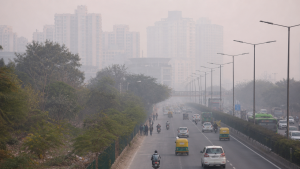
The National Clean Air Programme (NCAP) is India’s first time-bound national framework to reduce air pollution in cities that do not meet ambient air quality standards. It brings together central, state and urban agencies for coordinated action on monitoring, funding and emission reduction.
Origins and Coverage
The Ministry of Environment, Forest and Climate Change (MoEFCC) launched NCAP in January 2019 to address deteriorating air quality across urban areas. The programme is designed as a collaborative effort involving the Centre, states, local bodies and scientific institutions.
- Target jurisdictions: NCAP covers 130 non-attainment cities across 24 states and Union Territories.
- Meaning of non-attainment: These cities failed to meet the prescribed National Ambient Air Quality Standards (NAAQS) for a consecutive five-year period from 2011 to 2015.
- Data basis: City identification relies on ambient air quality data under the National Air Quality Monitoring Programme (NAMP).
- Implementing institutions: NAMP is operated by the Central Pollution Control Board (CPCB) in collaboration with State Pollution Control Boards (SPCBs).
- Million-plus cities: The target list also includes major urban agglomerations identified by the 15th Finance Commission, with specific conditions for performance-linked grants.
Core Objectives and Targets
NCAP aims to reduce particulate pollution and improve public health by strengthening air quality management in cities. It goes beyond emission cuts and also seeks to build long-term institutional capacity.
- Initial target: The original goal was a 20% to 30% reduction in particulate pollution by 2024.
- Revised target: The programme now aims for up to 40% reduction in PM2.5 and PM10 concentrations, or achievement of the annual PM10 NAAQS limit of 60 µg/m³ by 2025-26.
- Baseline year: Performance is measured against the calendar year 2017.
- Capacity building: The programme seeks to strengthen manual and continuous ambient air quality monitoring networks.
- Institutional support: It also emphasizes public awareness, technical upgradation of urban local bodies and strengthening of SPCBs.
Implementation and Financing
NCAP is not a standalone scheme in the narrow sense. Its activities are mainstreamed through existing urban and industrial programmes, with city-level planning and performance-linked funding.
- City Action Plans: Every non-attainment city must prepare and implement a Clean Air Action Plan (CAAP).
- Local focus: These plans are based on localized source apportionment studies to identify the main pollution sources in each city.
- Performance-linked grants: Funding is tied to measurable improvement in air quality indicators.
- Eligibility conditions: Cities must show progress such as 15% annual reduction in PM10 or maintain a minimum of 200 Good Air Days to access full allocations.
- Programme convergence: NCAP is aligned with missions such as Swachh Bharat Mission-Urban (SBM-U) and Atal Mission for Rejuvenation and Urban Transformation (AMRUT).
- Central releases: From 2019-20 to 2025-26, the Centre released ₹16,423.56 crore in performance-based incentive grants.
Sectoral Intervention Strategies
The programme uses a multi-sector approach to tackle key sources of particulate pollution. The interventions focus on transport, industry, dust control and waste management.
- Vehicular pollution control: Promotion of electric public transport, stricter Pollution Under Control (PUC) norms and installation of Vapour Recovery Systems (VRS) in petrol stations.
- Industrial emission abatement: Brick kilns are required to shift to zig-zag technology.
- Cleaner fuels: Industries are encouraged to adopt cleaner fuels, while coal and lignite-based thermal power plants are monitored for compliance with SO2 and NOx norms.
- Dust mitigation: Cities must use mechanical sweepers, pave unpaved roads and develop green buffers along roadsides.
- Construction dust control: Construction sites must install dust barriers and manage debris properly.
- Waste burning: Open burning of municipal solid waste or biomass is prohibited.
Monitoring and Digital Tracking
NCAP relies on digital monitoring and public reporting to improve transparency and coordination. The system helps track both physical progress and financial utilisation.
- PRANA portal: The CPCB manages the PRANA portal, which stands for Portal for Regulation of Air-pollution in Non-Attainment cities.
- Tracking function: It monitors the physical and financial progress of city-specific action plans.
- Public access: The portal provides daily Air Quality Index (AQI) bulletins.
- Station mapping: It also maps active monitoring stations and hosts national and local policy guidelines.
Key Prelims Takeaways
- Nodal ministry: Ministry of Environment, Forest and Climate Change (MoEFCC).
- Executing agency: Central Pollution Control Board (CPCB).
- Main target: Up to 40% reduction in PM2.5 and PM10, or meeting the PM10 standard of 60 µg/m³ by 2025-26.
- Baseline year: 2017.
- Coverage: 130 non-attainment cities across 24 states and Union Territories.
- Key data system: National Air Quality Monitoring Programme (NAMP).
- Digital tool: PRANA portal for tracking city-level action plans.
| Related | |
|---|---|