Monetary Policy Committee (MPC): Composition, Mandate and Decisions
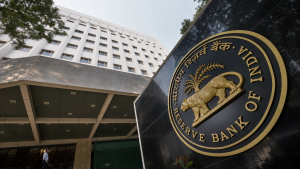
The Monetary Policy Committee (MPC) is India’s statutory rate-setting body that decides the benchmark policy repo rate under the Reserve Bank of India’s flexible inflation targeting framework. Its core task is to balance price stability with growth, using inflation data and broader macroeconomic indicators.
Legal Basis and Mandate
- Statutory body: The MPC was constituted under Section 45ZB of the Reserve Bank of India Act, 1934, as amended by the Finance Act, 2016.
- Main objective: To maintain price stability while supporting economic growth through a flexible inflation targeting framework.
- Inflation target: The central government, in consultation with the RBI, sets the CPI inflation target. It is currently 4% with a tolerance band of ±2%, or 2% to 6%.
- Accountability rule: If average retail inflation remains outside the 2% to 6% band for three consecutive quarters, the RBI must submit a failure report to the central government.
Composition and Governance
- Total members: The MPC has six members—three from the RBI and three external members appointed by the central government.
- Internal members: The RBI Governor serves as ex-officio Chairperson, along with the Deputy Governor in charge of monetary policy and one other RBI official.
- External members: They are appointed by the central government on the basis of recommendations from a search-cum-selection committee.
- Term: External members serve a non-renewable four-year term.
- Voting: Each member has one vote. Decisions are taken by majority; in case of a tie, the RBI Governor has a casting vote.
- Quorum: A meeting requires at least four members, including the Governor or, in the Governor’s absence, the Deputy Governor.
- Meetings and transparency: The MPC must meet at least four times a year, and minutes must be published 14 days after each meeting, along with members’ written statements explaining their votes.
Policy Rates and Operating Framework
The MPC uses policy rates to influence liquidity, borrowing costs and overall monetary conditions. These rates create the policy corridor in the liquidity adjustment facility framework.
| Policy Instrument | Current Rate |
| Policy Repo Rate | 5.25% |
| Standing Deposit Facility (SDF) Rate | 5.00% |
| Marginal Standing Facility (MSF) Rate | 5.50% |
| Bank Rate | 5.50% |
- Repo rate: The main policy rate used by the MPC to signal the stance of monetary policy.
- Policy corridor: The MSF rate acts as the ceiling, while the SDF rate serves as the floor.
- Policy stance: The committee may adopt a neutral, accommodative or withdrawal stance depending on inflation-growth conditions.
How the MPC Decides
- Data-driven approach: The committee reviews inflation trends, growth outlook, liquidity conditions and broader macroeconomic developments before deciding on rates.
- Inflation focus: CPI inflation remains the key anchor for decisions, since the MPC’s legal mandate is tied to the inflation target.
- Growth balancing: The MPC also considers real GDP growth to avoid overly tight or overly loose monetary conditions.
- Majority decision: A policy change or pause is adopted only when supported by a majority of members.
Key Prelims Takeaways
- Statutory basis: Section 45ZB of the RBI Act, 1934, as amended by the Finance Act, 2016.
- Primary mandate: Price stability while supporting economic growth.
- Inflation target: 4% CPI inflation with a 2% to 6% tolerance band.
- Failure report: Required if inflation stays outside the band for three consecutive quarters.
- Membership: Six members—three RBI officials and three external members.
- Decision rule: Majority vote, with a casting vote for the RBI Governor in case of a tie.
- Transparency: Minutes and voting statements must be published 14 days after each meeting.
Current General Studies comprises current-affairs-based, General Studies-rich study material on policies, laws, institutions, economy, science, environment, governance, international relations, and other varied but important topics for UPSC and State PSC Prelims examinations.
Fortnightly PDF compilations: Available here
Originally written on
March 27, 2026
and last modified on
September 5, 2026.
| Related | |
|---|---|