Monetary Policy Committee: Composition and Functions
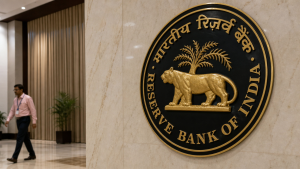
The Monetary Policy Committee (MPC) is the statutory body of the Reserve Bank of India that decides the policy interest rate needed to maintain price stability. It works under an inflation-targeting framework, while also keeping economic growth in view.
Legal Framework and Evolution
- Statutory basis: The MPC was created under Section 45ZB of the RBI Act, 1934, through amendments introduced by the Finance Act, 2016.
- Why it was created: It was recommended by the Urjit Patel Committee in 2014 to replace the earlier system in which the RBI Governor had sole discretion over interest rate decisions.
- Earlier arrangement: Before the MPC, the Governor took rate decisions with advice from an informal Technical Advisory Committee on Monetary Policy, which was not binding.
- Purpose of the shift: The committee-based structure was intended to improve institutional credibility, promote collective decision-making, and increase transparency in policy rate setting.
The Inflation Targeting Framework
- Target-setting power: Under Section 45ZA of the RBI Act, the Central Government, in consultation with the RBI, sets the inflation target once every five years.
- Current target: The present mandate is 4% headline CPI inflation, with a tolerance band of 2% on the lower side and 6% on the upper side.
- Failure condition: If average CPI inflation remains outside the 2% to 6% band for three consecutive quarters, the RBI is deemed to have failed in meeting the mandate.
- Reporting requirement: On such failure, the RBI must submit a report to the Central Government explaining the reasons, proposed corrective measures, and the likely time needed to return to target.
Composition and Selection
- Total strength: The MPC has six members—three internal members of the RBI and three external experts nominated by the Central Government.
- Internal members: The Governor of the RBI serves as the ex-officio Chairperson, the Deputy Governor in charge of monetary policy is an ex-officio member, and one RBI official is nominated by the Central Board.
- External members: Three external experts are appointed by the Central Government.
- Selection process: The external members are chosen through a Search-cum-Selection Committee chaired by the Cabinet Secretary, with the RBI Governor, the Secretary of the Department of Economic Affairs, and three domain experts nominated by the Central Government.
- Tenure: External members hold office for a non-renewable term of four years or until further orders, whichever is earlier.
- Reappointment: External members are not eligible for reappointment.
Current Members
| Category | Name / Designation | Key detail |
| Internal (Ex-officio Chairperson) | Sanjay Malhotra | 26th Governor of the RBI; assumed office on December 11, 2024. |
| Internal (Ex-officio Member) | Dr. Poonam Gupta | Deputy Governor in charge of monetary policy; took office on May 2, 2025. |
| Internal (Ex-officio Member) | Shri Indranil Bhattacharyya | Executive Director nominated by the Central Board in August 2025. |
| External Member | Prof. Ram Singh | Director, Delhi School of Economics; appointed on October 1, 2024. |
| External Member | Shri Saugata Bhattacharya | Economist; appointed on October 1, 2024. |
| External Member | Dr. Nagesh Kumar | Director and Chief Executive, Institute for Studies in Industrial Development; appointed on October 1, 2024. |
Decision-Making and Operational Rules
- Voting method: Decisions are taken by majority vote among members present and voting; each member has one vote.
- Tie-break: In case of equality of votes, the RBI Governor gets a second or casting vote.
- Quorum: A meeting requires four members, including the Governor or, in the Governor’s absence, the Deputy Governor.
- Meeting frequency: The committee must meet at least four times in a financial year, though additional emergency meetings may be held if required.
- Transparency: Under Section 45ZL of the RBI Act, the minutes of each meeting must be published on the 14th day after the meeting, along with the resolution, individual votes, and statements of members.
- Silent period: Members must observe a seven-day silent period before and after policy announcements to avoid speculative market movements.
Key Prelims Takeaways
- Statutory basis: Section 45ZB of the RBI Act, 1934; amended through the Finance Act, 2016.
- Origin: Recommended by the Urjit Patel Committee to replace sole rate-setting discretion.
- Inflation target: 4% CPI inflation with a 2% to 6% tolerance band.
- Failure trigger: Average inflation outside the band for three consecutive quarters.
- Composition: Six members—three RBI officials and three Central Government-nominated external experts.
- Selection and tenure: External members are chosen by a Search-cum-Selection Committee and serve a non-renewable four-year term.
- Key operations: Majority voting, quorum of four, minimum four meetings a year, casting vote for the Governor, and publication of minutes under Section 45ZL.
Current General Studies comprises current-affairs-based, General Studies-rich study material on policies, laws, institutions, economy, science, environment, governance, international relations, and other varied but important topics for UPSC and State PSC Prelims examinations.
Fortnightly PDF compilations: Available here
Originally written on
January 8, 2026
and last modified on
September 4, 2026.
| Related | |
|---|---|