Major Wrestling Styles and Their Rules
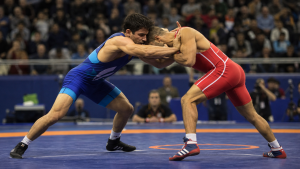
Wrestling is a grappling sport in which competitors use techniques such as throws, takedowns and pins. The international styles most relevant to competition are Greco-Roman and Freestyle, which differ chiefly in whether wrestlers may attack the legs.
Greco-Roman Wrestling
Greco-Roman is an international wrestling style in which holds and attacks below the waist are prohibited. Wrestlers use their upper bodies to execute holds, throws and other legal techniques, making upper-body strength, balance and technical control central to the contest.
- Permitted actions: Holds may be applied to the opponent’s arms, torso, head and neck. Leg grips, leg attacks and tripping are not allowed.
- Techniques: Common techniques include body and arm throws, gut wrenches and lifting moves. Wrestlers seek to take an opponent down or expose the opponent’s back to the mat.
- Victory and scoring: Points are awarded for actions such as takedowns, reversals and exposures. A fall, or pin, ends the match immediately.
Greco-Roman wrestling was included in the first modern Olympic Games in 1896. Its restriction on lower-body attacks gives the style a distinctive technical character and is an important point of comparison with Freestyle.
Freestyle Wrestling
Freestyle is another internationally contested style. Unlike Greco-Roman, it permits attacks on the legs and allows wrestlers to use holds across the body. This wider range of legal actions supports varied attacks and defensive responses.
- Leg attacks: Wrestlers may target the legs, and tripping is permitted. Single-leg and double-leg takedowns and ankle picks are among the techniques used.
- Other techniques: Freestyle also includes cradles, throws and other grappling moves. Competitors combine upper- and lower-body techniques to take down or control an opponent.
- Objective: As in Greco-Roman, wrestlers aim to win by pinning the opponent or by scoring through takedowns, reversals and exposures.
The two international styles share core outcomes and scoring actions, but their different restrictions require athletes to prepare for different legal techniques. Knowing whether leg attacks are allowed is a basic rules distinction for prelims.
United World Wrestling and International Standards
United World Wrestling (UWW) is the international governing body for wrestling. It sets rules and standards for international competitions and organises world championships across age groups and styles. This shared framework supports international standardisation: wrestlers and officials can compete under common rules across events.
- Competitions: UWW organises World Championships, Continental Championships and Olympic qualification events.
- Age groups: UWW-sanctioned age categories include Cadets (U17), Juniors (U20), U23 and Seniors.
- Styles: Its remit includes the Olympic disciplines of Greco-Roman and Freestyle wrestling for men and women.
- Institutional details: UWW is recognised by the International Olympic Committee (IOC) and is headquartered in Corsier-sur-Vevey, Switzerland.
Sports regulation depends on clear rules for legal techniques, scoring and competition procedures. In wrestling, UWW’s international standards provide the basis for consistent officiating across events, while rules that define permitted actions also help establish a common framework for athlete safety.
Match Structure, Scoring and Weight Categories
International matches typically consist of two three-minute periods, separated by a 30-second break. A match may end with a fall, through technical superiority or when time expires with one wrestler ahead on points.
- Fall: A fall, also called a pin, is an immediate victory when both of the opponent’s shoulders are held firmly to the mat for the required duration.
- Technical superiority: The match ends when the lead reaches 10 points in Freestyle or 8 points in Greco-Roman.
- Scoring actions: Depending on the technique and control, takedowns can score 2, 4 or 5 points. Exposure of an opponent’s back to the mat scores 2 points, while a reversal scores 1 point.
- Cautions and challenges: A caution for a rule infringement gives the opponent 1 point. Coaches may request video review of a referee’s call through the challenge system.
- Weight categories: Competitors are assigned weight limits. For example, the 55 kg category requires a wrestler to weigh at or below 55 kilograms.
These procedures make the outcome depend on both technical execution and compliance with the rules. Weight categories organise competition by weight, while the scoring system distinguishes the value of different actions. The fall and technical-superiority rules can end a bout before the scheduled time has elapsed.
Other Traditional and Folk Wrestling Styles
Wrestling also includes folk and regional forms outside the two principal international styles. Their rules and settings differ, so they should not be confused with the UWW-governed Olympic disciplines.
- Folkstyle: Also known as collegiate wrestling, it is common in American high schools and colleges.
- Beach Wrestling: A simplified style contested on sand, with fewer rules.
- Pehlwani: Also called Kushti, this traditional Indian wrestling form is often practised in mud pits.
- Sumo: The Japanese form aims to push an opponent out of a circular ring or make the opponent touch the ground with a body part other than the feet.
Key Prelims Takeaways
- Greco-Roman prohibits holds and attacks below the waist; Freestyle permits leg attacks.
- UWW is wrestling’s international governing body and organises world championships across age groups and styles.
- International matches typically have two three-minute periods with a 30-second break.
- A fall ends a match immediately; technical superiority requires a 10-point lead in Freestyle or an 8-point lead in Greco-Roman.
- Takedowns can score 2, 4 or 5 points; exposure scores 2 and a reversal scores 1.
- Greco-Roman wrestling featured at the first modern Olympic Games in 1896.
Recent Context
At the U23 World Wrestling Championships in Las Vegas on October 15, 2026, India’s Vishvajit Ramchandra More won silver in the men’s 55 kg Greco-Roman event. He became the first Indian wrestler to win a Greco-Roman silver at the U23 championships, losing the final 12–13 to Georgia’s Koba Karumidze.
| Related | |
|---|---|