Major Indian Institutions for Polar and Ocean Research
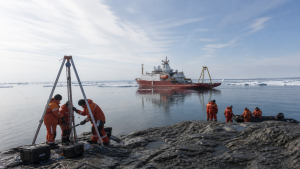
India’s polar and ocean research system is anchored by a set of specialized institutions under the Ministry of Earth Sciences, with support from CSIR. Together, they handle expeditions, ocean observations, deep-sea technology, marine ecology, and climate-related research.
Overview of India’s Marine and Polar Research Framework
India manages its polar and oceanographic studies through a dedicated network of research institutes. The Ministry of Earth Sciences (MoES) serves as the nodal administrative body for most of these institutions. The Council of Scientific & Industrial Research (CSIR) also plays a critical role. Together, these bodies implement key national programs such as the Prithvi Vigyan (PRITHVI) scheme and the Deep Ocean Mission.
Their collective objective is to map marine ecosystems, explore deep-sea mineral wealth, and monitor climate change processes in the polar regions.
National Centre for Polar and Ocean Research (NCPOR), Goa
Establishment and Mandate
The National Centre for Polar and Ocean Research (NCPOR) is an autonomous research and development institution under the Ministry of Earth Sciences. It was established in May 1998 in Vasco da Gama, Goa, originally under the name National Centre for Antarctic and Ocean Research (NCAOR). It acts as the nodal agency for planning, coordinating, and executing India’s polar and Southern Ocean scientific expeditions.
Key Functions
- Expeditions: NCPOR manages the logistical and scientific operations of the annual Indian expeditions to Antarctica, the Arctic, and the Southern Ocean.
- Research stations: It maintains India’s permanent research stations in the polar territories.
- EEZ surveys: It administers geoscientific surveys of India’s Exclusive Economic Zone (EEZ) and the extended continental shelf.
- Deep-sea drilling: The institute coordinates deep-sea drilling activities in the Arabian Sea basin through the International Ocean Discovery Program (IODP).
- Resource exploration: It conducts exploration for non-living deep-sea resources, including gas hydrates and multi-metal hydrothermal sulfides in mid-ocean ridges.
- Ice core laboratory: The facility houses a low-temperature ice core laboratory to archive ice cores from Antarctica and the Himalayas.
National Institute of Ocean Technology (NIOT), Chennai
Establishment and Mandate
The National Institute of Ocean Technology (NIOT) was established in November 1993 in Chennai. It functions as an autonomous society under the Ministry of Earth Sciences. Its primary mandate is to develop indigenous, reliable technologies to solve engineering challenges in harvesting non-living and living resources from the Indian Ocean.
Key Projects and Activities
- Deep Ocean Mission: NIOT serves as the lead agency for implementing the technology development components of the Deep Ocean Mission.
- Samudrayaan: It is developing the deep-ocean manned submersible vehicle named Matsya6000 under the Samudrayaan project. This vehicle is designed to carry three personnel to a depth of 6,000 meters.
- Deep-sea mining: The institute designs deep-sea mining systems. It successfully conducted trials of a seabed mining machine at a depth of 5,270 meters in the Central Indian Ocean Basin.
- Ocean energy: It works on ocean energy systems, including Ocean Thermal Energy Conversion (OTEC) and wave energy technologies.
- Marine instruments: It designs marine sensors, underwater thrusters, and autonomous underwater vehicles (AUVs) to assist in deep-sea scientific mapping.
Indian National Centre for Ocean Information Services (INCOIS), Hyderabad
Establishment and Mandate
The Indian National Centre for Ocean Information Services (INCOIS) is an autonomous body under the Ministry of Earth Sciences. It was established in February 1999 and is located in Pragathi Nagar, Hyderabad. Its mandate is to provide ocean data, information, and advisory services to society, industry, and the scientific community.
Core Services
- Tsunami warning: INCOIS operates the Tsunami Early Warning Centre for the Indian Ocean region. It issues real-time alerts on tsunamis and storm surges.
- Potential Fishing Zone (PFZ) advisories: It generates PFZ advisories for fishers using satellite data on sea surface temperature and chlorophyll content to identify high-fish-concentration zones.
- Ocean State Forecasts (OSF): It provides daily predictions on wave height, wind speed, ocean currents, and sea surface temperature.
- Special advisories: The institution provides Coral Bleaching Alerts, Marine Heatwave Advisories, and Algal Bloom Information.
- Training: It hosts the International Training Centre for Operational Oceanography (ITCOocean) to train global researchers in ocean data handling.
CSIR – National Institute of Oceanography (CSIR-NIO), Goa
Establishment and Mandate
The National Institute of Oceanography (NIO) was established on January 1, 1966, following the historic International Indian Ocean Expedition (IIOE). It is one of the constituent laboratories under the Council of Scientific & Industrial Research (CSIR), Ministry of Science and Technology. It is headquartered in Dona Paula, Goa, with regional centers in Kochi, Mumbai, and Visakhapatnam.
Areas of Research
- Oceanography: NIO conducts extensive research across the four primary branches of oceanography: physical, chemical, biological, and geological.
- Marine archaeology: It is a pioneer in marine archaeology in India. Its teams study submerged historical structures, including those at Dwarka and Poompuhar.
- Environmental assessments: The institute carries out environmental impact assessments for port developments, oil exploration, and coastal zone construction.
- Research vessels: It operates two research vessels, RV Sindhu Sadhana and RV Sindhu Sankalp, which collect oceanographic data in the Arabian Sea, the Bay of Bengal, and the wider Indian Ocean.
- Skill development: It runs the CSIR Integrated Skill Initiative program to build expertise in the marine blue economy.
Centre for Marine Living Resources and Ecology (CMLRE), Kochi
Establishment and Mandate
The Centre for Marine Living Resources and Ecology (CMLRE) is an attached office under the Ministry of Earth Sciences. It is located in Kochi, Kerala. CMLRE is dedicated to the study of marine biology, ecology, and the sustainable management of living resources within the Indian Exclusive Economic Zone (EEZ).
Key Contributions
- EEZ surveys: CMLRE conducts systematic surveys to assess the environment and productivity patterns of the Indian EEZ.
- Marine Living Resources (MLR) program: It coordinates the MLR program, which focuses on biodiversity assessment, deep-sea biology, and the cultivation of marine organisms.
- IndOBIS node: It serves as the Indian regional node for the Ocean Biodiversity Information System (IndOBIS), compiling and publishing standardized biogeographical data.
- Research vessel: The center manages the operations of the Fishery Oceanographic Research Vessel (FORV) Sagar Sampada.
- Antarctic cooperation: It represents India in the Committee for the Conservation of Antarctic Marine Living Resources (CCAMLR).
National Centre for Coastal Research (NCCR), Chennai
Mandate and Key Programs
- Institutional status: NCCR is an attached office of the Ministry of Earth Sciences, located in Chennai.
- Marine pollution monitoring: It monitors marine pollution levels along the Indian coastline, covering physical, chemical, and biological parameters.
- Coastal vulnerability mapping: The center maps coastal vulnerability to hazards like storm surges, sea-level rise, and coastal erosion.
- Shoreline management: It develops Shoreline Management Plans to support coastal protection and sustainable development.
- Clean Coast initiative: NCCR runs programs like the Clean Coast initiative to track and manage marine litter and microplastics.
India’s Polar Research Bases
To support year-round scientific investigations, India operates dedicated research stations in the polar regions.
| Research Base | Region | Location | Established Year | Current Status |
| Dakshin Gangotri | Antarctica | Ice Shelf, Queen Maud Land | 1983 | Decommissioned in 1990; currently used as a supply base |
| Maitri | Antarctica | Schirmacher Oasis | 1989 | Operational year-round |
| Bharati | Antarctica | Larsemann Hills | 2012 | Operational year-round |
| Himadri | Arctic | Ny-Ålesund, Spitsbergen, Norway | 2008 | Operational seasonally and year-round |
| Himansh | Himalayas | Chandra Basin, Lahaul and Spiti | 2016 | Operational seasonally for high-altitude glacier studies |
Major Indian Research Vessels
Ocean research vessels are the primary platforms for field data collection, underwater sampling, and technology deployment.
- ORV Sagar Kanya: An oceanographic research vessel managed by NCPOR. It supports multi-disciplinary studies in geology, geophysics, meteorology, and physical oceanography.
- FORV Sagar Sampada: A fishery oceanographic research vessel managed by CMLRE. It collects biological samples and studies marine resource distribution in the Indian EEZ.
- BTV Sagar Nidhi: A technology demonstration vessel operated by NIOT. It is equipped with dynamic positioning systems to support deep-sea mining, submersibles, and buoy deployments.
- RV Sagar Manjusha: A coastal research vessel operated by NIOT to conduct marine surveys and environmental monitoring closer to the shoreline.
- RV Sindhu Sadhana: A modern multidisciplinary research vessel owned by CSIR-NIO, capable of conducting ocean floor mapping and sediment coring.
- RV Sindhu Sankalp: A research vessel acquired by CSIR-NIO to support geological and biological studies across the Indian shelf seas.
The Deep Ocean Mission and Institutional Synergy
The Deep Ocean Mission is a coordinated national initiative to explore the deep ocean for resources and develop deep-sea technologies. It relies heavily on collaboration among the MoES institutions.
- Pillar 1: Deep-Sea Mining and Manned Submersible: Led by NIOT, this component focuses on developing Matsya6000 and mining equipment to extract polymetallic nodules from the Central Indian Ocean Basin.
- Pillar 2: Ocean Climate Advisory Services: Led by INCOIS and the Indian Institute of Tropical Meteorology (IITM), this pillar involves observations and modeling to predict decadal climate changes.
- Pillar 3: Deep-Sea Biodiversity: Led by CMLRE, this focuses on bio-prospecting of deep-sea microbes and conserving marine ecosystems.
- Pillar 4: Deep Ocean Survey: Led by NCPOR and CSIR-NIO, this component focuses on exploring multi-metal hydrothermal sulfides along mid-ocean ridges.
- Pillar 5: Energy and Freshwater from the Ocean: Managed by NIOT, this focuses on developing desalination plants and OTEC systems.
BRICS Ocean and Polar Science Cooperation
The 8th Meeting of the BRICS Working Group on Ocean and Polar Science and Technology (OPST) is currently underway in Goa, India. The three-day meeting began on 12 August 2026 and concludes on 14 August 2026.
The meeting is hosted by NCPOR under the Ministry of Earth Sciences as part of India’s 2026 BRICS Presidency. The BRICS Working Group on Ocean and Polar Science and Technology was established in 2018 to foster marine and polar scientific cooperation among member states.
Dr. Thamban Meloth, Director of NCPOR, is chairing the 2026 Working Group and welcomed the participating delegates.
Originally standing for Brazil, Russia, India, China, and South Africa, the BRICS bloc has expanded to 11 full member nations in 2026: Brazil, Russia, India, China, South Africa, Egypt, Ethiopia, Iran, Saudi Arabia, the United Arab Emirates, and Indonesia.
The Goa meeting focuses on short-term and medium-term goals to move from bilateral arrangements to integrated multilateral research programmes. Sessions cover joint research, capacity building, scientific exchanges, and the shared use of polar research infrastructure.
India previously hosted the third BRICS OPST meeting virtually in September 2020.
The event also featured a keynote lecture on India’s Blue Economy initiatives by climate scientist Dr. M. Rajeevan, former Secretary of the Ministry of Earth Sciences and currently Vice Chancellor of Atria University.
Rare Facts for Prelims
- Antarctic legacy station: Dakshin Gangotri was India’s first Antarctic base and is now preserved as a supply station rather than a full-time research outpost.
- Ice core archive: NCPOR maintains a low-temperature ice core laboratory that preserves samples from both Antarctica and the Himalayas.
- Indian Ocean warning network: INCOIS’s tsunami warning system is among the key regional early-warning mechanisms for the Indian Ocean basin.
- Marine archaeology link: CSIR-NIO’s work on submerged sites at Dwarka and Poompuhar connects oceanography with India’s archaeological heritage.
- Polar biodiversity diplomacy: CMLRE’s role in CCAMLR gives India a formal voice in Antarctic marine living resource conservation.
- Deep-sea engineering milestone: NIOT’s Matsya6000 is designed as a three-person submersible for 6,000-metre-class deep-ocean missions.
| Related | |
|---|---|