High Seas Governance and the Law of the Sea
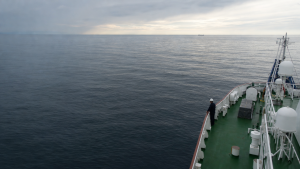
High seas governance is the international legal and institutional framework for activities in ocean areas beyond national jurisdiction. UNCLOS sets out maritime zones, state rights and duties, and principles for using ocean resources. Cooperation is particularly important in managing shared fisheries and the deep seabed.
UNCLOS and Maritime Zones
UNCLOS was adopted in 1982 and entered into force in 1994. Often called the “Constitution of the Oceans,” it establishes the legal framework for the seas and oceans, including the rights and obligations of states in different maritime zones.
- Territorial sea: Extends up to 12 nautical miles from the baseline. The coastal state has sovereignty, subject to the right of innocent passage for foreign vessels.
- Contiguous zone: Extends from 12 to 24 nautical miles from the baseline. A coastal state may exercise control to prevent infringement of its customs, fiscal, immigration or sanitary laws within its territory or territorial sea.
- Exclusive Economic Zone (EEZ): Extends up to 200 nautical miles from the baseline. The coastal state has sovereign rights to explore, exploit, conserve and manage natural resources in the waters, seabed and subsoil.
- Other states’ rights in the EEZ: Other states retain freedoms of navigation and overflight and of laying submarine cables and pipelines.
- Continental shelf: Comprises the seabed and subsoil extending beyond the territorial sea along the natural prolongation of a state’s land territory to the outer edge of the continental margin, or to 200 nautical miles where the margin does not extend that far. Coastal states have sovereign rights over its natural resources.
- High seas: Comprise parts of the sea not included in a state’s EEZ, territorial sea or internal waters, or in an archipelagic state’s archipelagic waters. They are open to all states, whether coastal or land-locked.
Freedoms and Duties on the High Seas
The high seas are governed by the principle of freedom of the high seas. The freedoms available to states are not unlimited: they must be exercised with due regard for the interests of other states exercising the same freedoms. UNCLOS also requires states to cooperate in conserving and managing living resources in high-seas areas.
- Navigation: States may navigate on the high seas.
- Overflight: States may exercise freedom of overflight.
- Cables and pipelines: States may lay submarine cables and pipelines.
- Installations: States may construct artificial islands and other installations permitted under international law.
- Fishing: States may fish, subject to treaty obligations and conservation requirements.
- Research: States may conduct scientific research.
These freedoms make the high seas a shared space rather than an area under the sovereignty of a single state. Their exercise therefore depends on respect for international law and cooperation, particularly where activities affect living resources or the interests of other states.
The Area and the International Seabed Authority
The seabed, ocean floor and subsoil beyond the limits of national jurisdiction are designated as the “Area.” Its resources are the “common heritage of mankind”; no state may claim sovereignty over any part of the Area or its resources. This regime is distinct from coastal states’ sovereign rights over resources of their continental shelves.
- International Seabed Authority (ISA): Established under UNCLOS, the ISA is an autonomous international organisation that manages the mineral resources of the Area.
- Role: It organises and controls activities in the Area, particularly deep-seabed mining, with a view to ensuring effective protection of the marine environment from harmful effects.
High-Seas Fisheries Governance
Freedom of fishing is accompanied by a duty to cooperate in conserving and managing living resources. Cooperation takes place through international agreements and regional fisheries management organisations (RFMOs), which provide arrangements for managing stocks across defined areas or for particular species.
- UN Fish Stocks Agreement (UNFSA): Adopted in 1995, its full title concerns implementation of UNCLOS provisions on the conservation and management of straddling and highly migratory fish stocks.
- Purpose: The agreement aims to secure the long-term conservation and sustainable use of these stocks, including stocks found both within EEZs and on the high seas, or stocks that migrate widely.
- RFMOs: These intergovernmental organisations manage fisheries in particular geographical areas or for particular species. They may set catch limits, control fishing effort and adopt technical measures for fishing gear.
- SIOFA: The Southern Indian Ocean Fisheries Agreement establishes a regional framework for managing fisheries resources in the Southern Indian Ocean. It covers fish, molluscs, crustaceans and other sedentary species within its area of application, but excludes highly migratory species and sedentary species under coastal-state jurisdiction.
SIOFA was signed in Rome on July 7, 2006, and entered into force in June 2012. Its regional framework illustrates how states can organise cooperation on high-seas fisheries. Such arrangements connect international law with maritime security and the management of global commons: states must balance access to resources with conservation and compliance.
Key Prelims Takeaways
- UNCLOS: Adopted in 1982 and in force since 1994; it provides the principal legal framework for ocean governance.
- Key distances: Territorial sea extends to 12 nautical miles; the contiguous zone to 24 nautical miles; the EEZ to 200 nautical miles from the baseline.
- High seas: Open to all states, subject to international law and the duty to have due regard for other states’ freedoms.
- The Area: The seabed and subsoil beyond national jurisdiction; its resources are the common heritage of mankind.
- Fisheries: UNFSA addresses straddling and highly migratory stocks; RFMOs support regional fisheries management.
- SIOFA: Signed in 2006 and in force since 2012; it excludes highly migratory species and sedentary species under coastal-state jurisdiction.
Recent Context
On October 14, 2026, India’s Central Government approved accession to SIOFA. India had held Cooperating Non-Contracting Party status since 2022. Accession allows Indian-flagged vessels and enterprises to fish for specified stocks under the agreement and enables India to participate in its Scientific and Compliance Committees and the High Seas Boarding and Inspection Scheme.
| Related | |
|---|---|