International Criminal Courts and Tribunals
Introduction
International criminal courts and tribunals were created to prosecute the gravest violations of international humanitarian and human rights law. They focus on individual criminal responsibility, not state liability, and have evolved from temporary post-war tribunals to a permanent international court.
This framework is central to modern international justice. It includes ad hoc tribunals set up after major conflicts, hybrid mechanisms, and the International Criminal Court (ICC), which now functions as the permanent court for core international crimes.
Evolution of International Criminal Justice
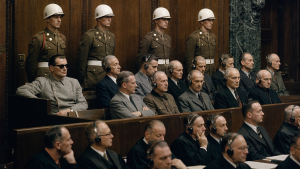
- Nuremberg Tribunal (1945): Created under the London Charter to try major European Axis war criminals. It introduced key definitions of crimes against peace, war crimes, and crimes against humanity.
- Tokyo Tribunal (1946): Established through a proclamation by General Douglas MacArthur to try Japanese leaders after World War II.
- ICTY (1993): The International Criminal Tribunal for the former Yugoslavia was set up by UN Security Council Resolution 827 to prosecute crimes committed during the Yugoslav Wars.
- ICTR (1994): The International Criminal Tribunal for Rwanda was created by UN Security Council Resolution 955 to prosecute genocide and related violations in Rwanda.
- Legal basis of ad hoc tribunals: They were established under Chapter VII of the UN Charter, which gave them primacy over national courts for the situations concerned.
- Rome Statute (1998): Adopted on July 17, 1998, it laid the foundation for the permanent international criminal court.
- Entry into force: The Rome Statute came into effect on July 1, 2002, after reaching 60 ratifications.
International Criminal Court: Jurisdiction
The ICC operates within four main jurisdictional limits under the Rome Statute:
- Subject-matter jurisdiction (ratione materiae): Covers genocide, crimes against humanity, war crimes, and crime of aggression.
- Territorial jurisdiction (ratione loci): Applies to crimes committed on the territory of a State Party or a state that has accepted ICC jurisdiction.
- Personal jurisdiction (ratione personae): Applies to individuals who are nationals of a State Party.
- Temporal jurisdiction (ratione temporis): The ICC can prosecute only crimes committed after July 1, 2002, or after the Rome Statute entered into force for a particular state.
Important: The ICC tries only individuals, not states, and it cannot try persons who were under 18 at the time of the alleged crime.
How the ICC Begins an Investigation
ICC investigations can be triggered in three ways:
- State Party referral: A member country refers a situation on its territory to the Office of the Prosecutor.
- UN Security Council referral: The UNSC refers a situation under Chapter VII of the UN Charter, which can cover non-member states as well.
- Proprio motu: The Prosecutor initiates an investigation independently, subject to authorization by a Pre-Trial Chamber.
The ICC follows the principle of complementarity. It acts as a court of last resort and intervenes only when national courts are genuinely unwilling or unable to investigate or prosecute.
ICC vs. Ad Hoc Tribunals vs. ICJ
| Feature | ICC | Ad Hoc Tribunals (ICTY/ICTR) | ICJ |
| Nature | Permanent international court | Temporary/ad hoc bodies | Principal judicial organ of the UN |
| Establishment | Multilateral treaty (Rome Statute) | UN Security Council resolutions | UN Charter (1945) |
| Target | Individual natural persons | Individual natural persons | Sovereign states only |
| Jurisdiction | Complementary to national courts | Primary jurisdiction over domestic courts | Consent-based state jurisdiction |
| Funding | State Parties and voluntary contributions | UN regular budget | UN regular budget |
Landmark Cases and Legal Significance
- Thomas Lubanga Dyilo (DR Congo): The ICC’s first trial and conviction in 2012, focused on the enlistment and conscription of child soldiers.
- Jean-Pierre Bemba (Central African Republic): A significant ruling on command responsibility and sexual violence as a war crime; the conviction was later overturned on appeal.
- Uhuru Kenyatta case (Kenya): Showed the practical difficulties of state cooperation and witness tampering, leading to withdrawal of charges.
- Omar al-Bashir (Sudan): The first arrest warrant issued by the ICC against a sitting head of state, following a UN Security Council referral.
- Jean-Paul Akayesu (ICTR, 1998): Established that sexual violence and rape can amount to acts of genocide.
Key Institutional Facts
- Headquarters: The ICC is headquartered at The Hague, Netherlands.
- Independence: It is independent of the United Nations, though it may work with UN mechanisms in specific cases.
- Membership: The ICC has over 120 State Parties.
- Non-signatories/non-ratifying states: India, the United States, China, Russia and Israel are among the major states outside the Rome Statute system.
- India’s concerns: India stayed out due to concerns over sovereignty, the absence of a definition of state-sponsored terrorism, and the concentration of power in the UN Security Council.
- Punishment: The ICC does not award capital punishment; the maximum sentence is life imprisonment.
- Enforcement: The ICC has no police force of its own and depends on member states for arrests and cooperation.
- Crime of aggression: It was activated for ICC jurisdiction after the Kampala Review Conference amendments in 2010.
Key Prelims Takeaways
- Nuremberg and Tokyo were the earliest modern international criminal tribunals after World War II.
- ICTY and ICTR were created by the UN Security Council under Chapter VII.
- The Rome Statute was adopted on July 17, 1998 and became operational on July 1, 2002.
- The ICC’s four core crimes are genocide, crimes against humanity, war crimes, and crime of aggression.
- The ICC follows complementarity and steps in only when national systems fail to act genuinely.
- The ICC can be triggered by State Party referral, UN Security Council referral, or proprio motu action by the Prosecutor.
- The ICC is based at The Hague and has no independent police force.
| Related | |
|---|---|