India‑China Diplomatic Mechanisms and Border Management Institutions
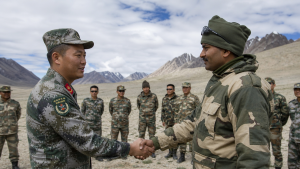
India and China manage their long and disputed border through a mix of bilateral agreements, political dialogue, military communication channels and institutional mechanisms. These arrangements are designed to reduce tensions along the Line of Actual Control (LAC), prevent escalation during patrol encounters and keep boundary negotiations active.
Historical Treaties and Bilateral Agreements
The framework of border management rests on a series of agreements signed over time to preserve peace and stability along the LAC:
- 1993 Border Peace and Tranquility Agreement: The foundational agreement for maintaining peace on the border. It calls for respect for the LAC and for both sides to keep their military forces to a minimum level compatible with friendly relations.
- 1996 Agreement on Confidence Building Measures (CBMs): Prohibits open firing and limits blasting operations within two kilometres of the LAC. It also restricts the deployment of heavy weaponry near the boundary.
- 2005 Agreement on Political Parameters and Guiding Principles: Provides the overarching framework for negotiating the boundary question.
- 2005 Protocol on Modalities: Operationalises guidelines for face-to-face encounters between border patrols and seeks to prevent the use of physical force.
- 2013 Border Defence Cooperation Agreement (BDCA): Prohibits tailing of patrols in areas where the two sides have differing perceptions of the LAC and creates more structured communication between border troops.
- 2024 Joint Patrolling Arrangement: Announced on October 21, 2024, it facilitated disengagement at key friction points, including Depsang Bulge and Demchok (Charding-Ninglung Nala).
Special Representatives (SR) Talks
The Special Representatives (SR) Talks on the Boundary Question began in 2003 and remain the highest-level political channel for seeking a fair, reasonable and mutually acceptable boundary settlement. The talks cover the western, middle and eastern sectors of the India-China boundary.
- Leadership: The dialogue is co-chaired by India’s National Security Advisor, Ajit Doval, and China’s Minister of Foreign Affairs, Wang Yi.
- Role: It focuses on the larger political framework for boundary settlement and supports peace and tranquillity along the LAC.
- Boundary sectors: The negotiations address the Western Sector (Aksai Chin/Ladakh), the Middle Sector (Uttarakhand/Himachal Pradesh) and the Eastern Sector (Arunachal Pradesh/Sikkim).
- 25th round: Held on August 25, 2026, in Beijing, it resulted in an eight-point consensus aimed at maintaining peace along the LAC and advancing framework negotiations.
Working Mechanism for Consultation and Coordination (WMCC)
The Working Mechanism for Consultation and Coordination on India-China Border Affairs (WMCC) is the key institutional platform for direct border-related coordination. It handles diplomatic communication, supports crisis management and addresses local friction points in real time.
- Established: 2012.
- Function: Brings together diplomatic, defence and security officials from both sides for regular consultation.
- Purpose: Manages border affairs, improves communication and helps prevent escalation during incidents on the ground.
- 35th WMCC meeting: Held on May 27, 2026, in Beijing.
- 36th WMCC meeting: Held on August 6, 2026, in New Delhi.
- Co-chairs: Sujit Ghosh, India’s Joint Secretary (East Asia), and Hou Yanqi, China’s Director General.
- New subsidiary bodies: The August 2026 consensus established the Demarcation Expert Group and the Working Group on Border Management under the WMCC.
Military Mechanisms and Border Communications
Military-to-military mechanisms support the diplomatic process and are intended to prevent local incidents from turning into larger confrontations. These mechanisms include commander-level meetings, designated meeting points and hotline channels.
- Corps Commander-level meetings: These high-level military talks address immediate tactical disengagement and stability along the LAC.
- 23rd round: Held at the Chushul-Moldo border meeting point on October 25, 2025.
- New meeting points: The August 2026 consensus designated Tawang in the Eastern Sector and Joshimath in the Middle Sector for General Level Mechanism/Senior Highest Military Commander meetings.
- Hotline channels: Two new border military hotline channels were introduced in the Eastern and Middle Sectors.
- Purpose of hotlines: To improve direct communication and reduce the risk of misunderstanding during patrol or deployment-related issues.
Trans-border Cooperation Measures
Along with border management, the two sides have also used certain cooperative measures to support stability and people-to-people contacts. These steps are part of broader confidence-building efforts.
- Hydrological data sharing: Trans-border river hydrological data sharing was renewed under the August 2026 consensus.
- Kailash Manasarovar Yatra: The arrangement expanded the pilgrimage-related cooperation.
- Border trade: Three designated border trading points were reopened.
Key Prelims Takeaways
- Border management framework: India-China border management is built on agreements, military protocols and bilateral institutions.
- 1993 agreement: The Border Peace and Tranquility Agreement is the foundational document for peace along the LAC.
- 1996 CBMs: This agreement bans open firing and limits blasting near the LAC within two kilometres.
- 2005 framework: The Political Parameters and Guiding Principles agreement guides boundary negotiations, while the Protocol on Modalities handles patrol encounters.
- 2013 BDCA: It prevents patrol tailing and improves military communication in disputed areas.
- SR Talks: Started in 2003 and remain the highest-level political channel for boundary settlement.
- WMCC: Established in 2012, it is the main institutional mechanism for consultation and coordination on border affairs.
- Recent additions: The August 2026 consensus added the Demarcation Expert Group and the Working Group on Border Management under the WMCC.
- Military connectivity: Tawang and Joshimath were designated as new meeting points, along with new hotline channels in the Eastern and Middle Sectors.
| Related | |
|---|---|