Major European Regional Organisations and Peacebuilding Roles
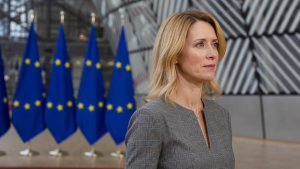
European regional organisations play a central role in conflict prevention, crisis management, peacekeeping, and post-conflict reconstruction. In Europe and its wider neighbourhood, these bodies rely on different treaties, institutions, and funding tools to support security, human rights, and international law.
The European Union and CSDP Framework
The European Union addresses security challenges through its Common Foreign and Security Policy (CFSP), within which the Common Security and Defence Policy (CSDP) provides the operational framework for civilian and military missions.
- Institutional leadership: Kaja Kallas serves as the EU High Representative for Foreign Affairs and Security Policy and Vice-President of the European Commission. Her five-year term began in December 2024.
- CSDP operations: The CSDP deploys civilian and military personnel globally to preserve peace, prevent conflict, and strengthen international security under the strategic direction of the Political and Security Committee (PSC).
- Project FREYA: The EU is collaborating with Ukraine on project “FREYA,” a joint initiative to build anti-ballistic missile defences.
- Lebanon mission: Discussions are underway on a potential EU CSDP mission to Lebanon to advise and train Lebanese armed and security forces for an initial three-year duration.
- Ukraine support: In February 2026, the European Parliament approved a EUR 90 billion Ukraine support loan package, including EUR 60 billion in loans earmarked for 2026 and 2027.
Funding Peace: The European Peace Facility
The European Peace Facility (EPF) is an off-budget funding mechanism designed to enhance the EU’s ability to prevent conflicts, build peace, and strengthen international security. It replaced the previous Athena mechanism and the African Peace Facility to consolidate defence funding under a single instrument.
- Financial scope: The EPF has a financial ceiling exceeding EUR 17 billion for the 2021–2027 period and covers the common costs of military CSDP operations.
- Partner assistance: It provides funding for military and defence assistance to partner countries, including equipment, infrastructure, and training.
- Non-lethal support: Between April 2025 and June 2026, the EU adopted 18 EPF-funded assistance measures totaling EUR 357.5 million for non-lethal equipment, services, and training to the armed forces of 15 partner countries, excluding Ukraine.
Organization for Security and Co-operation in Europe (OSCE)
The OSCE is the world’s largest regional security-oriented intergovernmental organization, comprising 57 participating states across Europe, Central Asia, and North America.
- Origins and mandate: Established by the 1975 Helsinki Accords, the OSCE follows a comprehensive concept of security covering the politico-military, economic and environmental, and human dimensions.
- Decision-making: All OSCE decisions are taken by consensus.
- Secretariat leadership: Feridun H. Sinirlioğlu of Türkiye is the eighth OSCE Secretary General. He took office in December 2024 and oversees the secretariat in Vienna, Austria.
- 2026 Chairpersonship: Switzerland holds the one-year rotating Chairpersonship of the OSCE for 2026, succeeding Finland in January 2026. Swiss Foreign Minister Ignazio Cassis serves as the OSCE Chairperson-in-Office.
- Swiss priorities: Switzerland’s 2026 priorities include a peace framework for Ukraine based on the Helsinki principles, stronger cybersecurity and inclusive diplomacy, attention to the security impact of new technologies, and stable funding for OSCE field operations.
Council of Europe and NATO
The Council of Europe and NATO represent distinct legal and security frameworks in Europe and operate independently of the EU.
- Council of Europe (CoE): Distinct from the EU, the 46-member CoE was founded by the 1949 Treaty of London to promote human rights, democracy, and the rule of law. It is headquartered in Strasbourg, France, and administers the European Court of Human Rights (ECtHR).
- CoE leadership: Alain Berset is the 15th Secretary General of the Council of Europe. His five-year term began on September 18, 2024.
- Special tribunal initiative: In May 2026, the Council of Europe’s Foreign Ministers established the Enlarged Partial Agreement on the Special Tribunal for the Crime of Aggression against Ukraine to support accountability and justice.
- NATO mandate: Established by the 1949 North Atlantic Treaty (Washington Treaty), NATO is a collective defence alliance of 32 member states headquartered in Brussels, Belgium, and governed by the North Atlantic Council (NAC).
- NATO leadership: Mark Rutte is the 14th Secretary General of NATO, having taken office on October 1, 2024.
Key Prelims Takeaways
- EU security policy: CFSP is the umbrella foreign and security policy of the EU; CSDP is its operational arm for civilian and military missions.
- EU funding tool: The European Peace Facility is the EU’s off-budget instrument for peacebuilding, military assistance, and common costs of CSDP operations.
- EPF ceiling: The EPF has a financial ceiling of more than EUR 17 billion for 2021–2027.
- OSCE basics: The OSCE has 57 participating states and follows consensus-based decision-making.
- Helsinki principles: These 10 principles include sovereign equality, refraining from the threat or use of force, and peaceful settlement of disputes.
- CoE identity: The Council of Europe is separate from the EU and is linked to the European Court of Human Rights.
- NATO function: NATO is a collective defence alliance under the North Atlantic Treaty, not a peacebuilding body like the OSCE or CoE.
| Related | |
|---|---|