National Energy Policies, Missions and Targets of India
Introduction
India’s energy transition is being shaped by a mix of capacity targets, subsidy-backed schemes, carbon market rules and technology missions. The policy focus is on expanding non-fossil capacity, cutting emissions intensity and building new markets for clean energy and low-carbon fuels.
For Prelims revision, the key points are the major schemes, statutory frameworks, fiscal outlays and 2030 targets linked to power, hydrogen, bioenergy, geothermal energy and coal gasification.
Installed Capacity and Climate Targets
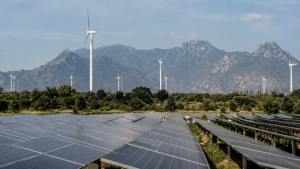
- Total installed capacity: India’s installed electricity generation capacity is about 552 GW.
- Non-fossil share: Non-fossil fuel sources account for over 54% of total capacity, or 300.50 GW as of July 31, 2026.
- NDC milestone: India achieved its target of 50% cumulative installed electric power capacity from non-fossil sources in June 2025, five years ahead of the 2030 deadline.
- 2030 target: India aims to reach 500 GW of non-fossil-fuel-based installed capacity by 2030.
- Net-zero goal: The long-term national target is net-zero carbon emissions by 2070.
| Generation Source | Installed Capacity (GW) |
| Solar Power | 164.59 |
| Wind Power | 58.14 |
| Large and Small Hydro | 57.24 |
| Bio-power | 11.75 |
| Nuclear Power | 8.78 |
Key Solar and Wind Energy Initiatives
- PM Surya Ghar Muft Bijli Yojana: Launched with a central allocation of ₹75,021 crore, this rooftop solar scheme aims to solarize 1 crore households by the end of FY 2026–27.
- Progress under the scheme: As of July 18, 2026, 47.26 lakh households had been solarized.
- External support: In July 2026, the World Bank approved an USD 890 million financing package for the scheme.
- PM-KUSUM: The Pradhan Mantri Kisan Urja Suraksha evam Utthaan Mahabhiyan has a central financial allocation of ₹34,422 crore.
- PM-KUSUM objective: It supports solar pumps and solarization of agricultural feeders.
- PM-KUSUM deadline: The completion deadline has been extended to March 31, 2027, for eligible projects with a Power Purchase Agreement (PPA) or Notice to Proceed (NTP) issued by December 31, 2025.
- Offshore Wind Energy VGF Scheme: The Union Cabinet approved a ₹7,453 crore Viability Gap Funding (VGF) scheme on June 19, 2024.
- Offshore wind objective: The scheme supports installation and commissioning of the country’s first 1 GW of offshore wind energy projects.
Green Hydrogen, Bioenergy, and Geothermal Frameworks
- National Green Hydrogen Mission: Approved with an initial outlay of ₹19,744 crore.
- Green hydrogen target: The mission targets at least 5 million metric tonnes (MMT) of green hydrogen production annually by 2030.
- Associated renewable capacity: It also aims to create 125 GW of renewable energy capacity by 2030.
- Commissioned capacity: As of February 2026, about 8,000 tonnes per annum of green hydrogen production capacity had been commissioned.
- GOBARdhan National Circular Bioenergy Scheme: Approved on August 6, 2026, with a total financial outlay of ₹23,731 crore.
- Scheme period: It will be implemented over ten years, from FY 2026–27 to FY 2035–36.
- Purpose: The scheme focuses on organic waste management and production of bio-compressed natural gas (bio-CNG).
- National Policy on Geothermal Energy: Notified on September 15, 2025, to create a regulatory and exploration framework for geothermal development.
- Geothermal potential: The Geological Survey of India and other agencies estimate India’s geothermal potential at around 10,600 MW.
Carbon Market Regulations and Coal Gasification
- Carbon Credit Trading Scheme (CCTS): Established under the Energy Conservation (Amendment) Act, 2022.
- First compliance cycle: The scheme launched its first compliance cycle in FY 2025–26.
- Indian Carbon Market: The CCTS shifts nine energy-intensive sectors from the Perform, Achieve and Trade (PAT) scheme into the Indian Carbon Market (ICM).
- CERC regulations: On February 27, 2026, the Central Electricity Regulatory Commission notified the CERC (Terms and Conditions for Purchase and Sale of Carbon Credit Certificates) Regulations, 2026.
- Purpose of CERC rules: These regulations set the legal and technical framework for exchange-based carbon credit trading in India.
- Surface Coal Gasification Scheme: In May 2026, the central government approved a ₹37,500 crore scheme to promote surface coal and lignite gasification.
- Gasification target: The scheme targets utilisation of 75 MTPA of coal toward the national target of 100 MT of coal or lignite gasification by 2030.
- Strategic aim: The policy is intended to reduce dependence on imported petrochemical derivatives.
Key Prelims Takeaways
- Non-fossil capacity: India crossed the 50% non-fossil installed capacity milestone in June 2025.
- Largest clean source: Solar power is the largest contributor to non-fossil capacity at 164.59 GW.
- 2030 milestones: Major targets include 500 GW non-fossil capacity and 5 MMT annual green hydrogen production.
- Carbon market law: The Energy Conservation (Amendment) Act, 2022 is the base law for the CCTS and Indian Carbon Market.
- Hydrogen mission outlay: National Green Hydrogen Mission has an initial outlay of ₹19,744 crore.
- Bioenergy scheme: GOBARdhan has an outlay of ₹23,731 crore and runs from FY 2026–27 to FY 2035–36.
- Energy ministers: Manohar Lal Khattar is the Union Minister of Power, and Pralhad Joshi is the Union Minister of New and Renewable Energy.
Current General Studies comprises current-affairs-based, General Studies-rich study material on policies, laws, institutions, economy, science, environment, governance, international relations, and other varied but important topics for UPSC and State PSC Prelims examinations.
Fortnightly PDF compilations: Available here
Originally written on
February 18, 2026
and last modified on
September 4, 2026.
| Related | |
|---|---|