Major Technology Missions in Indian Agriculture
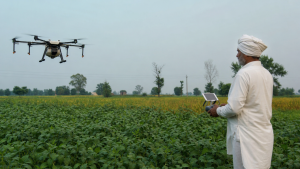
Technology missions in Indian agriculture were introduced to address key production and management challenges through focused, time-bound interventions. Over time, they evolved from crop-specific programmes to digital platforms, mechanization, climate resilience, and precision farming.
Evolution of Technology Missions in Indian Agriculture
The concept of technology missions in Indian agriculture began in the mid-1980s. The government introduced these missions to solve critical agricultural challenges in a time-bound manner.
- The Origin: In 1986, the government launched the Technology Mission on Oilseeds (TMO). This was the first major step to reduce import dependence on edible oils.
- Expansion: In the 1990s, the mission expanded to include pulses and maize. This became the Technology Mission on Oilseeds, Pulses, and Maize (TMOP).
- Modern Shift: Over time, the focus shifted from crop production to technology-enabled extension, digital infrastructure, mechanization, and climate resilience.
Digital Agriculture Mission (DAM)
The Union Cabinet approved the Digital Agriculture Mission in September 2024. It has a total outlay of Rs. 2,817 crore, with a central government share of Rs. 1,940 crore. The mission aims to build Digital Public Infrastructure (DPI) for the agricultural sector.
AgriStack
AgriStack is a farmer-centric DPI designed to improve the delivery of schemes and services. It contains three primary databases:
- Farmers’ Registry: Each farmer receives a unique digital identity called “Farmer ID”. This ID is linked to land records, livestock, crops grown, and availed benefits.
- Geo-referenced Village Maps: These maps link physical land parcels with geographical coordinates. This improves land-use planning and title verification.
- Crop Sown Registry: This database records the types of crops planted by farmers. It relies on digital crop surveys conducted on the ground.
Krishi Decision Support System (DSS)
The Krishi DSS is a geospatial system. It integrates remote sensing data with information on weather, soil, and water.
- Weather and Soil Monitoring: It tracks soil moisture and weather patterns to help farmers make timely decisions.
- Disaster Management: It assists in assessing droughts, floods, and crop damage.
- Resource Management: The system provides advisory data for crop insurance and irrigation planning.
Soil Profile Mapping
This component involves detailed mapping of soil fertility and properties.
- Optimized Inputs: Farmers can use these maps to apply the exact amount of fertilizers needed.
- Precision Farming: It supports scientific soil health management and reduces soil degradation.
National Mission on Agricultural Extension and Technology (NMAET)
Launched during the 12th Five Year Plan, NMAET aims to reform agricultural extension. It brings technology directly to the fields. The mission operates through four sub-missions:
- Sub-Mission on Agricultural Extension (SMAE): This sub-mission focuses on improving the reach of extension services. It uses electronic media, mobile services, and physical training to educate farmers.
- Sub-Mission on Seed and Planting Material (SMSP): It aims to improve the Seed Replacement Rate (SRR). It ensures the availability of high-yielding, climate-resilient seeds.
- Sub-Mission on Agricultural Mechanization (SMAM): This sub-mission promotes farm mechanization. It supports small and marginal farmers by establishing Custom Hiring Centres (CHCs).
- Sub-Mission on Plant Protection and Plant Quarantine (SMPP): It focuses on minimizing crop losses from pests, weeds, and diseases. It regulates the quality of pesticides and facilitates plant quarantine inspection.
National Mission for Sustainable Agriculture (NMSA)
NMSA is one of the eight missions under the National Action Plan on Climate Change (NAPCC). It focuses on making agriculture climate-resilient and sustainable.
- Rainfed Area Development (RAD): This component promotes integrated farming systems in rainfed areas. It combines crops, livestock, fishery, and forestry to secure farmer income.
- On-Farm Water Management (OFWM): It targets water-use efficiency through micro-irrigation systems. It promotes drip and sprinkler irrigation technologies.
- Soil Health Management (SHM): This program aids the distribution of Soil Health Cards. It helps farmers assess nutrient deficiencies in their fields.
- Paramparagat Krishi Vikas Yojana (PKVY): It supports organic farming through cluster-based models and participatory guarantee certification.
National Mission on Edible Oils
India faces a large deficit in edible oil production. The government introduced targeted missions to reduce this dependency.
National Mission on Edible Oils – Oil Palm (NMEO-OP)
Launched in 2021, NMEO-OP targets a massive expansion of oil palm cultivation.
- Target Areas: The mission focuses on the Northeast region and the Andaman and Nicobar Islands.
- Financial Assistance: It provides price assurances to farmers to protect them against market volatility. It also assists in purchasing quality planting materials.
National Mission on Edible Oils – Oilseeds (NMEO-Oilseeds)
Approved in late 2024, this mission aims to achieve self-reliance in key oilseeds.
- Primary Crops: It targets mustard, soybean, groundnut, sunflower, and sesame.
- Technological Focus: It promotes high-yielding seed varieties, modern farm equipment, and post-harvest management.
Other Key E-Technology Initiatives in Farming
The government uses several digital platforms to support the agricultural sector.
- National Agriculture Market (e-NAM): This is an online trading portal for agricultural commodities. It integrates physical mandis across India to create a single national market.
- National Pest Surveillance System (NPSS): An artificial intelligence-based platform. Farmers can upload crop images to identify pests and receive instant advisories.
- Kisan e-Mitra: This is an AI-powered multilingual chatbot. It resolves farmer queries regarding PM-KISAN, crop insurance, and credit facilities in multiple languages.
Summary of Major Agricultural Technology Missions
| Mission Name | Launch Year | Primary Focus / Technology | Nodal Ministry |
| Technology Mission on Oilseeds (TMO) | 1986 | Oilseed productivity, seed replacement, import reduction | Ministry of Agriculture & Farmers Welfare |
| National Mission on Agricultural Extension and Technology (NMAET) | 2014 | Farm mechanization, seed replacement, pest management, extension services | Ministry of Agriculture & Farmers Welfare |
| National Mission for Sustainable Agriculture (NMSA) | 2010 | Climate resilience, water efficiency, organic farming, soil health | Ministry of Agriculture & Farmers Welfare |
| National Mission on Edible Oils – Oil Palm (NMEO-OP) | 2021 | Oil palm area expansion, financial price protection | Ministry of Agriculture & Farmers Welfare |
| Digital Agriculture Mission (DAM) | 2024 | Digital Public Infrastructure, AgriStack, Krishi DSS, Soil Profile Maps | Ministry of Agriculture & Farmers Welfare |
| National Mission on Edible Oils – Oilseeds (NMEO-Oilseeds) | 2024 | High-yielding oilseed varieties, seed hubs, import reduction | Ministry of Agriculture & Farmers Welfare |
Rare Facts for Prelims
- TMO was the first technology mission in agriculture: It was launched in 1986, making it an early model of mission-mode intervention in the farm sector.
- AgriStack gives each farmer a unique digital identity: The Farmer ID is intended to link land, crops, livestock, and scheme benefits.
- Krishi DSS uses geospatial tools: It combines remote sensing with weather, soil, and water data for agricultural planning.
- NMSA is linked to NAPCC: It is one of the eight missions under the National Action Plan on Climate Change.
- CHCs under SMAM help small farmers: Custom Hiring Centres reduce the burden of owning expensive farm machinery.
- e-NAM creates a unified market: It connects mandis digitally to support wider trading of agricultural produce.
| Related | |
|---|---|