Major Sikh Takhts and Religious Centres
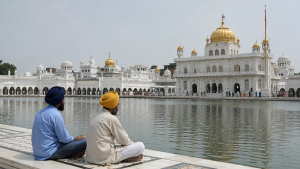
Sikh Takhts are the highest seats of temporal and spiritual authority in Sikhism. They guide the community on faith, discipline, tradition and collective decision-making. Among them, the Akal Takht in Amritsar is the most prominent, while the other Takhts are linked to major turning points in Sikh history.
What Are Takhts?
The word Takht means a throne or seat of authority. In Sikhism, Takhts are not only sacred shrines but also institutions of moral guidance and religious administration. They represent the principle of Miri-Piri, introduced by Guru Hargobind, where Miri stands for temporal responsibility and Piri for spiritual authority.
These institutions issue Hukamnamas, or directives, on matters affecting the Sikh Panth. They also served historically as places where disputes were settled and community discipline was maintained. Thus, Takhts combine devotion, authority and collective leadership.
Akal Takht Sahib, Amritsar
The Akal Takht Sahib, meaning “Throne of the Timeless God,” is the foremost Takht of Sikhism. It stands within the Sri Harmandir Sahib complex in Amritsar, Punjab, and is closely linked with the spiritual centre of the Sikh faith while representing its temporal authority.
- Founded by: Guru Hargobind in 1606.
- Original name: Akal Bunga.
- Historical significance: It symbolised Sikh resistance and self-respect by challenging imperial restrictions on raised platforms.
- Role: Guru Hargobind held court here, heard grievances and discussed strategy and policy.
- Sarbat Khalsa: It became the centre for major collective Sikh decisions.
- Authority: The Jathedar of Akal Takht is regarded as the most important temporal and religious spokesperson of the Sikh community.
- Important events: It witnessed conflicts with Mughal forces, the declaration of the Khalsa in 1699, and damage during Operation Blue Star in 1984.
Key exam point: Akal Takht is the first and most important Takht, and it symbolises Miri, the temporal aspect of Sikh authority.
Takht Sri Kesgarh Sahib, Anandpur Sahib
Takht Sri Kesgarh Sahib at Anandpur Sahib in Rupnagar district, Punjab, is one of the most revered Sikh centres because it is associated with the birth of the Khalsa. The foundation of Anandpur Sahib was laid by Guru Tegh Bahadur in 1665, while the foundation stone of this Takht was laid in 1689.
- Historic event: On Baisakhi, 13 April 1699, Guru Gobind Singh founded the Khalsa here.
- Panj Pyare: He initiated the first five Sikhs through the Amrit Sanchar ceremony.
- Religious importance: The event gave shape to the Sikh warrior community and reinforced equality, courage and discipline.
- Relics: The shrine preserves weapons and other relics associated with Guru Gobind Singh, including the double-edged sword used during the Khalsa tradition.
Takht Sri Damdama Sahib, Talwandi Sabo
Takht Sri Damdama Sahib is located at Talwandi Sabo near Bathinda in Punjab. The word Damdama means a resting place. It is remembered as a major centre of Sikh learning and scriptural compilation.
- Founded by: Guru Gobind Singh in 1705.
- Why important: Guru Gobind Singh stayed here for nearly a year after the battles against Mughal forces.
- Guru Ki Kashi: It is known as this because of its association with scholarship and learning.
- Scriptural role: The final and authenticated version of the Guru Granth Sahib was prepared here in 1705, known as the Damdama Sahib Bir.
- Recognition: It was officially recognised as the fifth Takht on 18 November 1966 after a resolution by the SGPC.
Takht Sri Patna Sahib and Takht Sri Hazur Sahib
Takht Sri Patna Sahib, also known as Takhat Sri Harmandir Ji Patna Sahib, is in Patna, Bihar. It marks the birthplace of Guru Gobind Singh, who was born on 22 December 1666. The shrine preserves important belongings and manuscripts linked to him and was later developed by Maharaja Ranjit Singh in the 19th century.
- Religious importance: It is one of the most important Sikh pilgrimage centres in eastern India.
- Historical associations: Patna was also visited by Guru Nanak and Guru Tegh Bahadur.
- Preservation: The shrine has been rebuilt more than once, including after a fire in the early 19th century and an earthquake in 1934.
Takht Sri Hazur Sahib, officially Takht Sachkhand Sri Hazur Abchalnagar Sahib, is located on the banks of the Godavari River in Nanded, Maharashtra. It is associated with the final days of Guru Gobind Singh and is among the holiest Sikh sites outside Punjab.
- Final visit: Guru Gobind Singh arrived in Nanded in 1708.
- Passing: He passed away here in 1708.
- Eternal Guru: Before his passing, he declared the Guru Granth Sahib as the eternal Guru, ending the line of human Gurus.
- Angitha Sahib: The inner room of the gurdwara is built over the cremation site of Guru Gobind Singh.
- Abchal Nagar: Guru Gobind Singh named Nanded “Abchal Nagar,” meaning the Steadfast City.
Role and Authority of Takhts
The five Takhts together form the highest authority structure in Sikhism. They interpret doctrine, preserve tradition and guide the community on questions of faith and conduct. Their directives are especially significant when issued from the Akal Takht, whose decisions carry wide reverence among Sikhs worldwide.
- Religious guidance: Takhts help ensure that Sikh practices remain aligned with the teachings of the Guru Granth Sahib.
- Collective decision-making: They reflect the Sikh emphasis on shared authority rather than individual rule.
- Community discipline: They historically played a role in maintaining unity, ethics and social order.
- Historical memory: Takhts preserve important events, relics and traditions linked with the Gurus.
- Pilgrimage significance: They are major destinations for Sikh devotees and important centres of religious identity.
Key Prelims Takeaways
- Five Takhts: Sikhism has five supreme seats of temporal and spiritual authority.
- Miri-Piri: The dual concept of temporal and spiritual authority was introduced by Guru Hargobind.
- Akal Takht: The first and most prominent Takht, established in 1606 at Amritsar.
- Jathedar: The Jathedar of Akal Takht is the most respected temporal and religious spokesperson of the Sikh Panth.
- Khalsa birth: Takht Sri Kesgarh Sahib is associated with the creation of the Khalsa in 1699.
- Damdama Sahib: Known as Guru Ki Kashi and linked to the final compilation of the Guru Granth Sahib.
- Hazur Sahib: Guru Gobind Singh passed away at Nanded in 1708, after declaring the Guru Granth Sahib as the eternal Guru.
Recent Context
Wadda Gurdwara Sahib in Penang, Malaysia, reopened in September 2026 after extensive restoration. The 125-year-old gurdwara, established in 1901, is recognised as the oldest and largest Sikh temple in Southeast Asia and holds Category One heritage status. Its reopening highlighted Sikh religious heritage and community preservation beyond India.
| Related | |
|---|---|