Major Revolutionary Movements in India’s Freedom Struggle
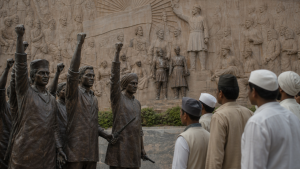
The revolutionary stream in India’s freedom struggle ran alongside constitutional politics and mass movements. It aimed at the direct overthrow of British rule through secret societies, armed actions, assassinations and propaganda, while building a strong nationalist consciousness among the youth.
Genesis and Early Phase
The first phase of revolutionary activity broadly covered the late 1890s to 1915. It grew out of dissatisfaction with moderate politics, the repressive colonial response to protests, and the impact of events such as the Partition of Bengal in 1905.
- Maharashtra: Vasudev Balwant Phadke led the Ramosi Peasant Force in 1879 to establish an Indian republic. He is regarded as the father of Indian armed rebellion.
- Chapekar Brothers: Damodar and Balkrishna Chapekar assassinated W.C. Rand, the Special Plague Commissioner of Pune, and Lieutenant Ayerst in 1897, reacting to brutal anti-plague measures.
- Mitra Mela and Abhinav Bharat: Vinayak Damodar Savarkar and Ganesh Savarkar founded Mitra Mela in Nasik in 1899, which later merged into Abhinav Bharat in 1904.
- Nasik assassination: Anant Lakshman Kanhere, linked to Abhinav Bharat, assassinated Jackson, the Collector of Nasik, in 1909.
- Bengal stream: The Anushilan Samiti was established in Calcutta in 1902 by Promotha Mitter, Jatindranath Banerjee and Barindra Kumar Ghosh. A parallel branch functioned in Dhaka under Pulin Behari Das.
- Alipore Bomb Conspiracy Case: Khudiram Bose and Prafulla Chaki attempted to assassinate Kingsford, the Chief Presidency Magistrate of Muzaffarpur. Prafulla Chaki died by suicide, while Khudiram Bose was hanged.
- Howrah Gang Case and Jugantar: Jatindranath Mukherjee, popularly known as Bagha Jatin, reorganized Jugantar. He died in 1915 at Balasore after an armed encounter while attempting to receive German arms via the Maverick.
- Role of Aurobindo: Barindra Ghosh and Aurobindo Ghosh were arrested in the Alipore case. Aurobindo was defended successfully by Chittaranjan Das.
Punjab and Delhi Revolutionary Actions
- Anjuman-i-Mohisban-i-Watan: Ajit Singh and Sufi Amba Prasad formed this secret organization in Lahore in 1907.
- Revolutionary literature: The group circulated writings such as Bharat Mata and supported agrarian protests like the Pagdi Sambhal Jatta agitation against agrarian bills.
- Delhi Conspiracy Case: In 1912, Rash Behari Bose and Sachindra Nath Sanyal hurled a bomb at Viceroy Lord Hardinge during a ceremonial procession in Chandni Chowk, Delhi.
- Aftermath: Rash Behari Bose evaded arrest and later fled to Japan.
Revolutionary Activity Abroad
Indian revolutionaries also built networks abroad in Europe, North America and East Asia to obtain arms, publish literature and seek international support for the nationalist cause.
- India House, London: Shyamji Krishnavarma established India House in 1905 and began the journal The Indian Sociologist. He also awarded fellowships to young revolutionaries.
- Curzon Wyllie assassination: Madan Lal Dhingra assassinated Curzon Wyllie in London in 1909.
- Paris Indian Society: Bhikaiji Cama and S.R. Rana operated from Paris.
- Indian flag at Stuttgart: Bhikaiji Cama unfurled the first version of the Indian National Flag at the International Socialist Congress in Stuttgart, Germany, in 1907.
- Ghadar base: The Pacific Coast Hindustan Association was established in 1913 at San Francisco by Lala Har Dayal, Sohan Singh Bhakna and Bhai Parmanand.
- Ghadar newspaper: The movement published the weekly newspaper Ghadar in Urdu, Gurmukhi and other languages.
Ghadar Movement, Berlin Committee and Kabul Government
- Komagata Maru incident: In 1914, a Japanese ship carrying 376 prospective Indian immigrants was turned back from Vancouver. On return to Budge Budge near Calcutta, clashes with British police led to the death of 20 passengers.
- Ghadar Mutiny: With the outbreak of World War I, Ghadarites returned to India to trigger an armed revolt in the British Indian Army. The plan was leaked, leading to arrests and executions under the Defense of India Act, 1915.
- Berlin Committee: In 1915, Virendranath Chattopadhyaya, Bhupendranath Dutta and Lala Har Dayal formed the Berlin Committee for Indian Independence with German support to incite mutiny among Indian troops abroad.
- Provisional Government of India: Raja Mahendra Pratap and Maulana Barkatullah established India’s first provisional government-in-exile at Kabul, Afghanistan, in 1915.
Reorganization Phase: 1920s and 1930s
The second phase was shaped by the withdrawal of the Non-Cooperation Movement in 1922, the influence of the Russian Revolution and the spread of Marxist ideas. Revolutionary groups now combined armed struggle with socialist goals and wider political propaganda.
- Hindustan Republican Association: Sachindra Nath Sanyal, Ram Prasad Bismil and Jogesh Chandra Chatterji founded the HRA in Kanpur in 1924, aiming at a Federal Republic of the United States of India through armed revolution.
- Kakori Train Action: In 1925, HRA members intercepted a government treasury train near Kakori, Lucknow.
- Kakori martyrs: Ram Prasad Bismil, Ashfaqulla Khan, Roshan Singh and Rajendra Lahiri were hanged.
- HSRA formation: In 1928, the organization was renamed the Hindustan Socialist Republican Association at Feroz Shah Kotla, Delhi, under Bhagat Singh, Chandrashekhar Azad, Sukhdev and Bhagwati Charan Vohra.
- Ideological shift: The HSRA adopted socialism as its ultimate goal.
- Saunders assassination: Bhagat Singh, Rajguru and Azad killed J.P. Saunders in Lahore to avenge the death of Lala Lajpat Rai following a police lathi-charge.
- Central Assembly bombing: In 1929, Bhagat Singh and Batukeshwar Dutt threw non-lethal bombs inside the Central Legislative Assembly to protest the Public Safety Bill and Trade Disputes Bill.
- Purpose of the bombing: They courted arrest to propagate their views.
- Lahore Conspiracy Case: Bhagat Singh, Sukhdev and Rajguru were executed on March 23, 1931.
- Jatin Das: He died in Lahore jail after a 63-day hunger strike demanding political prisoner status.
Chittagong Armoury Raid
- Indian Republican Army: Surya Sen, known as Masterda, organized the Chittagong Armoury Raid in 1930.
- Objective: The raid targeted the twin armories in Chittagong and declared a provisional revolutionary government.
- Associate: Kalpana Datta was among the key associates linked with the movement.
Key Prelims Takeaways
- Nature of movement: It was a parallel stream to mainstream politics, using secret societies, propaganda and armed action.
- Early centres: Maharashtra, Bengal, Punjab and overseas Indian groups were major revolutionary hubs.
- Key early organizations: Mitra Mela, Abhinav Bharat, Anushilan Samiti, Jugantar and Anjuman-i-Mohisban-i-Watan were important groups.
- Important cases: Alipore Bomb Conspiracy, Howrah Gang Case, Delhi Conspiracy Case, Kakori Train Action and Lahore Conspiracy Case are repeatedly asked in prelims.
- Major leaders: Vasudev Balwant Phadke, Savarkar, Bagha Jatin, Ajit Singh, Rash Behari Bose, Bhagat Singh and Surya Sen are crucial names.
- Foreign linkages: India House, Paris networks, Ghadar and the Berlin Committee show the international dimension of the struggle.
- Political evolution: The revolutionary phase moved from assassination-based resistance to socialist and organized revolutionary politics in the 1920s and 1930s.
| Related | |
|---|---|