Major Retail Payment Systems in India
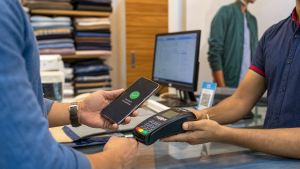
India’s retail payment ecosystem is built on a mix of real-time transfer systems, deferred settlement rails and domestic card networks. The Reserve Bank of India (RBI) regulates the system, while the National Payments Corporation of India (NPCI) operates several mass retail platforms used across the country.
These systems together enable instant person-to-person transfers, merchant payments, recurring collections and high-value settlements. For Prelims, the key is to remember the operator, settlement mode, transaction limits and the distinct use-case of each rail.
Regulatory and Governance Architecture
- Payment and Settlement Systems Act, 2007: Gives the RBI statutory authority over payment and settlement systems in India.
- RBI: Frames policy and supervises payment systems through the Board for Regulation and Supervision of Payment and Settlement Systems (BPSS).
- BPSS: Functions as a specialized committee under the RBI Central Board.
- NPCI: Incorporated in 2008 as a Section 8 non-profit company under the guidance of the RBI and the Indian Banks’ Association (IBA).
- Role division: RBI directly owns and operates central payment infrastructure such as NEFT and RTGS, while NPCI manages major retail payment systems.
Unified Payments Interface (UPI)
- Launch: Introduced by NPCI in April 2016.
- Function: Enables instant interbank person-to-person (P2P) and person-to-merchant (P2M) transfers.
- How it works: Money is routed through a Virtual Payment Address (VPA) or registered mobile number without revealing core bank account details.
- Security: Uses two-factor authentication through handset binding and a user-defined UPI PIN.
- UPI Lite: Supports small-value transactions up to ₹500 from an on-device wallet, without requiring internet connectivity or a UPI PIN.
- UPI 123PAY: Allows feature phone users to make payments through IVR calls, app-based functions or sound-based technology.
- Credit Line on UPI: Permits pre-sanctioned credit lines from commercial banks to be linked directly to UPI VPAs.
- Transaction limit: Standard daily transfer limit is ₹1 lakh for basic P2P transfers; specified categories such as capital markets, healthcare, tax payments and educational institutions may allow up to ₹5 lakh per transaction.
IMPS, NEFT and RTGS
- IMPS: Introduced by NPCI in November 2010 for round-the-clock instant fund transfers across participating banks.
- Channels for IMPS: Works through mobile banking, internet banking, ATMs and SMS.
- MMID routing: Uses a 7-digit Mobile Money Identifier linked to a mobile number and issued by the remitter’s bank.
- IFSC routing: Uses the beneficiary’s bank account number and 11-character Indian Financial System Code (IFSC).
- IMPS cap: Maximum limit per transaction is ₹5 lakh.
- NEFT: Owned and operated by the RBI since November 2005.
- Settlement mode: NEFT follows a Deferred Net Settlement (DNS) model, where transactions are cleared in half-hourly batches.
- NEFT availability: Operates 24x7x365 across 48 half-hourly batches daily.
- Charges: Online NEFT transfers initiated through net banking or mobile apps carry zero processing charges for savings account holders.
- Limits: RBI imposes no minimum or maximum value ceiling for online NEFT transfers.
- RTGS: Operated directly by the RBI since March 2004 for high-value payments.
- Settlement mode: Real-time gross settlement, where each transaction settles individually in the books of the central bank.
- RTGS threshold: Minimum transaction value is ₹2 lakh; there is no upper limit.
- Availability: RTGS has been available 24x7x365 following the RBI’s December 2020 directive.
Card Networks and RuPay
- Card rails in India: Payments run through domestic and international networks such as Visa, Mastercard, Diners Club, American Express and RuPay.
- RuPay launch: Introduced by NPCI in 2012 as an indigenous card network.
- Purpose: Designed to reduce transaction processing costs for domestic banks.
- PMJDY linkage: RuPay cards are integrated with Pradhan Mantri Jan Dhan Yojana (PMJDY) accounts and offer built-in personal accident insurance.
- UPI credit cards: RBI permitted linking of credit cards to UPI, with RuPay being the first network enabled for this facility.
- Card-on-file tokenization (CoFT): Replaces stored 16-digit primary account numbers on merchant servers with encrypted tokens to reduce card data theft risks.
| Platform | Operator | Settlement mode | Speed | Minimum | Maximum / Key limit | Availability |
| UPI | NPCI | Real-time gross | Instant | No minimum | ₹1 lakh; up to ₹5 lakh for specified sectors | 24x7x365 |
| IMPS | NPCI | Real-time gross | Instant | Re 1 | ₹5 lakh per transaction | 24x7x365 |
| NEFT | RBI | Deferred net | Batch processing | Re 1 | No central cap | 24x7x365 |
| RTGS | RBI | Real-time gross | Instant | ₹2 lakh | No central cap | 24x7x365 |
| RuPay | NPCI | Net settlement | Instant | Re 1 | Depends on card issuer credit/debit limit | 24x7x365 |
Key Prelims Takeaways
- RBI regulator: The RBI is the statutory authority under the Payment and Settlement Systems Act, 2007.
- NPCI role: NPCI operates India’s major retail payment rails, including UPI, IMPS, RuPay, NACH, AePS and Bharat BillPay.
- UPI identity: UPI uses VPA or mobile number; bank account details are not exposed to the payer.
- UPI limits: Standard daily limit is ₹1 lakh, with higher caps up to ₹5 lakh for notified categories.
- IMPS link: IMPS can be routed through MMID or IFSC, with a cap of ₹5 lakh per transaction.
- NEFT vs RTGS: NEFT uses deferred net settlement in half-hourly batches, while RTGS is real-time gross settlement.
- RTGS threshold: Minimum amount for RTGS is ₹2 lakh; there is no upper limit.
Current General Studies comprises current-affairs-based, General Studies-rich study material on policies, laws, institutions, economy, science, environment, governance, international relations, and other varied but important topics for UPSC and State PSC Prelims examinations.
Fortnightly PDF compilations: Available here
Originally written on
April 30, 2026
and last modified on
September 5, 2026.
| Related | |
|---|---|