Major Presidential Systems in the World
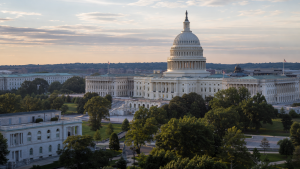
A presidential system is a democratic form of government in which the executive branch is separate from the legislature. The president serves as both head of state and head of government, and derives authority directly from the people through election.
Salient Features of the Presidential Form of Government
- Unified Executive: The president performs the dual role of head of state and head of government.
- Separation of Powers: The executive, legislature, and judiciary function independently of one another.
- Independent Source of Power: The president is elected directly or indirectly by the people, not chosen by the legislature.
- Fixed Tenure: The president serves a fixed term and cannot be removed by a simple vote of no confidence.
- Non-Parliamentary Cabinet: Ministers and secretaries are usually appointed from outside the legislature and are often selected for expertise.
- Absence of Legislative Dissolution: The president generally cannot dissolve the legislature before its term ends.
Prominent Presidential Systems Across the World
United States of America
- The United States is the classical model of the presidential system.
- The President is indirectly elected by an Electoral College for a four-year term.
- Under the 22nd Amendment, a person is limited to two presidential terms.
- Congress exercises strong checks, including the power of the purse and confirmation of presidential appointments.
Brazil
- Brazil follows a federal presidential system with a bicameral National Congress.
- The President is directly elected through a two-round system for a four-year term.
- The system is known for coalition presidentialism, requiring negotiation with multiple parties to secure legislative support.
- Cabinet ministers are appointed by the President and need not be members of Congress.
Mexico
- Mexico functions as a federal presidential republic.
- The President is elected by simple plurality for a single, non-renewable six-year term known as the sexenio.
- No re-election is permitted under the Mexican Constitution to prevent long-term autocracy.
- The legislative branch consists of the Chamber of Deputies and the Senate.
Argentina
- Argentina has a federal presidential system based on its 1853 Constitution.
- The President is directly elected for a four-year term, with the possibility of one consecutive re-election.
- The President may issue executive decrees with the force of law under specific emergency conditions.
- The bicameral National Congress can override presidential vetoes with a two-thirds majority in both houses.
Philippines
- The Philippines has a unitary presidential system modeled after the United States.
- The President is directly elected by plurality for a single, non-renewable six-year term.
- The system has a bicameral Congress consisting of the Senate and the House of Representatives.
- The President serves as commander-in-chief of the armed forces.
South Korea
- South Korea operates under a presidential system with some unique constitutional features.
- The President is directly elected for a single five-year term.
- A Prime Minister is appointed by the President, but the office is subordinate and not co-equal with the President.
- The single-term limit is intended to prevent authoritarian rule.
Colombia
- Under the 1991 Constitution, the President of Colombia acts as both head of state and head of government.
- The President is elected by direct popular vote for a four-year term.
- Runoff elections are held if no candidate secures an absolute majority in the first round.
- Abelardo de la Espriella was sworn in on August 7, 2026, as the 36th President of Colombia for the 2026–2030 term.
- He won the runoff on June 21, 2026, with 12,960,166 votes, or 49.66%, narrowly defeating Iván Cepeda, who received 48.70%.
- The inauguration was held at the USC Arena at Santiago de Cali University in Cali, breaking the tradition of holding it in Bogotá.
Presidential vs. Parliamentary Systems
| Basis of Comparison | Presidential System | Parliamentary System |
| Executive Head | Single executive; the President is both Head of State and Head of Government. | Dual executive; the Prime Minister is Head of Government, while the Monarch or President is Head of State. |
| Relationship of Branches | Executive and legislature are independent. | Executive is a part of the legislature and responsible to it. |
| Cabinet Appointment | Appointed from outside the legislature; often includes experts. | Appointed from within the legislative majority. |
| Tenure | Fixed and stable tenure. | Flexible tenure dependent on legislative confidence. |
| Dissolution of Legislature | The executive cannot dissolve the legislature. | The executive can dissolve the legislature before its term ends. |
| Veto Powers | The President has strong veto powers over legislation. | The executive does not have separate veto powers in the same way. |
Advantages of the Presidential System
- Policy Stability: Fixed tenure prevents sudden government collapse and supports long-term policymaking.
- Cabinet of Talent: The President can appoint experts and professionals rather than being limited to elected politicians.
- Strong Leadership: Concentrated executive authority can enable quick decisions during national crises.
- Prevention of Majority Tyranny: Separation of powers helps prevent any single branch from gaining absolute control.
Limitations of the Presidential System
- Frequent Gridlock: If the presidency and legislature are controlled by different parties, lawmaking can stall.
- Tendency Toward Authoritarianism: Concentration of executive power may weaken legislative and judicial checks.
- Lack of Direct Accountability: The cabinet is not answerable to the legislature, reducing daily scrutiny.
- Inflexibility of Tenure: Removing an ineffective president is difficult except through impeachment or similar procedures.
Key Comparative Facts and Trivia
- The First System: The United States pioneered the modern presidential system in 1789.
- The Brazilian Exception: Brazil’s multi-party presidential system often produces fragmented coalitions.
- The Mexican Sexenio: Mexico has maintained its ban on immediate re-election since 1917.
- The Veto Override: In many presidential systems, a presidential veto can be overridden by a supermajority in the legislature.
- No Dual Membership: In a pure presidential system, a person cannot simultaneously be a cabinet member and a legislator.
Rare Facts for Prelims
- Electoral College Origin: The U.S. Electoral College was designed as a compromise between direct popular election and election by Congress.
- Brazil’s Runoff Rule: Brazil requires a second round if no presidential candidate wins an absolute majority in the first round.
- Colombia’s Oath: In 2026, Colombia’s presidential oath was administered by Senate President and Congress Speaker Honorio Henríquez.
- Colombia’s Vice President: After taking the oath, De la Espriella swore in José Manuel Restrepo as Vice President.
- Security Assistance: On August 7, 2026, the United States State Department announced plans for USD 1 billion in security assistance for Colombia, subject to congressional approval.
- Inauguration Guest of Honour: De la Espriella invited Luis Felipe Yagüé, a 74-year-old panela street vendor from Florencia, as a guest of honour.
Current General Studies comprises current-affairs-based, General Studies-rich study material on policies, laws, institutions, economy, science, environment, governance, international relations, and other varied but important topics for UPSC and State PSC Prelims examinations.
Fortnightly PDF compilations: Available here
Originally written on
August 6, 2026
and last modified on
August 10, 2026.
| Related | |
|---|---|