Important Railway Sector Institutions and Bodies
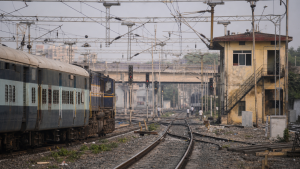
Indian Railways is supported by a wide network of administrative, safety, technical, training, and commercial institutions that handle regulation, research, recruitment, project execution, and operations.
Administrative and Regulatory Bodies
- Railway Board: The apex administrative body of Indian Railways. It functions under the Ministry of Railways from Rail Bhawan, New Delhi. The Board consists of a Chairperson, a Chief Executive Officer (CEO), and functional members overseeing Infrastructure, Traction & Rolling Stock, Operations, Business Development, and Finance. It originated from the recommendations of the Sir Thomas Robertson Committee in 1901.
- Railway Claims Tribunal (RCT): Established in 1989 under the Railway Claims Tribunal Act, 1987. It is headquartered in New Delhi and has benches in 19 locations across India. It decides claims against the railway administration for loss, destruction, damage, deterioration, or non-delivery of animals or goods, and also handles compensation cases for passenger deaths or injuries due to train accidents.
- Railway Recruitment Boards (RRBs): These 21 boards coordinate recruitment of technical and non-technical Group ‘C’ staff. They operate under the Railway Recruitment Control Board (RRCB) to ensure standardized selection processes.
- Railway Recruitment Cells (RRCs): These operate at the headquarters of each of the 17 zonal railways and manage recruitment of Group ‘D’ staff for their respective geographic zones.
Safety and Oversight Institutions
- Commission of Railway Safety (CRS):
- Administrative Authority: The CRS operates under the administrative control of the Ministry of Civil Aviation, not the Ministry of Railways.
- History: In 1941, the Railway Inspectorate was separated from the Railway Board and placed under the Department of Posts and Air. It was renamed the Commission of Railway Safety in 1961.
- Headquarters: New Delhi, headed by the Chief Commissioner of Railway Safety (CCRS).
- Statutory Role: It performs inspectorial, investigatory, and advisory functions under the Railways Act, 1989.
- Functions: It conducts statutory inquiries into serious passenger train accidents and must inspect and sanction any new railway line, gauge conversion, line doubling, or railway electrification project before opening for public traffic.
Technical and Research Organizations
- Research Designs and Standards Organisation (RDSO):
- Origin: Formed in 1957 by merging the Central Standards Office (CSO, established in 1930) and the Railway Testing and Research Centre (RTRC, established in 1952).
- Headquarters: Lucknow, Uttar Pradesh.
- Role: The sole research and development (R&D) wing of the Ministry of Railways and a technical advisor to the Railway Board, Zonal Railways, and production units.
- Key Activities: Designs and standardizes rolling stock, permanent way (tracks), signaling systems, and overhead traction equipment.
- Centre for Railway Information Systems (CRIS):
- Establishment: Registered as an autonomous society in July 1986.
- Headquarters: Chanakyapuri, New Delhi.
- Role: The IT arm of the Ministry of Railways, responsible for developing, implementing, and maintaining core software applications for railway operations.
- Key Systems: Passenger Reservation System (PRS), Unreserved Ticketing System (UTS), Freight Operations Information System (FOIS), National Train Inquiry System (NTES), and Crew Management System (CMS).
Centralized Training Institutes
These institutes provide professional training to officers of the Indian Railways Management Service (IRMS) and other technical cadres.
- National Academy of Indian Railways (NAIR): Located in Vadodara, Gujarat. Operating from the historic Pratap Vilas Palace, it is the premier training academy for probationary officers of the civil and administrative services of Indian Railways.
- Gati Shakti Vishwavidyalaya (GSV): Located in Vadodara, Gujarat. This central university was established in 2022 by upgrading the National Rail and Transportation Institute (NRTI). It focuses on transport technology, logistics, and management, and collaborates with NAIR.
- Indian Railways Institute of Civil Engineering (IRICEN): Located in Pune, Maharashtra. Established in 1959, it trains civil engineering officers in track design, bridge construction, and geotechnology.
- Indian Railways Institute of Signal Engineering and Telecommunications (IRISET): Located in Secunderabad, Telangana. Established in 1957, it provides specialized training in railway signaling and modern telecommunications.
- Indian Railways Institute of Mechanical and Electrical Engineering (IRIMEE): Located in Jamalpur, Bihar. Dating back to 1927, it is one of the oldest technical training centers in India, specializing in mechanical engineering and rolling stock maintenance.
- Indian Railways Institute of Electrical Engineering (IRIEEN): Located in Nashik, Maharashtra. Established in 1988, it offers training in electrical locomotive technology, power supply, and traction systems.
- Indian Railways Institute of Transport Management (IRITM): Located in Lucknow, Uttar Pradesh. Established in 2003, it trains traffic and operations management officers in logistics and commercial strategies.
- Indian Railways Institute of Financial Management (IRIFM): Located in Secunderabad, Telangana. Established in 2019, it trains finance and accounts officers in railway accounting and financial rules.
Public Sector Undertakings
The Ministry of Railways exercises administrative control over several specialized public sector undertakings (PSUs). These entities execute construction, handle financing, and manage specialized logistics.
| PSU Name | Established | Headquarters | Core Function |
| RITES Limited | 1974 | Gurugram, Haryana | Multi-disciplinary consultancy for transport infrastructure, exports of rolling stock, and quality assurance. |
| IRCON International Limited | 1976 | New Delhi | Infrastructure construction company specializing in turnkey railway, highway, and bridge projects globally. |
| Indian Railway Finance Corporation (IRFC) | 1986 | New Delhi | Market-borrowing arm that raises funds to lease rolling stock and finance railway projects. |
| Container Corporation of India (CONCOR) | 1988 | New Delhi | Logistics and multimodal container transport operator managing inland container depots. |
| Konkan Railway Corporation Limited (KRCL) | 1990 | Navi Mumbai, Maharashtra | Operator and builder of the 741 km Konkan railway line, known for executing complex terrain engineering. |
| Indian Railway Catering and Tourism Corporation (IRCTC) | 1999 | New Delhi | Handles online internet ticketing, onboard catering, railway tourism packages, and bottled water production. |
| RailTel Corporation of India (RCIL) | 2000 | New Delhi | Deploys optic fiber networks along railway tracks to provide nationwide broadband, telecom, and VPN services. |
| Rail Vikas Nigam Limited (RVNL) | 2003 | New Delhi | Fast-track project execution agency that mobilizes extra-budgetary resources for rail capacity addition. |
| Dedicated Freight Corridor Corporation of India (DFCCIL) | 2006 | New Delhi | Special purpose vehicle tasked with the planning, construction, and operation of dedicated freight corridors. |
Historical and Technical Trivia
- Indian Railway Conference Association (IRCA): Founded in 1902, it is the oldest railway coordinating body. It facilitates the interchange of rolling stock and technical standardization among different railways.
- The Robertson Committee (1901): Sir Thomas Robertson investigated the administration of Indian Railways and recommended setting up a centralized, independent authority. This recommendation led to the creation of the Railway Board.
- First Passenger Train: The first passenger train in India ran between Bori Bunder (Mumbai) and Thane on 16 April 1853, covering a distance of 34 kilometers.
- Electrification Development: Indian Railways aims to achieve complete electrification of its broad-gauge network. Currently, over 99% of the broad-gauge network is electrified, moving the country closer to its net-zero carbon emissions target by 2030.
Rare Facts for Prelims
- Rail Bhawan: The Railway Board functions from Rail Bhawan, which is one of the most recognizable administrative buildings in New Delhi.
- CRS Independence: The CRS is kept outside the Ministry of Railways to ensure independent safety oversight of railway operations.
- RDSO Legacy: The Central Standards Office, one of RDSO’s predecessor bodies, was established as early as 1930.
- IRIMEE Heritage: IRIMEE at Jamalpur is among the oldest railway technical training institutions in Asia.
- CONCOR Network: CONCOR plays a key role in India’s container logistics ecosystem through inland container depots and multimodal transport.
- DFCCIL Purpose: DFCCIL was created specifically to build dedicated freight corridors to decongest the existing railway network and improve freight efficiency.
Current General Studies comprises current-affairs-based, General Studies-rich study material on policies, laws, institutions, economy, science, environment, governance, international relations, and other varied but important topics for UPSC and State PSC Prelims examinations.
Fortnightly PDF compilations: Available here
Originally written on
August 5, 2026
and last modified on
August 8, 2026.
| Related | |
|---|---|