Major Poultry Diseases and Their Control in India
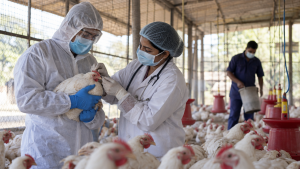
Poultry diseases can reduce flock productivity, cause high mortality and disrupt farmer livelihoods. Control depends on early detection, vaccination where permitted, farm biosecurity and coordinated veterinary response. Avian influenza requires particular attention because highly pathogenic strains can spread rapidly and trigger culling and movement restrictions.
Major Poultry Diseases
- Avian influenza (bird flu): Caused by influenza Type A viruses, which are classified by their surface proteins, haemagglutinin (H) and neuraminidase (N). H5N1 denotes Type 5 haemagglutinin and Type 1 neuraminidase. HPAI and LPAI describe pathogenicity in domestic chickens; the classification does not predict disease severity in other species. Signs may include sudden high mortality, respiratory distress, nervous signs, swelling of the head and wattles, and reduced egg production.
- Newcastle disease (Ranikhet disease): A highly contagious disease caused by Avian Paramyxovirus Serotype 1. It affects many bird species and causes respiratory, nervous and digestive signs. Mortality can be very high, particularly in young birds; vaccination is a primary control measure.
- Marek’s disease: A herpesvirus infection that can cause neurological signs, tumours in various organs and paralysis. Vaccination of day-old chicks is highly effective.
- Infectious Bursal Disease (Gumboro disease): An acute, highly contagious infection of young chickens. It damages the bursa of Fabricius, which is important for immune-system development, causing immunosuppression. This can increase susceptibility to other infections and reduce vaccine efficacy.
- Fowl pox: Caused by Avian Poxvirus. The relatively slow-spreading disease causes skin lesions (dry pox) or diphtheritic lesions in the mouth and upper respiratory tract (wet pox). Vaccination helps prevent outbreaks.
Institutional and Legal Framework
- Central authority: The Department of Animal Husbandry & Dairying (DAHD), under the Ministry of Fisheries, Animal Husbandry and Dairying, oversees veterinary services at the central level.
- Legal basis: The Prevention and Control of Infectious and Contagious Diseases in Animals Act, 2009, provides for managing and eradicating animal diseases, including poultry diseases. It empowers authorities to declare infected areas, restrict animal movement and implement control measures.
- Avian influenza action plan: The National Action Plan for Prevention, Control, and Containment of Avian Influenza (Revised 2021) sets out preparedness, notification of affected areas, culling, movement restrictions, biosecurity and surveillance measures. It calls for logistics assessment and training, alongside surveillance of migratory birds, poultry, live bird markets, international borders and wetlands.
- Compensation: Under the Livestock Health and Disease Control Scheme, affected farmers can receive compensation for culled birds, destroyed eggs and feed. Costs are shared 50:50 between the Centre and States.
Outbreak Control and Containment
Rapid action is important during outbreaks of highly contagious diseases, especially HPAI. India follows a “detect and cull” policy for HPAI in domestic poultry. Control operations combine surveillance, restrictions and disposal measures to limit further spread.
- Surveillance: Monitor poultry, migratory birds, live bird markets and international borders as part of preparedness and outbreak detection.
- Culling: Under the 2021 Government of India guidelines, all birds at the epicentre farm and within a one-kilometre radius are targeted for culling during HPAI containment.
- Movement restrictions: Measures can include a ban on poultry movement, closure of poultry and egg markets or shops, and restrictions on the movement of people and vehicles in affected areas.
- Disposal: Culled birds, dead birds and contaminated materials are destroyed or disposed of to prevent further spread. Deep burial in designated pits is used for culled birds.
- Cleaning and disinfection: Farm premises are cleaned and disinfected; VIRKON-S is used in affected premises.
- Post-operation monitoring: A Post Operation Surveillance Plan (POSP) is implemented after initial containment to monitor for resurgence. Restocking is prohibited in affected areas, typically for three months.
Vaccination Policy
- H5N1: Preventive vaccination is not permitted in India. The “detect and cull” approach remains the control policy for HPAI in domestic poultry.
- H9N2: DAHD has permitted use of the vaccine for this low pathogenic avian influenza strain. Developed by ICAR-NIHSAD, Bhopal, it is commercially available; a national study is underway to evaluate its effectiveness.
- Other poultry diseases: Vaccines are routinely used against Newcastle disease, Marek’s disease, Infectious Bursal Disease and fowl pox.
Operational Priorities
Effective control links farm-level biosecurity with veterinary surveillance and a coordinated response. Controlled access, disinfection of vehicles and personnel, and hygiene protocols help prevent pathogen entry and spread. Outbreak management also has livelihood implications: timely compensation for culled birds, eggs and feed can support affected farmers. Veterinary capacity, preparedness, logistics and training are important to carrying out surveillance and containment measures.
Key Prelims Takeaways
- H5N1 is an HPAI strain; H and N refer to haemagglutinin and neuraminidase.
- India follows a “detect and cull” policy for HPAI in domestic poultry and does not permit preventive H5N1 vaccination.
- The Prevention and Control of Infectious and Contagious Diseases in Animals Act was enacted in 2009.
- The revised 2021 National Action Plan guides avian influenza preparedness and outbreak response.
- DAHD is the central department overseeing veterinary services.
- H9N2 vaccine developed by ICAR-NIHSAD, Bhopal, is commercially available.
- The Livestock Health and Disease Control Scheme provides for compensation, with costs shared equally by the Centre and States.
Recent Context
H5N1 was confirmed on 13 November 2026, in a chicken carcass sample from a farm in Kattiyankuppam, Cuddalore district; NIHSAD, Bhopal, tested the sample. By that date, 35,647 bird deaths were recorded in the affected belt, and nine Rapid Response Teams were deployed. Movement restrictions, disinfection and culling were undertaken.
| Related | |
|---|---|