Major National Health Programmes and Missions
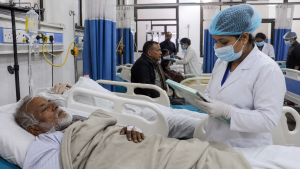
India’s major health programmes aim to reduce out-of-pocket spending, expand insurance coverage, and improve access to quality care through stronger physical and digital health systems. For Prelims revision, the key focus is on scheme objectives, beneficiary coverage, infrastructure targets, and recent official milestones.
Ayushman Bharat Pradhan Mantri Jan Arogya Yojana (AB-PMJAY)
AB-PMJAY is the world’s largest government-funded health assurance scheme and is operational across all 36 States and Union Territories. It provides cashless health cover of up to ₹5 lakh per family per year for secondary and tertiary care hospitalization to eligible beneficiaries.
- Beneficiary base: The targeted beneficiary base stands at 12 crore families, revised from 10.74 crore families in January 2023.
- Expanded coverage: In March 2024, around 37 lakh families of ASHAs, Anganwadi Workers and Anganwadi Helpers were included under the scheme.
- Senior citizens: In September 2024, the scheme was expanded to cover all senior citizens aged 70 and above, regardless of income.
- Cover for senior citizens: Eligible senior citizens receive a distinct card; those already in covered families get a top-up of ₹5 lakh per year, while those not previously covered receive ₹5 lakh on a family basis.
- Hospital network: As of June 30, 2026, the scheme had authorized 12.69 crore hospital admissions totaling ₹1.92 lakh crore through 37,413 empanelled public and private hospitals.
- Budget support: The allocation for AB-PMJAY in the 2026–27 fiscal year is ₹17,588 crore.
- Out-of-pocket expenditure: According to National Health Accounts Estimates 2022–23, OOPE as a share of total health expenditure fell from 62.6% in 2014–15 to 43.4% in 2022–23.
Ayushman Bharat Digital Mission (ABDM)
ABDM creates the digital backbone for integrated health services in India by linking patients, facilities, and health professionals through a unified digital architecture.
- ABHA IDs: As of July 20, 2026, more than 94.87 crore Ayushman Bharat Health Account IDs had been created.
- Health Facility Registry: The HFR includes 5.36 lakh verified facilities.
- Healthcare Professionals Registry: The HPR includes 10.09 lakh verified professionals.
- Aarogya Setu 2.0: Launched on June 29, 2026 as a Personal Health Record application and a gateway for digital healthcare under ABDM.
- System integration: About 2.72 lakh healthcare facilities have adopted ABDM-enabled software.
- Scan & Register: Nearly 24 crore Scan & Register tokens had been generated by July 2026.
PM Ayushman Bharat Health Infrastructure Mission (PM-ABHIM)
PM-ABHIM addresses critical gaps in health infrastructure, surveillance, and health research in both rural and urban areas. The mission is meant to improve preparedness for public health emergencies and strengthen the public health system at multiple levels.
- Total outlay: The mission has a total outlay of ₹64,180 crore for FY 2021–22 to FY 2025–26.
- Budget allocation: In the FY 2026–27 Union Budget, the allocation was raised to ₹4,770 crore.
- State infrastructure support: Of this, ₹4,200 crore is earmarked for state-level infrastructure under the Centrally Sponsored Scheme component.
- Rural targets: The scheme supports states to construct 17,788 rural Ayushman Arogya Mandirs.
- Urban targets: It also includes 11,024 urban Ayushman Arogya Mandirs.
- Public health units: The mission targets 3,382 Block Public Health Units.
- Laboratory network: It provides for 730 District Integrated Public Health Labs and 602 critical care hospital blocks.
- Approved infrastructure: As of March 2026, sanctioned units included 9,519 AAMs, 5,456 Urban Health Centres, 2,151 Block Public Health Units and 744 Integrated Public Health Labs.
National Tuberculosis Elimination Programme (NTEP)
NTEP is the national programme for TB control, combining early detection, treatment support, and programmatic interventions to reduce the disease burden. Its strategy is to move India towards TB elimination through targeted screening and newer treatment regimens.
- Elimination goal: India’s target is to eliminate tuberculosis by 2025, ahead of the global SDG target of 2030.
- Global report findings: According to the WHO Global Tuberculosis Report 2025, India recorded a 21% decline in emerging TB cases and a 28% drop in TB-related deaths between 2015 and 2024.
- Drug-resistant TB treatment: The shorter six-month BPaLM regimen has been introduced for drug-resistant TB.
- BPaLM components: Bedaquiline, Pretomanid, Linezolid and Moxifloxacin.
- Treatment advantage: The regimen reduces treatment duration from about 20 months.
- TB Mukt Bharat: The campaign has screened over 20 crore individuals since December 2024.
- Case detection: More than 32.65 lakh TB patients have been diagnosed, including 10.9 lakh asymptomatic individuals.
Pradhan Mantri Bhartiya Janaushadhi Pariyojana (PMBJP)
PMBJP promotes affordable treatment by making quality generic medicines available through a dedicated retail network. It is an important scheme for lowering medicine-related expenditure, especially for chronic and long-term treatment needs.
- Jan Aushadhi Kendras: As of June 30, 2026, 20,149 Kendras were operational across the country.
- Expansion target: The network is targeted to expand to 25,000 Kendras by March 2027.
- Product basket: As of June 2026, the basket included 2,110 medicines and 315 surgicals, medical consumables and devices.
- Core objective: To provide quality generic medicines at affordable prices through a dedicated retail network.
- Exam relevance: PMBJP is one of the main schemes linked directly to reducing household medicine costs.
Key Prelims Takeaways
- AB-PMJAY: Cashless health cover of ₹5 lakh per family per year for secondary and tertiary hospitalization.
- Senior citizen coverage: All persons aged 70 and above are covered under AB-PMJAY regardless of income.
- ABDM: Digital health mission built around ABHA IDs, HFR and HPR.
- PM-ABHIM: Focuses on rural and urban health infrastructure, labs, public health units and critical care blocks.
- NTEP: India’s TB elimination target is 2025; global SDG target is 2030.
- BPaLM regimen: Used for drug-resistant TB; components are Bedaquiline, Pretomanid, Linezolid and Moxifloxacin.
- PMBJP: Targets 25,000 Jan Aushadhi Kendras by March 2027.
| Related | |
|---|---|