ISRO Clears CE20 Cryogenic Engine for LVM3-M7
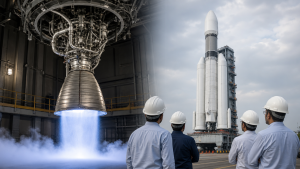
The Indian Space Research Organisation (ISRO) conducted a flight acceptance hot test of the CE20 cryogenic engine on 6 July 2026 at the ISRO Propulsion Complex in Mahendragiri, Tamil Nadu. The engine is meant for the upper stage of the LVM3 launch vehicle for its seventh operational mission, LVM3-M7.
CE20 Cryogenic Engine
The CE20 is a cryogenic upper-stage engine developed for the LVM3 launch vehicle. A cryogenic engine uses propellants stored at very low temperatures, and the CE20 is part of India’s heavy-lift launch system for orbital missions.
Hot Test and Nozzle Protection System
ISRO used a newly developed Nozzle Protection System for the first time in a flight acceptance test. The system supports testing under high-altitude conditions. During the test, the engine ran at 19.5 tonnes of thrust for 45 seconds and then at its maximum rated thrust of 22 tonnes for 25 seconds.
LVM3 and Mission Use
LVM3 is India’s heavy-lift launch vehicle used for major space missions. The CE20 engine has already flown successfully in eight consecutive LVM3 missions, including Chandrayaan-2, Chandrayaan-3, and three commercial launches. The tested engine will be integrated with the C32 cryogenic stage for LVM3-M7 after refurbishment.
Important Facts for Exams
- The CE20 is the cryogenic engine used in the upper stage of LVM3.
- Mahendragiri in Tamil Nadu houses the ISRO Propulsion Complex.
- The CE20 has met human-rating qualification requirements for Gaganyaan missions.
- LVM3 has carried Chandrayaan-2 and Chandrayaan-3 missions.
Gaganyaan Link
The CE20 engine has met human-rating qualification requirements for India’s Gaganyaan human spaceflight programme. Human-rating refers to technical qualification standards applied to systems intended for crewed missions.
| Related | |
|---|---|