International Space Station: Partners, Modules and Key Experiments
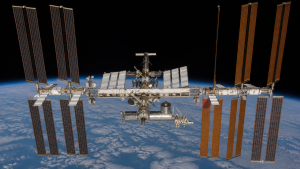
The International Space Station (ISS) is a modular laboratory in low Earth orbit and one of the largest international scientific collaborations in history. It supports continuous research in microgravity across physics, biology, human physiology, astronomy and Earth observation.
Built and operated by multiple space agencies, the ISS has served as a long-duration platform for experiments that cannot be carried out on Earth. Its modular design, robotic systems and crewed segments make it a unique orbital research outpost.
Partner Agencies and Operational Structure
- Five space agencies representing 15 countries jointly operate the station.
- NASA manages the overall US orbital segment, communications and core laboratory infrastructure.
- Roscosmos operates the Russian segment, including propulsion, orbit maintenance and crew transport systems.
- ESA represents 11 European member nations and contributes pressurised research modules and automated cargo capability.
- JAXA developed and operates the largest single science laboratory complex on the station.
- CSA supplied the main external robotic systems used for assembly, maintenance and vehicle capture.
- Governance rests on intergovernmental agreements and bilateral memoranda of understanding covering legal jurisdiction, management and resource allocation.
Station Design and Main Segments
- The ISS spans about 109 metres end to end and weighs roughly 430 metric tons.
- It is broadly divided into two functional parts: the Russian Orbital Segment (ROS) and the United States Orbital Segment (USOS).
- The station orbits at an altitude of about 400 kilometres, completes nearly 16 orbits every 24 hours and travels at around 28,000 km per hour.
- Its microgravity environment enables long-duration experiments in a stable orbital setting.
Russian Orbital Segment
- Zarya (Functional Cargo Block) was launched in November 1998 as the first ISS module, providing initial power, propulsion and storage.
- Zvezda (Service Module) joined in July 2000 and provides life-support systems, crew living quarters, main engine propulsion and flight control.
- Poisk and Rassvet are mini-research modules used for experiments, cargo storage and docking ports for Soyuz and Progress spacecraft.
- Nauka, docked in 2021, is Russia’s primary research module and expanded the station’s scientific space.
United States Orbital Segment
- Unity (Node 1) was launched in December 1998 and serves as the connecting node between the Russian and American segments.
- Destiny Laboratory was attached in February 2001 as the core US research facility for microgravity, materials, life sciences and physics experiments.
- Quest Joint Airlock supports spacewalks using both US EMU and Russian Orlan suits.
- Harmony (Node 2) and Tranquility (Node 3) function as utility hubs for power distribution, environmental control and crew exercise equipment.
- Columbus Laboratory was contributed by ESA in 2008 for fluid physics, biology and materials science research.
- Kibo, developed by JAXA, is the station’s largest module and includes a pressurised laboratory, exposed experiment platform and its own robotic arm.
- Cupola has seven windows and is used for Earth observation, astronomical photography and robotic operations.
- BEAM was attached in 2016 to test expandable habitat structures in low Earth orbit.
| Module / Component | Agency | Year | Primary Function |
| Zarya (FGB) | Roscosmos / NASA | 1998 | Initial propulsion, electrical power and cargo storage |
| Unity (Node 1) | NASA | 1998 | Connecting hub between Russian and US segments |
| Zvezda | Roscosmos | 2000 | Crew habitation, life support and orbital reboost engines |
| Destiny | NASA | 2001 | Primary US microgravity research laboratory |
| Canadarm2 | CSA | 2001 | Mobile robotic arm for assembly, repair and cargo capture |
| Harmony (Node 2) | NASA / ESA | 2007 | Connecting node for Columbus, Kibo and docking adapters |
| Columbus | ESA | 2008 | European microgravity research laboratory |
| Kibo (JEM) | JAXA | 2008 | Japanese science module with pressurised and exposed experiment platforms |
| Cupola | ESA / NASA | 2010 | Seven-window observatory dome for Earth viewing and robotics control |
| Nauka (MLM) | Roscosmos | 2021 | Russian science laboratory and attitude control systems |
Key Scientific Experiments and Technologies
- More than 3,000 scientific experiments from over 100 countries have been conducted aboard the station.
- Alpha Magnetic Spectrometer (AMS-02): A particle physics detector mounted externally to study cosmic rays and search for antimatter and dark matter.
- Cold Atom Lab (CAL): Produces Bose-Einstein condensates at temperatures close to absolute zero for observing quantum phenomena.
- Neutron Star Interior Composition Explorer (NICER): Measures X-ray emissions from pulsars to investigate dense matter states.
- Twin Study: Compared astronaut Scott Kelly’s year-long mission with his identical twin on Earth to study genetic, telomeric and physiological changes.
- Tissue Chips in Space: Uses human-cell microfluidic devices to model disease progression and support drug discovery.
- Veggie: Studies plant growth in microgravity to aid sustainable food production for future deep-space missions.
Deorbit Plan and Future Transition
- The station is planned to operate through 2030.
- Aging electronics, structure degradation and atmospheric drag make an orderly retirement necessary.
- NASA awarded SpaceX a contract to build a custom US Deorbit Vehicle (USDV).
- The vehicle is expected to dock with the ISS, perform retrograde thruster burns and guide the structure into a remote area of the South Pacific Ocean near Point Nemo.
- After retirement, human presence in low Earth orbit is expected to shift toward commercial space stations and China’s Tiangong.
Key Prelims Takeaways
- ISS status: A modular low-Earth-orbit research laboratory and major multinational space project.
- Altitude: About 400 km above Earth.
- Speed and orbit: Around 28,000 km per hour and nearly 16 orbits daily.
- Partners: NASA, Roscosmos, ESA, JAXA and CSA jointly operate the station.
- Main divisions: Russian Orbital Segment and United States Orbital Segment.
- Notable modules: Zarya, Zvezda, Unity, Destiny, Columbus, Kibo, Cupola and Nauka.
- Future plan: Deorbiting is planned through a dedicated US Deorbit Vehicle after 2030.
Current General Studies comprises current-affairs-based, General Studies-rich study material on policies, laws, institutions, economy, science, environment, governance, international relations, and other varied but important topics for UPSC and State PSC Prelims examinations.
Fortnightly PDF compilations: Available here
Originally written on
April 30, 2026
and last modified on
September 5, 2026.
| Related | |
|---|---|