India Targets 155 GW Wind Energy Capacity by 2035
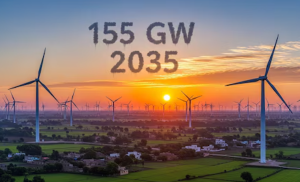
India has set a target of 155 GW installed wind energy capacity by 2035. India also has an interim target of 100 GW by 2030, and its installed wind capacity exceeded 56.1 GW as of 15 June 2026.
Wind Energy in India
Wind energy is a renewable energy source that uses wind turbines to convert kinetic energy into electricity. India is the world’s fourth-largest wind energy market by installed capacity. The country added 6.1 GW of new wind capacity in fiscal year 2025-26, which was a 46% year-on-year increase.
WT-MARUT Portal
WT-MARUT stands for Wind Turbine Materials and Resources Utility Tracker. It was launched on 15 June 2026 as India’s first dedicated digital platform for managing the wind energy supply chain. The portal is designed for supplier discovery, domestic manufacturing support, and supply-chain transparency.
Policy and Supply Chain Features
The wind energy plan gives priority to local sourcing over imports for wind turbine components. Wind turbine components include blades, towers, nacelles, gearboxes, generators, and control systems. Domestic manufacturing of these components is linked with industrial capacity in the renewable energy sector.
Important Facts for Exams
- India’s installed wind energy capacity exceeded 56.1 GW on 15 June 2026.
- The Global Wind Day Conference was held in Goa on 15 June 2026.
- Pralhad Joshi is the Union Minister for New and Renewable Energy.
- Wind energy is classified as a renewable source of electricity.
Project Execution Issues
Project deployment in wind energy often involves land acquisition, grid connectivity, and transmission infrastructure. These factors are part of the planning framework for large-scale wind power expansion in India.
| Related | |
|---|---|