India Launches First Barrier-Free Toll Plaza on NH-48
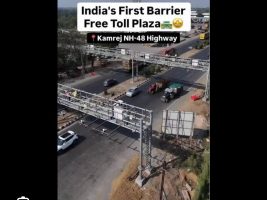
India has taken a major step towards modernising its highway infrastructure with the launch of its first barrier-free tolling system on the Delhi–Mumbai National Highway (NH-48). The system has been introduced at the Chorayasi Toll Plaza on the Surat–Bharuch stretch in Gujarat, marking a shift towards seamless and technology-driven toll collection.
What is the MLFF Tolling System?
The newly launched Multi-Lane Free Flow (MLFF) system allows vehicles to pass through toll plazas without stopping. It uses advanced technologies such as Automatic Number Plate Recognition (ANPR) and FASTag to automatically identify vehicles and deduct toll charges. This eliminates the need for physical barriers and manual toll booths, ensuring uninterrupted traffic flow.
Key Benefits of Barrier-Free Tolling
The MLFF system is expected to significantly reduce travel time by eliminating queues at toll plazas. It will also help lower fuel consumption and vehicular emissions, as vehicles no longer need to idle or slow down. Additionally, reduced human intervention enhances efficiency and minimises operational delays, improving overall highway experience for commuters and logistics operators.
Enforcement and Payment Mechanism
Under the new system, toll payments are automatically processed through FASTag accounts or linked vehicle details. In cases of violations, such as non-payment or absence of FASTag, authorities will issue electronic notices (e-notices). Continued non-compliance may result in penalties, including suspension of FASTag services and restrictions on vehicle-related services like fitness certificates or ownership transfers.
Important Facts for Exams
- MLFF stands for Multi-Lane Free Flow tolling system with no physical barriers.
- ANPR technology captures vehicle number plates for automated toll deduction.
- FASTag is an RFID-based electronic toll collection system in India.
- Barrier-less tolling is planned for all four-lane highways by 2029.
Future Roadmap and Policy Shift
The Ministry of Road Transport and Highways aims to expand barrier-less tolling across all major highways by 2029. This system replaces earlier plans for satellite-based tolling, which raised privacy and security concerns. The move aligns with broader goals of digital governance, improved logistics efficiency, and enhanced ease of living and doing business in India.
| Related | |
|---|---|