IMF Projects 6.5% Growth for India in 2026
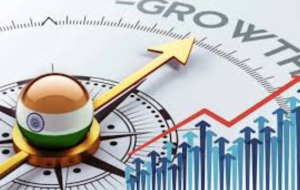
India is set to remain the world’s fastest-growing major economy in 2026, with the International Monetary Fund projecting a steady GDP growth rate of 6.5 per cent. This outlook comes despite global uncertainties, including geopolitical tensions and inflationary pressures. The resilience of the Indian economy is largely attributed to strong domestic demand and a relatively stable macroeconomic environment.
Global outlook and India’s relative position
The IMF estimates global economic growth at 3.1 per cent in 2026 and 3.2 per cent in 2027, significantly lower than India’s projected expansion. China’s economy is expected to grow at around 4.9 per cent in 2026, while the United States is projected to record a modest growth of 2.3 per cent. Emerging markets and developing economies are likely to face slower growth along with rising inflation, highlighting India’s comparatively strong performance.
Carryover momentum from previous growth cycle
One of the key drivers behind India’s sustained growth is the strong economic performance recorded in 2025, when growth was revised upward to 7.6 per cent. This has created a “carryover effect,” ensuring continued momentum into 2026. Additionally, easing trade tensions, particularly reduced tariff uncertainties in global markets, have contributed to a more favourable economic outlook.
Domestic demand as the primary growth engine
India’s growth remains largely driven by domestic consumption and investment, which has helped shield the economy from external shocks. Unlike several Asian economies that depend heavily on exports, tourism, or remittances, India’s internal demand base provides stability. However, rising oil prices due to geopolitical tensions, especially in West Asia, continue to pose risks for the import-dependent economy.
Important Facts for Exams
- IMF projects India’s GDP growth at 6.5% for 2026 and 2027.
- Global growth is estimated at 3.1% in 2026.
- India’s growth is primarily driven by domestic demand.
- High oil prices remain a key external risk for India.
Key risks and policy implications
Despite strong fundamentals, risks remain from global inflation, geopolitical conflicts, and energy price volatility. Policymakers will need to maintain fiscal discipline, manage inflation, and sustain investment momentum. Continued reforms and stable domestic demand will be crucial in ensuring that India maintains its growth leadership amid uncertain global conditions.
| Related | |
|---|---|