Human–Wildlife Conflict: Causes, Mitigation Measures and Compensation Policies
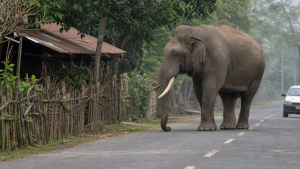
Human-wildlife conflict occurs when wild animals and people come into negative contact, leading to loss of life, crop damage, livestock predation and, in some cases, retaliatory killing of wildlife. It usually intensifies where expanding human activity overlaps with forest habitats and wildlife movement routes.
Causes of Human-Wildlife Conflict
The conflict largely arises from shrinking habitats, changing land use and the movement needs of animals. As forests are fragmented and wildlife corridors are blocked, animals are pushed closer to farms and settlements in search of food, water and space.
- Habitat loss and fragmentation: Deforestation, agricultural expansion and infrastructure projects reduce forest cover and break continuous habitats into isolated patches.
- Encroachment into eco-sensitive zones: Human settlement near protected areas forces animals to enter villages and farmlands.
- Linear infrastructure: Railways, highways and power transmission lines cut across migration routes, especially for elephants and large carnivores.
- Depletion of prey base: In protected forests, reduced natural prey can push carnivores such as leopards and tigers towards domestic livestock.
- Adaptive species near farms: Wild boars, nilgai and rhesus macaques often thrive around agricultural fields and cause repeated crop raids.
- Climate stress: Changing water availability and dry-season stress can move herbivores and carnivores nearer to human habitations.
Major Forms of Conflict
Human-wildlife conflict is not limited to crop loss. It can also involve injury, death, property damage and repeated disruption of rural livelihoods. The nature of damage often depends on the species involved and the location of the conflict.
- Crop raiding: Common in areas near forest edges and corridors.
- Livestock predation: Frequently reported where carnivores lose access to wild prey.
- Human injury or death: Often linked with surprise encounters, retaliatory chases or animal movement through settlements.
- Property damage: Includes damage to houses, fences, grain stores and farm structures.
- Retaliatory killing: Occurs when communities respond to repeated losses by harming wildlife.
Mitigation Measures and Prevention Strategies
Governments and conservation agencies use physical barriers, technology and local participation to reduce conflict. The aim is to protect both livelihoods and wildlife without relying on lethal control.
- Solar-powered electric fences: Used around agricultural fields to keep out wild herbivores with non-fatal deterrence.
- Deep trenches and stone boundary walls: Help protect vulnerable settlements from elephant incursions.
- Hanging fences: Useful in selected locations to discourage entry by large animals.
- Canopy bridges and underpass tunnels: Provide safe crossing points for wildlife along fragmented highways.
- Community response teams: Local groups using flashlights, drums and tracking tools can help drive away stray wildlife safely.
- Radio-collaring and warning systems: Movement tracking and sensor-based alerts help identify the presence of large carnivores near settlements.
- Buffer crops and alternate livelihoods: Cultivating unpalatable crops and reducing dependence on forest resources can lower repeated conflict.
Compensation Policies and Legal Framework
Compensation is a key policy tool to reduce anger among affected communities and discourage retaliatory killing of wildlife. Relief is usually provided after verification of damage by forest authorities and linked to official tariff schedules or government norms.
- Ex-gratia relief for human loss: State forest departments provide monetary compensation for death, permanent disability and severe injury caused by wild animal attacks.
- Livestock compensation: Payments are given for verified livestock predation losses, with tariff schedules for animals such as cattle, sheep, goats and camels.
- Crop damage compensation: Relief is paid for verified agricultural loss based on acreage affected and prevailing market rates.
- Wild Life Protection Act, 1972: Provides the legal foundation for wildlife management and empowers state Chief Wildlife Wardens to deal with nuisance animals.
- Standing committees: State-level committees review compensation claims and sanction emergency relief funds for affected villagers.
- Central assistance: Funds support rapid response units and anti-depredation equipment for forest divisions.
| Mitigation Approach | Primary Mechanism | Target Species | Operational Advantage |
| Solar electric fencing | Mild electrical pulse barrier | Elephants, wild boars, nilgai | Non-lethal crop protection |
| Underpasses and overpasses | Grade-separated wildlife corridors | Leopards, tigers, ungulates | Reduces road-kill incidents |
| Community response teams | Local patrolling and alarm raising | Elephants, leopards | Rapid local intervention |
| Ex-gratia relief schemes | Direct compensation for losses | Affected farmers and pastoralists | Discourages retaliatory killing |
Institutional and Conservation Measures
Conflict mitigation is also built into broader wildlife conservation programmes. These measures combine habitat protection with local participation and improved monitoring in conflict-prone zones.
- Chief Wildlife Wardens: Empowered by the Ministry of Environment, Forest and Climate Change to declare specific wild animals as vermin under local conditions when they threaten human life or property.
- Project Elephant: Includes habitat restoration and conflict mitigation within its conservation framework.
- Project Tiger: Integrates habitat management with conflict reduction measures in tiger landscapes.
- National Wildlife Action Plan: Emphasizes participatory management through local village committees.
- Early warning systems: Acoustic sensors and thermal cameras are used in high-density elephant corridors in southern and eastern states.
Key Prelims Takeaways
- Core meaning: Human-wildlife conflict refers to harmful interactions between wild animals and human populations.
- Main causes: Habitat loss, fragmentation, encroachment and linear infrastructure are key drivers.
- Common conflict species: Elephants, wild boars, nilgai, rhesus macaques, leopards and tigers are frequently mentioned.
- Non-lethal mitigation: Solar fencing, trenches, underpasses and overpasses are important preventive tools.
- Community role: Local response teams and participatory management are central to conflict reduction.
- Compensation: Ex-gratia relief is used for human injury or death, livestock loss and crop damage.
- Legal basis: The Wild Life Protection Act, 1972 and the role of Chief Wildlife Wardens are important for prelims.
| Related | |
|---|---|