Genetic Diversity and Population Management in Wildlife Conservation
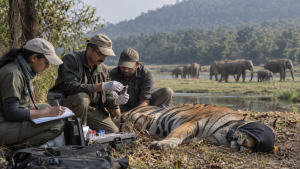
Genetic diversity provides the variation that wildlife populations need to adapt to environmental change, disease and other pressures. Conservation therefore combines habitat protection with genetic monitoring and population management to sustain viable populations in the wild and, where necessary, in captivity.
Understanding Genetic Diversity
Genetic diversity is variation in genes within a species or population. It is the raw material for adaptation and evolution: populations with greater variation are generally better placed to respond to changing conditions and disease. Conserving this variation is an important part of conserving genetic resources, rather than simply maintaining a headcount of animals.
- Allelic diversity: The variety of alleles, or forms of a gene, present in a population.
- Heterozygosity: The proportion of individuals carrying two different alleles at a given gene. It is one measure used to assess genetic variation.
- Conservation value: Genetic diversity can support reproductive fitness, resilience to disease and adaptation to pressures such as climate change or habitat alteration. It also informs decisions about breeding, translocation and population recovery.
Threats to Genetic Diversity
Human pressures and small population size can reduce genetic variation, increasing the risk that populations will be less resilient or less viable over time.
- Habitat fragmentation: Breaks continuous habitat into isolated patches, restricting movement and gene flow between populations.
- Population bottlenecks: A sharp decline in population size can remove genetic variation, including alleles that may not be represented in the surviving animals.
- Genetic drift: Random changes in allele frequencies have stronger effects in small populations and can cause rare alleles to disappear.
- Inbreeding depression: Mating between related individuals can increase homozygosity for harmful recessive alleles and reduce biological fitness.
- Outbreeding depression: Interbreeding between genetically distinct populations may reduce offspring fitness where incompatible gene complexes are involved.
- Selective pressure: Unnatural pressures, including intense hunting, can favour particular traits and reduce variation within a population.
Principles of Population Management
Population management seeks to maintain populations that are demographically and genetically healthy. It must account for population size, reproduction, survival, movement between habitats and the genetic relationships among individuals. These considerations are relevant both to populations in the wild and to carefully managed captive programmes.
- Population Viability Analysis (PVA): A modelling tool that estimates the probability of extinction over a specified period and allows managers to assess the possible effects of different management strategies.
- Minimum Viable Population (MVP): The smallest isolated population size considered necessary to have a very high chance of survival for a specified period. Illustrative benchmarks may be a 90–95% probability of persistence over 100–1,000 years; the appropriate estimate depends on the population and its circumstances.
- Genetic monitoring: Regular assessment, including through DNA sequencing, can track genetic diversity, relatedness and gene flow and help inform breeding or translocation decisions.
- Metapopulation management: A metapopulation comprises spatially separated populations of the same species that interact through dispersal. Maintaining connectivity between habitat patches can support these exchanges.
- Demographic management: Monitoring births, deaths, immigration and emigration helps assess whether a population is growing, declining or stable.
Population viability is not determined by numbers alone: a population may require both adequate size and sufficient genetic variation. PVA, demographic information and genetic monitoring can therefore complement one another. Building scientific capacity to collect and interpret these data supports evidence-based recovery planning and the assessment of interventions.
Conservation Approaches
In-situ and ex-situ conservation are distinct approaches that can be used together. The choice depends on the species, the condition of its habitat and the recovery objective.
- In-situ conservation: Protects species in their natural habitats. National Parks, Wildlife Sanctuaries and Biosphere Reserves can provide protected areas; habitat restoration and corridors can address fragmentation and facilitate gene flow. Control of invasive species and mitigation of pollution can also support habitat quality.
- Captive breeding: Rears animals in controlled settings, including zoos, to maintain populations and help prevent extinction. Careful pairing and breeding, often guided by studbooks, can help retain genetic diversity. Captive-bred individuals may augment wild populations or be reintroduced where a species has been extirpated.
- Gene and seed banks: Store genetic material such as sperm, eggs, seeds or tissue for possible future use in research or species recovery.
- Head-starting: Raises young animals in captivity through a vulnerable early stage before release, with the aim of improving their chances of survival after release.
- Translocation and reintroduction: Move individuals to establish populations or bolster existing ones. Genetic assessment can help evaluate compatibility and support diversity in recipient populations.
Legal and Institutional Frameworks
- Wildlife Protection Act, 1972 (India): Provides for the protection of wild animals, birds and plants, and for related matters. It provides for protected areas and regulates hunting and trade.
- CITES: The Convention on International Trade in Endangered Species of Wild Fauna and Flora aims to ensure that international trade in specimens of wild animals and plants does not threaten their survival.
- IUCN: The International Union for Conservation of Nature maintains the IUCN Red List of Threatened Species, which categorises species by extinction risk and informs conservation efforts.
Key Prelims Takeaways
- Genetic diversity is variation within species or populations and supports adaptation and resilience.
- Fragmentation, bottlenecks and genetic drift can reduce variation, especially in small or isolated populations.
- Inbreeding depression is associated with mating among relatives; outbreeding depression may arise between genetically distinct populations.
- PVA and MVP are tools and concepts used to assess extinction risk and population requirements.
- In-situ conservation protects species in natural habitats; ex-situ conservation includes captive breeding and gene banks.
- Head-starting raises young animals through a vulnerable early stage before release into the wild.
Recent Context
On November 10, 2026, the San Francisco Zoo & Gardens announced the release of 62 genetically tested, captive-bred San Francisco garter snakes, the first successful head-starting programme for the endangered subspecies. The project began in spring 2025; another release is planned for 2027.
| Related | |
|---|---|