Page-5 of General Science – Physics

Antiparticle
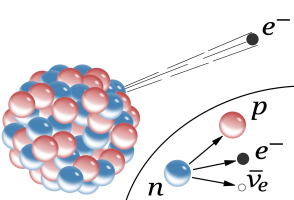
In particle physics, every fundamental particle of ordinary matter is associated with an antiparticle that has the same mass but opposite charge and quantum numbers. This concept arises...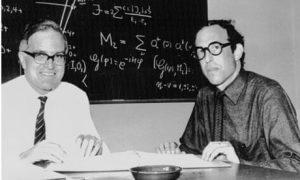
Aage Bohr
Aage Niels Bohr (19 June 1922 – 8 September 2009) was a Danish nuclear physicist whose pioneering work on the structure and behaviour of atomic nuclei earned him...
Albert Einstein
Albert Einstein (14 March 1879 – 18 April 1955) was a German-born theoretical physicist whose work transformed modern science. Best known for developing the theory of relativity, he...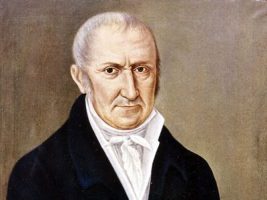
Alessandro Volta
Alessandro Giuseppe Antonio Anastasio Volta (18 February 1745 – 5 March 1827) was an Italian chemist and physicist celebrated as one of the principal founders of the science...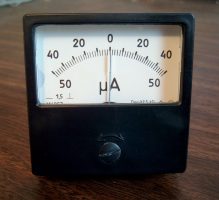
Ammeter
An ammeter is an electrical measuring instrument used to determine the current flowing through a circuit. Current is measured in amperes (A), from which the instrument derives its...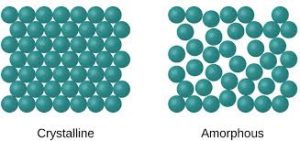
Amorphous solid
Amorphous solids, also known as non-crystalline solids, are materials that lack the long-range periodic atomic arrangement characteristic of crystalline structures. They are widespread in nature and technology, appearing...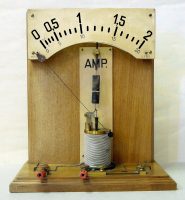
Ampere
The ampere is the fundamental SI base unit used to quantify electric current, forming a cornerstone of modern electrical science and engineering. It expresses the rate at which...
Anders Celsius
Anders Celsius was a Swedish astronomer, physicist, and mathematician whose work in observational astronomy and scientific instrumentation left a lasting legacy in the physical sciences. Born on 27...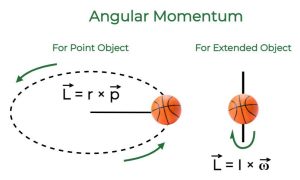
Angular momentum
Angular momentum is a fundamental quantity in classical mechanics describing the rotational analogue of linear momentum. It plays a central role in the dynamics of rotating objects and...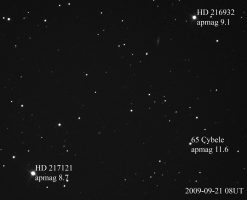
Apparent magnitude
Apparent magnitude is a fundamental measure in astronomy used to describe how bright a celestial object appears from Earth. It applies not only to stars but also to...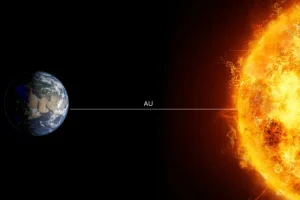
Astronomical unit
The astronomical unit, symbol au, is a fundamental unit of length used in astronomy to describe distances within the Solar System and around other stars. It is defined...