Page-6 of General Science – Physics

Big Bang
The Big Bang Theory is the prevailing scientific model describing the origin, evolution, and large-scale structure of the universe. It outlines a transition from an extremely hot, dense,...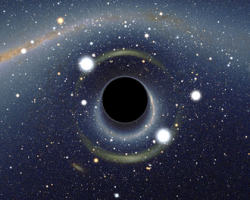
Black hole
A black hole is an exceptionally compact astronomical object whose gravitational field is so intense that nothing—not even light—can escape from within its boundary. This boundary, known as...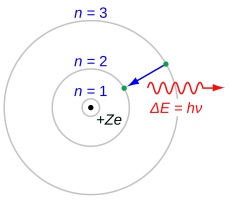
Bohr model
The Bohr model, also known as the Rutherford–Bohr model, represents one of the most significant developments in early atomic theory. Formulated between 1911 and 1918 by Niels Bohr,...
Chandrasekhar limit
The Chandrasekhar limit represents the maximum mass at which a white dwarf star can remain in hydrostatic equilibrium. It marks the threshold beyond which the inward pull of...
Color temperature
Colour temperature is a parameter used to describe the perceived colour of a visible light source by comparing its hue to that of an ideal blackbody radiator. The...
Conversion of units
The conversion of units refers to the process of expressing a measured quantity in a different unit of measurement without altering the underlying physical amount. This is commonly...
Copernican principle
In physical cosmology, the Copernican principle asserts that human beings do not occupy a privileged or central position in the universe and that observations made from Earth are...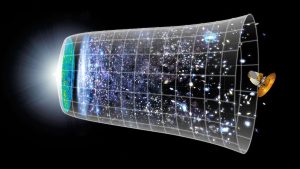
Cosmic inflation
Cosmic inflation refers to a theoretical phase of extremely rapid, exponential expansion that occurred in the earliest instants of the Universe. Proposed to resolve several inconsistencies in the...
Cryogenics
Cryogenics is the branch of physics and engineering concerned with the production, study, and practical use of materials at extremely low temperatures. The field encompasses scientific, industrial, and...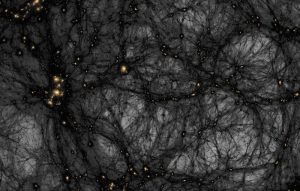
Dark matter
Dark matter is a hypothetical and invisible form of matter that does not interact with electromagnetic radiation and therefore cannot be observed directly through light. Its presence is...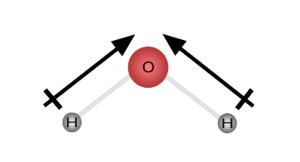
Dipole
A dipole is a fundamental concept in electromagnetism and molecular physics that refers to a system consisting of two equal and opposite poles or charges separated by a...