Page-7 of General Science – Physics
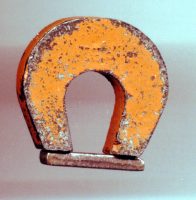
Ferromagnetism
Ferromagnetism is a form of magnetism exhibited by a relatively small group of materials in which the atomic magnetic moments align spontaneously, giving rise to strong magnetization even...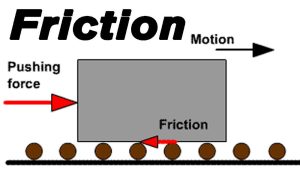
Friction
Friction is a fundamental mechanical force that opposes the relative motion of solid surfaces, fluid layers or deforming material elements. Present in everyday phenomena and critical to engineering...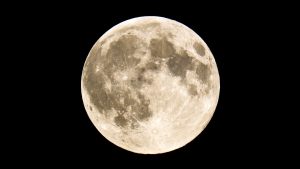
Full moon
The full moon is the lunar phase in which the entire hemisphere of the Moon visible from Earth is illuminated by the Sun, producing a bright, circular disc...
Inertia
Inertia is a foundational concept in classical physics, describing the natural tendency of an object to remain at rest or continue in uniform motion unless acted upon by...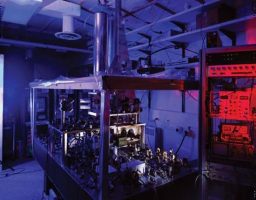
International Atomic Time
International Atomic Time (TAI), derived from the French Temps atomique international, is a high-precision atomic time standard based on the ideal flow of proper time on the Earth’s...
Ionosphere
The ionosphere is the ionised region of the Earth’s upper atmosphere, extending from roughly 60 kilometres to more than 1,000 kilometres above sea level. It spans parts of...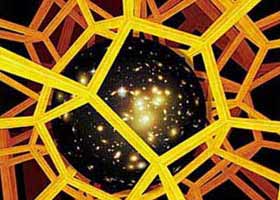
Isotropy
Isotropy, from terms meaning “equal in all directions”, describes the property of exhibiting uniformity regardless of orientation. In physics, geometry, and other scientific fields, it denotes systems whose...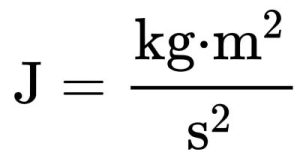
Joule
The joule, symbol J, is the standard unit of energy in the International System of Units (SI). Defined formally as the work done when a force of one...
Kilogram
The kilogram is the base unit of mass in the International System of Units (SI) and is defined as exactly one thousand grams. Represented by the symbol kg,...
Kinetic energy
Kinetic energy is a fundamental concept in physics describing the energy an object possesses by virtue of its motion. Every moving body, whether a particle, a vehicle, or...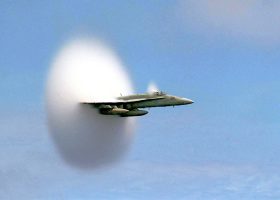
Mach number
The Mach number is a dimensionless quantity used in fluid dynamics to express the ratio between the velocity of a flow and the local speed of sound. Named...