Page-10 of General Science – Physics
Adiabatic Process
In thermodynamics, an adiabatic process refers to a type of thermodynamic transformation in a system where there is no exchange of heat with the surroundings. During an adiabatic...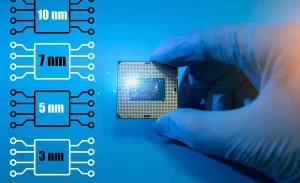
Nanometre
The nanometre is a standard unit of length in the International System of Units (SI), defined as one billionth of a metre. It is widely used in the...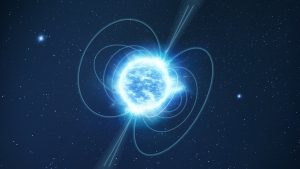
Neutron
The neutron is a subatomic particle with no electric charge and a mass slightly greater than that of the proton. Together with protons, neutrons form the nuclei of...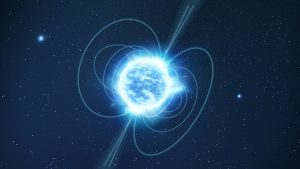
Neutron star
Neutron stars are the compact stellar remnants produced when the core of a massive star collapses under gravity following a supernova explosion. They represent one of the densest...
Niels Bohr
Niels Henrik David Bohr was a Danish theoretical physicist whose work fundamentally shaped modern atomic physics and the early development of quantum theory. Born on 7 October 1885...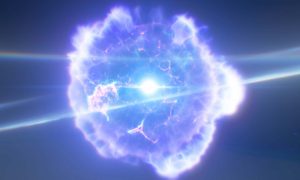
Nuclear fusion
Nuclear fusion is a fundamental process in nuclear physics and astrophysics in which light atomic nuclei combine to form heavier nuclei, releasing energy in the process. It underpins...
Physical cosmology
Physical cosmology is the scientific study of the universe as a whole, examining its large-scale structure, origin, evolution, and ultimate fate. It relies on cosmological models—mathematical descriptions that...
Plum pudding model
The plum pudding model was an early and ultimately superseded attempt to describe the internal structure of the atom. Proposed in 1904 by the British physicist J. J....
Pressure measurement
Pressure measurement is the process of determining the force exerted by a fluid—liquid or gas—per unit area on a surface. Because pressure plays a central role in science,...
Beta particle
Beta radiation refers to a form of ionising radiation consisting of high-energy, high-speed electrons or positrons emitted during the radioactive decay of unstable atomic nuclei. It occupies an...
CERN
The European Organization for Nuclear Research, widely known by its historical acronym CERN, is an intergovernmental scientific institution that operates the world’s largest and most advanced particle physics...