Page-9 of General Science – Physics
Graphene
Graphene is one of the thinnest, strongest two dimensional materials. Graphene is a two dimensional material consisting of a single layer of carbon atoms arranged in a honeycomb...Gravitational Waves
Gravitational Waves were for the first time discovered in February, 2016, 100 years after they were hypothesized by Albert Einstein in 1916. These waves were detected by the...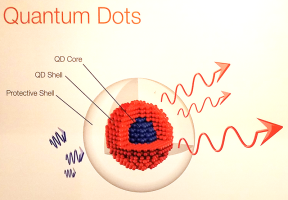
Quantum Dots
Quantum dots are nanoscale semiconductor particles whose electronic, optical, and structural properties are governed by quantum mechanical principles. Owing to their extremely small dimensions—typically ranging from 2 to...Chromosphere
The chromosphere is a distinct layer of the Sun’s atmosphere located above the photosphere and beneath the corona. It derives its name from the Greek words chroma meaning...
Alpha Centauri
Alpha Centauri is the closest stellar system to the Solar System and one of the most studied objects in modern astronomy. Located approximately 4.37 light-years away from Earth...
Aurora
An aurora is a spectacular natural light display that occurs in the upper atmosphere (the thermosphere and lower exosphere), typically near the polar regions of the Earth. It...
Achromatic Lens
An achromatic lens is a type of optical lens designed to minimise chromatic aberration, a common distortion that occurs when different wavelengths of light are refracted at slightly...
Condensation
Condensation is the physical process by which a gas or vapour changes into a liquid when cooled or when it comes into contact with a surface at a...
Cold wall
A cold wall is a term used in physical geography and oceanography to describe a zone of sharp temperature contrast that develops along certain coastal regions, where cold...Antipleion
An antipleion, more commonly known as an antipode, refers to the point on the Earth’s surface that lies diametrically opposite to another point. If a straight line were...
Issues Around India-based Neutrino Observatory (INO)
Neutrinos are fundamental particles which make up the universe. They are abundant, feeble mass, travel through planets, stars, rock and human body without any interaction. Neutrinos do not...