Digital Payment Instruments in India
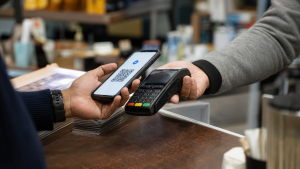
India’s digital payment ecosystem is built on interoperable rails, authentication rules, and settlement systems regulated mainly by the Reserve Bank of India (RBI) and operated in key parts by the National Payments Corporation of India (NPCI). It supports retail, wholesale, domestic, and cross-border transactions through a mix of real-time, batch, and wallet-based instruments.
Unified Payments Interface (UPI)
- What it is: UPI is an instant real-time payment system developed by NPCI for inter-bank mobile transactions.
- Standard limit: The usual daily transaction limit is ₹1 lakh.
- Higher-limit categories: Select use cases such as taxes, education, and capital markets allow up to ₹5 lakh per transaction and a ₹10 lakh daily cumulative limit.
- New user safeguard: New UPI registrations or app installations are capped at ₹5,000 for the first 24 hours to reduce fraud risk.
- System controls: NPCI guidelines restrict balance checks to 50 per app per day and limit account-list calls to avoid service disruptions.
- International reach: UPI’s global network covers 11 countries, including Singapore, France, Sri Lanka, Mauritius, the UAE and Uzbekistan.
UPI Lite, UPI Lite X and UPI 123Pay
- UPI Lite: This is an on-device wallet for PIN-less low-value transactions.
- UPI Lite limits: It has a ₹1,000 transaction limit, a ₹5,000 wallet limit, and a ₹10,000 daily cumulative cap.
- UPI Lite X: It enables offline contactless payments through NFC.
- UPI Lite X limits: It caps transactions at ₹500, with a ₹2,000 wallet limit and ₹4,000 daily spending cap.
- UPI 123Pay: It is meant for feature-phone users and supports offline transactions through IVR, missed calls, and proximity sound technology.
Payment Clearing and Settlement Systems
| System | Operating Agency | Settlement Basis | Timings |
| RTGS | Reserve Bank of India | Real-time Gross | 24x7x365 |
| NEFT | Reserve Bank of India | Half-hourly batches | 24x7x365 |
| IMPS | National Payments Corporation of India | Immediate real-time | 24x7x365 |
| UPI | National Payments Corporation of India | Immediate real-time | 24x7x365 |
- RTGS: It is used for high-value inter-bank transfers settled individually and continuously; the minimum amount is ₹2 lakh and there is no maximum limit.
- NEFT: It works on a Deferred Net Settlement basis in half-hourly batches, with no minimum or maximum transaction limit.
- IMPS: It provides instant electronic fund transfers and allows up to ₹5 lakh per day.
Regulatory Framework and Authentication Rules
- Regulator: The RBI oversees the payment ecosystem under the Payment and Settlement Systems Act, 2007, while NPCI runs major retail payment rails such as UPI and IMPS.
- Two-Factor Authentication: From April 1, 2026, domestic digital payment transactions require Two-Factor Authentication with at least one dynamic factor, so SMS OTP alone is not sufficient.
- Recurring payments: The RBI’s E-mandate framework consolidated earlier circulars on recurring payments for domestic and cross-border transactions.
- AFA exemption: Additional Factor of Authentication is bypassed up to ₹15,000, and up to ₹1 lakh for select categories such as mutual funds and insurance after initial registration with AFA.
- Payments bank controls: RBI security directions were issued for payments banks to strengthen digital payment security.
Digital Rupee (CBDC)
- What it is: The Digital Rupee (e₹) is India’s Central Bank Digital Currency, a digital token representing sovereign legal tender issued by the RBI.
- Two variants: CBDC-Wholesale (e₹-W) is meant for interbank settlements, while CBDC-Retail (e₹-R) is for use by the public and merchants.
- Pilot structure: The e₹ pilot includes 19 banks and two non-banks, CRED and MobiKwik.
- Growth: Circulation increased from ₹16.39 crore in FY2022-23 to ₹1,016.50 crore in FY2024-25.
Key Prelims Takeaways
- RBI and NPCI roles: RBI regulates the payment ecosystem; NPCI operates major retail systems such as UPI and IMPS.
- UPI basic limit: The standard UPI limit is ₹1 lakh, with higher limits for specified categories like taxes, education and capital markets.
- New-user restriction: Fresh UPI users face a ₹5,000 cap for the first 24 hours.
- Offline options: UPI Lite is PIN-less; UPI Lite X works through NFC; UPI 123Pay is designed for feature-phone users.
- RTGS and NEFT: RTGS is for high-value real-time transfers, while NEFT uses half-hourly batch settlement.
- Authentication rule: SMS OTP alone is not enough under the new Two-Factor Authentication framework from April 1, 2026.
- CBDC structure: The Digital Rupee has wholesale and retail variants issued by the RBI.
Current General Studies comprises current-affairs-based, General Studies-rich study material on policies, laws, institutions, economy, science, environment, governance, international relations, and other varied but important topics for UPSC and State PSC Prelims examinations.
Fortnightly PDF compilations: Available here
Originally written on
April 13, 2026
and last modified on
September 5, 2026.
| Related | |
|---|---|