Major Milk and Nutrition Programmes in India
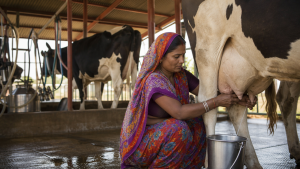
India’s major milk and nutrition programmes combine dairy infrastructure, bovine productivity, maternal care, and school feeding to support both rural livelihoods and nutritional security. For Prelims, the key points are the implementing ministry, budget outlay, beneficiary group, and special incentives or extensions attached to each scheme.
National Programme for Dairy Development (NPDD)
The NPDD aims to strengthen the milk value chain by improving infrastructure for quality milk testing, procurement, processing, and marketing. It is one of the central schemes for expanding cooperative dairy networks and improving milk quality standards.
- Implementing authority: Department of Animal Husbandry & Dairying.
- Restructuring: Re-structured in July 2021.
- Outlay: ₹2,790 crore for the 15th Finance Commission cycle (2021–22 to 2025–26).
- Extension: Component A has been extended up to 2027–28.
- Coverage: The scheme focuses on dairy cooperatives and milk quality improvement.
- Grassroots expansion: It has supported the organisation of new Dairy Cooperative Societies and strengthening of village-level societies.
Animal Husbandry Infrastructure Development Fund (AHIDF)
The dairy processing support ecosystem now operates through the AHIDF framework. It provides institutional support for modernising milk processing and value addition, with interest support for eligible projects.
- DIDF merger: The Dairy Processing Infrastructure Development Fund (DIDF) was subsumed into AHIDF on 1 February 2024.
- Purpose: To promote dairy processing, value addition, and allied infrastructure.
- Project capacity approved: Projects with a combined processing and value-addition capacity of 418 lakh litres per day (LLPD) have been approved as of June 2026.
- Interest benefit: Eligible entities receive 3% interest subvention.
Rashtriya Gokul Mission (RGM)
The Rashtriya Gokul Mission supports indigenous bovine development, better breeding practices, and conservation of native cattle and buffalo breeds. It is a core programme under the animal husbandry development framework.
- Administrative placement: It is administered under the Rashtriya Pashudhan Vikas Yojana.
- Outlay: ₹3,400 crore for 2021–22 to 2025–26.
- Objective: Bovine conservation, genetic improvement, and productivity enhancement.
- Heifer Rearing Centres: The mission provides 35% capital cost assistance for setting up Heifer Rearing Centres.
- IVF heifers: It also offers 3% interest subvention for purchasing IVF heifers.
- NAIP coverage: The Nationwide Artificial Insemination Programme (NAIP) has covered 8.39 crore animals across 605 districts.
Saksham Anganwadi and Poshan 2.0
Poshan 2.0 is the country’s major integrated nutrition support programme for vulnerable groups. It strengthens supplementary nutrition delivery and monitors nutrition outcomes through digital tools and Anganwadi networks.
- Implementing ministry: Ministry of Women & Child Development.
- Period: 2021–22 to 2025–26.
- Target groups: Children up to 6 years, pregnant women, lactating women, and adolescent girls.
- Budget: ₹21,960 crore in the Union Budget 2025–26.
- Coverage: More than 9.14 crore registered beneficiaries.
- Monitoring: Real-time tracking through the Poshan Tracker app across 14 lakh active Anganwadi Centres.
- Core aim: Upgradation of Anganwadi infrastructure and continuation of supplementary nutrition.
PM POSHAN and Pradhan Mantri Matru Vandana Yojana
School feeding and maternal benefit schemes are an important part of India’s nutrition support architecture. They address both child nutrition and maternal health through direct service delivery and cash transfer.
- PM POSHAN: Formerly the Mid-Day Meal Scheme, it provides hot cooked meals to school children.
- Objective of PM POSHAN: To improve nutrition, school participation, and retention.
- PMMVY: Under Mission Shakti guidelines, PMMVY 2.0 came into force on 1 April 2022.
- Benefit mode: Eligible pregnant and lactating women receive direct benefit transfers (DBT).
- First child benefit: ₹5,000 in two installments.
- Second child benefit: ₹6,000 in a single installment, if the second child is a girl.
- Coverage: Over 5.19 crore beneficiaries enrolled and more than ₹20,677 crore disbursed to 4.39 crore paid beneficiaries since inception.
| Scheme / Programme | Ministry / Department | Outlay / Period | Objective / Target Group |
| NPDD | Department of Animal Husbandry & Dairying | ₹2,790 crore; 2021–22 to 2025–26; Component A till 2027–28 | Dairy cooperatives, milk quality, procurement, processing |
| RGM | Department of Animal Husbandry & Dairying | ₹3,400 crore; 2021–22 to 2025–26 | Bovine conservation, genetics, indigenous breeds |
| Poshan 2.0 | Ministry of Women & Child Development | ₹21,960 crore in FY 2025–26 | Children under 6, pregnant/lactating women, adolescent girls |
| PMMVY | Ministry of Women & Child Development | Mission Shakti guidelines; PMMVY 2.0 | DBT support for pregnant and lactating mothers |
Key Prelims Takeaways
- NPDD: Restructured in July 2021; outlay is ₹2,790 crore for 2021–22 to 2025–26.
- Extension point: Component A of NPDD continues up to 2027–28.
- AHIDF: DIDF was merged into AHIDF on 1 February 2024.
- AHIDF support: Approved projects have a combined capacity of 418 lakh litres per day and receive 3% interest subvention.
- RGM: Outlay is ₹3,400 crore; it supports indigenous bovine breeding and productivity.
- RGM incentives: 35% capital cost assistance for Heifer Rearing Centres and 3% interest subvention for IVF heifers.
- Poshan 2.0: Budget allocation for 2025–26 is ₹21,960 crore, with over 9.14 crore registered beneficiaries.
| Related | |
|---|---|