Chola-Era Nataraja and Sivakami Bronze Idols Found in Nagapattinam
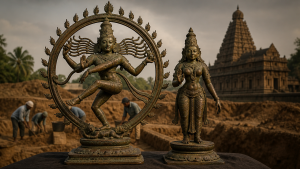
The Tamil Nadu State Department of Archaeology unearthed bronze-alloy idols of Nataraja and Sivakami, along with their pedestals, during excavations in Nagapattinam on 30 October 2026. They were found at a depth of one metre.
Features and dating
The Nataraja idol is 110 cm high and 100 cm wide. It depicts the four-armed deity in the Ananda Tandava posture. The Sivakami idol measures 82 cm in height and 23 cm in width, and shows the two-armed goddess in the Tribhanga posture.
The idols’ physical structure, iconography and ornamental designs indicate that they date to the 12th century AD. Minister for School Education and Archaeology Rajmohan A announced the discovery. Officials said it was the first time the state archaeology department had unearthed bronze idols during its excavations.
Archaeological significance
The finds provide evidence for religious practices and metal sculpture in Nagapattinam during the Chola period. Nagapattinam was then a port, manufacturing centre and site of religious shrines. The idols may have been buried for safekeeping during invasions. They have been taken to Chennai for chemical treatment; metallurgical analysis is planned to establish their composition.
Important Facts for Exams
- Chola bronze tradition: Chola South India was a major centre of bronze casting from the ninth to thirteenth centuries.
- Bronze composition: Chola Nataraja artworks are mostly copper, with some brass, despite commonly being called bronzes.
- Casting method: Chola Nataraja artworks were typically made by cire-perdue, or lost-wax casting.
- Dance symbolism: Nataraja’s Ananda Tandava is the vigorous dance of bliss, contrasted with Lasya, Shiva’s gentle dance associated with creation.
| Related | |
|---|---|