New Mollisia Fungus Discovered in the Sikkim Himalaya
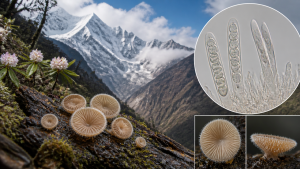
Microbiologists discovered a new fungal species, Mollisia sokpayensia, in October 2026. The team was led by Manipur scientist Dr Laishram Shantikumar Singh and included Subecha Rai, Gajanan V. Mane, Dr Rohit Sharma and Dr Thounaojam Salvia.
Isolation, publication and growth
The researchers isolated the fungus from the rhizome of Panax sokpayensis, a rare, high-value medicinal plant found in the Sikkim Himalaya. It is an endophyte: it inhabits the internal tissues of healthy plants without causing visible disease.
The species was documented in Fungal Diversity, Volume 136, in the paper “Fungal Diversity Notes: Notes on Worldwide New Species and Records”. At 28°C, its colonies grew slowly, reaching 2–3 cm in diameter after six days and about 8 cm after 14 days. Their colour changed from brown to blackish-brown.
Researchers said further study could identify microbial resources for drug discovery and biotechnology. They also noted that cultivating the fungus in laboratories may reduce the need to harvest rare medicinal plants.
Important Facts for Exams
- Endophyte persistence: Fungal endophytes may be systemic, living in plant tissue throughout their life cycle, or transient, with their abundance and diversity varying as conditions change.
- Transmission routes: Fungal endophytes can pass vertically from parent to offspring, or horizontally between plants through asexual conidia or sexual spores.
- Metabolite potential: Endophytes produce diverse secondary metabolites that can serve as lead compounds in drug-discovery research.
| Related | |
|---|---|