Telangana Plans Nelakondapalli Buddhist Heritage Destination
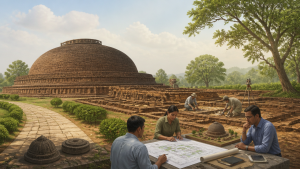
Telangana is preparing a ₹4.26-crore master plan to develop the protected Buddhist site at Nelakondapalli in Khammam district as an international heritage and tourism destination. On 26 October 2026, Revenue, Housing and Information and Public Relations Minister Ponguleti Srinivas Reddy laid the foundation stone for tourism facilities and conservation works. The project is expected to be completed over 18 months.
Development and conservation plan
The proposed budget includes ₹2.50 crore for tourism infrastructure through the Telangana State Tourism Development Corporation and ₹1.76 crore for scientific restoration and conservation by the Department of Heritage. The conservation component covers ancient viharas and other archaeological structures at the protected site.
An expert committee is preparing the development plan. Its members include Department of Heritage Director Professor Arjun Rao Kuthadi, Buddhist expert Dr E. Sivanagi Reddy, retired IPS officer Upendra Reddy and Buddhavanam Special Officer Lakshmaiah. Consultations are planned with Buddhist monks, subject experts and local residents.
Archaeological significance of the site
The Nelakondapalli stupa dates to the 3rd century and is recognised as one of India’s largest Buddhist stupas. Archaeological excavations within a 1.5-kilometre radius of the stupa uncovered ancient artefacts. The artefacts were moved to a museum in Hyderabad because local preservation facilities were unavailable.
A stupa is a Buddhist structure traditionally associated with the preservation of relics and commemorative practices. A vihara is a Buddhist monastic residence. Nelakondapalli’s development plan includes conservation of both the stupa-related archaeological remains and ancient viharas.
Buddhist architecture and heritage
Buddhist archaeological sites can include stupas, monasteries, sculptures and objects recovered through excavation. Scientific conservation involves documenting and stabilising archaeological structures while preserving their material features. The planned works at Nelakondapalli combine this conservation with tourism infrastructure.
Important Facts for Exams
- The Nelakondapalli stupa is dated to the 3rd century.
- The protected site lies in the Palair Assembly constituency of Khammam district, Telangana.
- The project allocates ₹1.76 crore to restoration and conservation by the Department of Heritage.
- Artefacts from excavations around the stupa are preserved in a museum in Hyderabad.
The Telangana State Tourism Development Corporation is responsible for the project’s tourism infrastructure component. The Department of Heritage is undertaking the scientific restoration and conservation component.
| Related | |
|---|---|