Maharashtra Approves Two Wildlife Sanctuaries and 14 Conservation Reserves
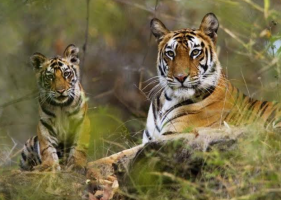
On 26 October 2026, the Maharashtra State Board for Wildlife approved proposals to declare two forest areas as wildlife sanctuaries and to establish 14 conservation reserves across seven districts. The decisions were taken at the Board’s 26th meeting, chaired by Chief Minister Devendra Fadnavis.
Wildlife sanctuary proposals
The Board approved the proposal to declare the Kolamarka Conservation Reserve in Gadchiroli district a wildlife sanctuary. Kolamarka is known for its wild buffalo population. It also approved sanctuary status for an expanded area adjoining the existing Tansa Wildlife Sanctuary.
The proposed expansion of Tansa includes 588.767 hectares of revenue and private land from six villages: Ogda, Khodde, Tirmal, Pachghar, Phanasad and Amle. The stated objective is to make the expanded sanctuary free of human habitation.
Proposed conservation reserves
The 14 proposals cover Pune, Raigad, Nashik, Nandurbar, Thane, Palghar and Chandrapur districts. Velhe-Mulshi spans Pune and Raigad, while Bhor-Girigad is in Pune. Dindori, Surgana and Taharabad are in Nashik; Chinchpada is in Nandurbar; and Alibag and Ghera Manikgad are in Raigad.
Lonavala spans Pune and Raigad. Gumtara is in Thane; Jawhar, Asherigad and Dhamani are in Palghar; and Ekara is in Chandrapur. These are approved proposals for conservation reserves.
Critical wildlife habitats and management
The Board approved proposals to declare 100.139 square kilometres within Koka Wildlife Sanctuary and 255.79 square kilometres within Jayakwadi Bird Wildlife Sanctuary as critical wildlife habitats. Routine works, including dam repairs, rehabilitation and desilting, are to be incorporated into sanctuary management plans, with necessary amendments directed within three months.
Important Facts for Exams
- The Wildlife (Protection) Act was enacted in 1972 and provides the legal framework for wildlife protection in India.
- The Wildlife (Protection) Act added the statutory category of conservation reserve through an amendment in 2002.
- Critical wildlife habitats are defined under the Scheduled Tribes and Other Traditional Forest Dwellers (Recognition of Forest Rights) Act, 2006.
- The Board also approved proposals for infrastructure in protected areas, eco-sensitive zones and tiger corridors, including roads, healthcare facilities and electricity lines.
Protected-area planning
The Board directed that standard operating procedures for routine sanctuary works be prepared in line with applicable rules. It also discussed proposals concerning silence zones in tiger reserves and village rehabilitation in tiger-reserve buffer zones.
Maharashtra’s approved conservation-reserve proposals span seven districts. The two sanctuary proposals concern Kolamarka in Gadchiroli and an expanded area adjoining Tansa Wildlife Sanctuary.
| Related | |
|---|---|