India’s First AI-Powered Bird Sanctuary Announced
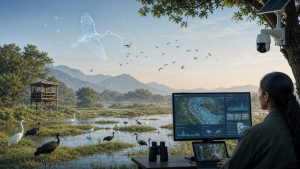
India’s first AI-powered bird sanctuary has been announced for development at the Thane Creek Flamingo Sanctuary in Mumbai, Maharashtra. The project is named Bhandup Bird Park and has received administrative approval with an allocation of ₹45 crore from the District Planning Committee’s special fund.
Project Location and Area
The sanctuary will come up over about 20.09 hectares along the Thane Creek shoreline. Thane Creek Flamingo Sanctuary is a designated Ramsar site, which places it among wetlands of international importance under the Ramsar Convention. Only 0.35 hectares of the project area will be used for physical infrastructure. The remaining area will be retained for ecological features and habitat-related facilities.
AI-Based Bird Monitoring System
The project will use an AI-based bird tracking and identification system within a 1.5-kilometre radius. The system is designed for real-time automated tracking, species identification, centralised data management, and digital analytics. Such systems use machine learning and pattern recognition tools to process bird movement data, visual records, and habitat information. These tools are used in wildlife monitoring, biodiversity surveys, and conservation planning.
Eco-Tourism and Habitat Features
The project includes a 2.16-kilometre mangrove nature trail, observation towers, and viewing decks. Mangroves are salt-tolerant coastal plants that grow in intertidal zones and support fish, birds, and other wetland species. The sanctuary is linked with eco-tourism, which is a form of tourism based on natural areas and low-impact visitor facilities. Wetland bird sanctuaries in India often combine habitat protection with controlled public access.
Important Facts for Exams
- Thane Creek Flamingo Sanctuary is located in Maharashtra and is known for flamingo populations and wetland biodiversity.
- Ramsar sites are wetlands listed under the Ramsar Convention, which was adopted in 1971 in Ramsar, Iran.
- Artificial intelligence in wildlife studies is used for species recognition, movement tracking, and data analysis.
- Mangrove ecosystems are important coastal buffers and breeding habitats for many bird and marine species.
Related AI Initiatives in Bird Conservation
Uttarakhand’s Haldwani forest division launched an AI initiative on 1 June 2026 to analyse acoustic data for protecting rare bird habitats. Haryana also began work on a technology-driven bird census at Sultanpur National Park using AI cameras on watchtowers and drone surveys.
| Related | |
|---|---|