Chandrayaan-3 Lander Performs Controlled Hop Experiment
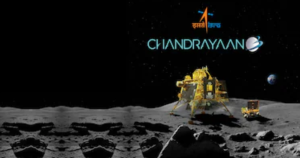
ISRO confirmed in September 2023 that the Chandrayaan-3 Vikram lander performed a controlled hop experiment on the lunar surface. The lander fired its engines on command, rose about 40 cm above the surface, and soft-landed about 30–40 cm from its original position.
Chandrayaan-3 Mission Context
Chandrayaan-3 was India’s lunar mission that placed the Vikram lander and Pragyan rover near the Moon’s south polar region in August 2023. The controlled hop was an additional experiment beyond the core landing and rover operations of the mission.
Controlled Hop Experiment
The hop experiment tested the lander’s ability to lift off and land again using its onboard propulsion system. ISRO described this as a “kick-start” capability for future lunar missions that may require ascent, repositioning, or return from the Moon. Before the hop, the deployed ramp, ChaSTE, and ILSA were retracted, and they were redeployed after the manoeuvre. The experiment was completed without loss of the lander’s operational status.
Scientific Findings from the Hop
Data from ChaSTE during the manoeuvre showed that the lunar regolith has a two-layer structure within a few centimetres of depth. The engine plume eroded about 3 cm of loose dust and exposed a denser layer beneath it. Regolith is the loose layer of dust, soil, and broken rock that covers the Moon’s surface. Lunar surface studies use regolith data to assess landing safety, mobility, and sample collection conditions.
Important Facts for Exams
- Vikram is the lander component of Chandrayaan-3.
- ChaSTE stands for Chandra’s Surface Thermophysical Experiment.
- ILSA stands for Instrument for Lunar Seismic Activity.
- The Moon’s regolith is the outer loose layer of dust and rock fragments.
Relevance for Future Lunar Missions
The controlled hop tested a lander’s ability to move after touchdown on the Moon. The experiment is relevant to sample return missions and human lunar missions that may require surface mobility and ascent capability.
| Related | |
|---|---|