CCMB Researchers Identify New Approach to Fungal Infections
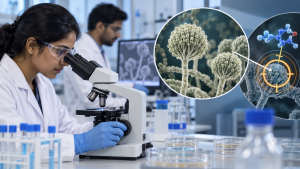
Researchers at the CSIR-Centre for Cellular and Molecular Biology (CCMB), Hyderabad, identified a new strategy for tackling fungal infections on 17–18 November 2026. Led by Dr Sriram Varahan, the team studied Candida albicans, which can cause severe infections if it enters the bloodstream or internal organs.
Blocking fungal invasion
Instead of killing the fungus outright, the approach aims to prevent it from changing from a rounded form into invasive, filament-like structures—a process called morphogenesis. The researchers identified two compounds that block this change by targeting glycolysis, the fungal sugar-metabolism pathway, and identified pyruvate kinase as a key regulator of morphogenesis.
Findings and next steps
One compound reduced biofilm formation, which can help fungi resist treatment, and increased the effectiveness of fluconazole and amphotericin B. In a mouse model of systemic Candida infection, a lead compound significantly improved survival. The findings were published in ACS Infectious Diseases through a collaboration between CSIR-CCMB and the BRIC-Translational Health Science and Technology Institute (THSTI). Varahan said further studies are needed to assess the compounds’ effectiveness, safety and suitability for therapeutic development.
Important Facts for Exams
- Morphological plasticity: Candida albicans is polyphenic: changes in temperature, carbon dioxide, nutrients or pH can shift yeast-form cells towards filamentous growth.
- Yeast and hyphal roles: In Candida albicans, yeast cells are suited to bloodstream dissemination, while hyphal cells have been proposed as a virulence factor.
- Terminal glycolysis reaction: Pyruvate kinase catalyses glycolysis’s final phosphate transfer from phosphoenolpyruvate to ADP, producing pyruvate and ATP.
- Allosteric control: Fructose-1,6-bisphosphate activates pyruvate kinase by binding an allosteric site and changing the enzyme’s conformation.
| Related | |
|---|---|