Cabinet Approves ₹3,230 Crore for Yuge Yugeen Bharat Museum
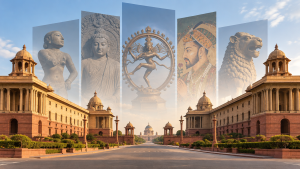
The Union Cabinet, chaired by Prime Minister Narendra Modi, approved ₹3,230 crore on 11 November 2026 for the Yuge Yugeen Bharat National Museum in New Delhi. The museum will adapt the historic North Block and South Block, which formerly housed key Union government offices, and is scheduled for completion by March 2031.
Project plan and heritage conservation
Implementation is planned in phases from 2026–27 to 2030–31. The museum is intended to present 10,000 years of India’s civilisational history. Its proposed built-up area is about 1.92 million square feet (178,509 square metres), with capacity for up to one crore visitors annually. The first gallery, ‘Adornment’, is expected to open in North Block in the second half of 2027.
Plans include visitor pavilions, conservation facilities, intermediate floors, public circulation areas, glass-covered courtyards, glass ‘Peacock Pavilions’ at entrances and an underground service tunnel between the blocks. Work on the heritage structures must be minimal and reversible, avoiding additional loads on historic masonry. The Central Public Works Department invited bids for a ₹735-crore civil works package; it had also floated a ₹338-crore North Block renovation tender in April 2025.
The project follows the relocation of government offices under the Central Vista redevelopment. Seva Teerth, the new executive enclave housing the Prime Minister’s Office, Cabinet Secretariat and National Security Council Secretariat, began operating in February. India signed a technical cooperation agreement with France Museums Développement in December 2024 on heritage conservation and adaptive reuse.
Important Facts for Exams
- National museum role: Yuge Yugeen Bharat is planned to occupy the existing Secretariat blocks and replace the National Museum of India as the national museum.
- Architectural style: The Secretariat buildings being adapted for Yuge Yugeen Bharat were designed by Herbert Baker in the Indo-Saracenic Revival style.
- Heritage details: The Secretariat buildings incorporate Mughal and Rajasthani motifs, including perforated jali screens and dome-shaped chatri pavilions.
| Related | |
|---|---|