Basic Structure Doctrine: Key Principles and Landmark Cases
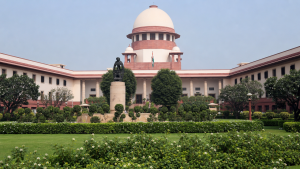
The Basic Structure Doctrine is a judge-made principle in Indian constitutional law that prevents Parliament from destroying the Constitution’s core identity through amendments under Article 368. It balances constitutional flexibility with permanence by protecting essential features such as democracy, judicial review, federalism and the rule of law.
Evolution of the Doctrine
- Shankari Prasad v. Union of India (1951): The Supreme Court upheld the 1st Constitutional Amendment Act and held that Parliament’s power under Article 368 included the power to amend Fundamental Rights.
- Sajjan Singh v. State of Rajasthan (1965): The court reaffirmed that Parliament could amend any part of the Constitution, including Part III, while examining the 17th Constitutional Amendment Act.
- Golaknath v. State of Punjab (1967): By a 6:5 majority, an 11-judge Bench held that Parliament could not curtail or take away Fundamental Rights through constitutional amendments.
Kesavananda Bharati: The Landmark Judgment
- Case and date: Kesavananda Bharati v. State of Kerala, decided on April 24, 1973.
- Bench strength: A 13-judge Bench, the largest ever constituted by the Supreme Court, heard the case.
- Issue: The validity of the 24th, 25th and 29th Constitutional Amendment Acts was under review.
- Core holding: Parliament can amend any part of the Constitution, but it cannot alter its basic structure or essential features.
- Majority: The doctrine was evolved by a narrow 7:6 majority.
- Basic features noted: The Court did not give an exhaustive list, but identified the supremacy of the Constitution, federal character and separation of powers as essential elements.
Expansion Through Later Cases
- Indira Nehru Gandhi v. Raj Narain (1975): The Supreme Court struck down clauses (4) and (5) of Article 329A, inserted by the 39th Constitutional Amendment Act, because they sought to place the Prime Minister and Speaker’s election beyond judicial scrutiny.
- Free and fair elections: The Court treated free and fair elections as part of the basic structure.
- Judicial review: The decision also confirmed that judicial review is a basic feature of the Constitution.
- Minerva Mills v. Union of India (1980): Sections 4 and 55 of the 42nd Constitutional Amendment Act were struck down for attempting to give Parliament unlimited amending power and for giving blanket primacy to Directive Principles over Fundamental Rights.
- Limited amending power: The Court held that Parliament’s amending power is itself limited, and this limitation is part of the basic structure.
- Harmony between Parts III and IV: The balance between Fundamental Rights and Directive Principles was recognised as a basic feature.
Ninth Schedule and Judicial Review
- Waman Rao v. Union of India (1981): The Court held that amendments placing laws in the Ninth Schedule on or after April 24, 1973, can be challenged under the Basic Structure Doctrine.
- Cut-off date: April 24, 1973 became the crucial threshold for testing Ninth Schedule protections.
- L. Chandra Kumar v. Union of India (1997): A 7-judge Bench ruled that judicial review under Articles 32, 226 and 227 is an integral feature of the basic structure.
- I.R. Coelho v. State of Tamil Nadu (2007): A 9-judge Bench unanimously held that laws added to the Ninth Schedule after April 24, 1973 do not enjoy blanket immunity.
- Review tests: The Court applied the rights test and the essence of rights test to examine whether such laws violate the basic structure.
Why the Doctrine Matters
- Constitutional supremacy: It ensures that Parliament remains subject to the Constitution.
- Democratic continuity: It protects the democratic character of the polity from destructive amendments.
- Institutional balance: It preserves the separation of powers among the legislature, executive and judiciary.
- Judicial review: It keeps courts empowered to test constitutional amendments against core principles.
- Federalism: It protects the federal character of the Constitution from being diluted.
- Rights protection: It prevents the complete erosion of Fundamental Rights through amendment power.
Key Prelims Takeaways
- Origin: The Basic Structure Doctrine emerged from Kesavananda Bharati v. State of Kerala on April 24, 1973.
- Pre-1973 line of cases: Shankari Prasad and Sajjan Singh supported broad amendment power; Golaknath restricted amendment of Fundamental Rights.
- Core rule: Parliament can amend the Constitution, but cannot destroy its basic structure.
- Important basic features: Supremacy of the Constitution, federalism, separation of powers, judicial review and free and fair elections.
- Minerva Mills: Confirmed that limited amending power under Article 368 is itself a basic feature.
- Ninth Schedule: Laws inserted on or after April 24, 1973, can be judicially reviewed.
- Judicial review: Articles 32, 226 and 227 were affirmed as part of the basic structure in L. Chandra Kumar.
Current General Studies comprises current-affairs-based, General Studies-rich study material on policies, laws, institutions, economy, science, environment, governance, international relations, and other varied but important topics for UPSC and State PSC Prelims examinations.
Fortnightly PDF compilations: Available here
Originally written on
March 28, 2026
and last modified on
September 5, 2026.
| Related | |
|---|---|