Anti Defection Law and Legislative Discipline
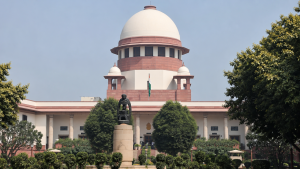
The Supreme Court’s August 2026 notice to twenty rebel Trinamool Congress MPs has renewed focus on delayed disqualification under the Tenth Schedule. This case brings renewed attention to the balance between legislative discipline and fair adjudication.
What the Tenth Schedule was meant to cure
The Tenth Schedule was added through the 52nd Constitutional Amendment Act, 1985, to curb opportunistic defections, deter horse-trading, and maintain government stability. It establishes that a legislator elected on a party platform cannot freely abandon that affiliation after taking office. The law seeks to differentiate between genuine political dissent and the betrayal of the voters’ mandate, though continuing tensions between party discipline and representative freedom persist when enforcement is delayed.
What amounts to defection?
Under the Tenth Schedule, legislators face disqualification if they voluntarily give up their party membership or vote contrary to their party’s whip without permission. Independent legislators are disqualified if they join any political party after election. Nominated members face disqualification if they join a political party after six months of taking their seat.
Paragraph 4 exempts a merger from disqualification if at least two-thirds of the legislature party members agree to merge with another party. The 91st Constitutional Amendment Act, 2003, deleted the “split” exception, which previously allowed one-third of a party to defect without disqualification.
Why the Speaker’s role matters?
The Speaker or Chairman acts as the sole adjudicating authority under the Tenth Schedule. In Kihoto Hollohan v. Zachillhu (1992), the Supreme Court ruled that the Speaker functions as a quasi-judicial tribunal, making decisions subject to judicial review by High Courts and the Supreme Court on grounds of malafides, perversity, or constitutional violations. However, because the Tenth Schedule sets no explicit timeline, presiding officers often delay decisions. This permits challenged members to vote and participate in legislative proceedings, undermining democratic legitimacy and the deterrent effect of the law.
Why delays weaken legislative discipline?
The 2026 dispute involving 20 rebel Trinamool Congress (TMC) MPs who defected to the Nationalist Citizens Party of India (NCPI) in June 2026 is a clear example of open-ended adjudication. After party leader Abhishek Banerjee filed disqualification petitions, Speaker Om Birla’s delay prompted a petition to the Supreme Court. The court subsequently issued notices to the rebel MPs in August 2026. Delays allow defecting members to continue holding public office and participating in legislative activities despite violating their party’s electoral mandate. This weakens the authority of the party whip and damages public trust in legislative discipline.
What reform ideas have been discussed?
In Keisham Meghachandra Singh v. Speaker, Manipur Legislative Assembly (2020), the Supreme Court ruled that Speakers must decide petitions within a reasonable timeframe, recommending an outer limit of three months. In Keisham Meghachandra Singh (2020) and Padi Kaushik Reddy (2025), the Supreme Court recommended that Parliament amend the Constitution to replace the Speaker with an independent, permanent tribunal headed by a retired judge to ensure impartial and swift decisions.
This aligns with recommendations of the Dinesh Goswami Committee (1990) and the National Commission to Review the Working of the Constitution (NCRWC), which proposed that the President or Governor decide defection cases on the binding advice of the Election Commission. The Goswami Committee also proposed restricting the whip’s scope to votes directly affecting government survival, such as confidence and no-confidence motions.
How can discipline and dissent be balanced?
A major challenge is balancing legislative discipline with representative freedom. The absolute power of the party whip suppresses internal dissent by forcing legislators to vote strictly along party lines on all legislative matters under the threat of disqualification. Restricting the whip to core survival issues would allow freer expression and debate on policy-heavy legislation without destabilizing the government.
Additionally, implementing fixed timelines and transparent procedures would ensure the law acts as a constitutional safeguard rather than a tactical political tool. The ultimate goal must be to protect the electoral mandate of the voters while maintaining a functional democracy.
| Key point | Exam fact |
| Constitutional basis | Tenth Schedule, inserted by the 52nd Constitutional Amendment Act, 1985 |
| Main triggers | Voluntary giving up of party membership; voting or abstaining against the party whip |
| Major exception | Merger by at least two-thirds of a legislature party |
| Judicial position | Speaker is a quasi-judicial authority; final decision is open to judicial review |
| Current concern | Delay in deciding disqualification petitions weakens legislative discipline |
The anti-defection law remains a necessary constitutional response to political instability. Yet its legitimacy depends on speed, neutrality and proportion. Without those, the law may protect party control while eroding the very accountability it was meant to serve.
Practice Questions
- Analyze the objectives of the Anti-Defection Law and examine whether it has succeeded in curbing political opportunism without harming representative democracy. (Answer in 250 words)
- Discuss the constitutional and institutional problems arising from delayed disqualification decisions by the Speaker under the Tenth Schedule. Suggest measures to ensure timely and impartial adjudication. (Answer in 250 words)
- Critically examine the role of the party whip in Indian legislatures. Should the scope of the whip be restricted to confidence and no-confidence motions? Comment. (Answer in 150 words)
| Related | |
|---|---|