Targeted Welfare Schemes and the Politics of Social Assistance
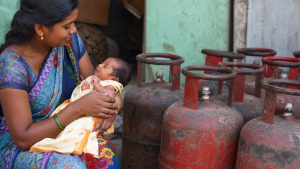
On August 24, 2026, Tamil Nadu’s new welfare measures, including a newborn gold ring scheme and six free LPG cylinders a year for eligible families, have renewed debate on targeted social assistance, fiscal sustainability, and the use of symbolic transfers in politics.
Welfare architecture: cash, in-kind and symbolic benefits
Governments deploy different models of social assistance depending on policy goals, fiscal capacity, and demographics. Cash transfers offer household flexibility, in-kind support ensures access to specific goods, and symbolic transfers use culturally valued items to guide public behavior. Tamil Nadu’s newborn gold ring scheme belongs to the symbolic category. Under this scheme, a one-gram gold ring is provided to babies born in state-run government hospitals. Modeled after the traditional Tamil custom of maternal uncles presenting gifts, the transfer is both material and culturally meaningful. By linking a prestigious token with hospital delivery, the state tries to nudge families toward institutional births, encouraging timely postnatal care, vaccination, and professional medical attention. Such designs can be effective where health-seeking behavior is deeply shaped by cultural norms and trust in public systems.
Why targeted welfare keeps expanding?
Targeted welfare is attractive to policymakers because it optimizes limited public funds by focusing on high-need demographics, such as low-income households, women, and marginal farmers. This limits the massive fiscal strain of universal schemes. The state’s cooking fuel initiative follows this targeted logic. The revised LPG scheme under the “Annapoorani Super Six” banner provides eligible households with three free cylinders annually, modifying a pre-poll guarantee of six cylinders. The benefit is restricted to families with an annual income below ₹2.5 lakh, small and marginal farmers, and households with differently-abled members. By utilizing a Direct Benefit Transfer (DBT) mechanism to credit the reimbursement directly into the bank accounts of female heads of households after purchase, the state reduces intermediate leakages and ensures fuel access for approximately 1.3 crore vulnerable families.
Universal versus targeted welfare
The choice between universal and targeted welfare remains a critical policy debate. Universal schemes minimize exclusion errors, remove administrative barriers, and eliminate social stigma, but they demand vast public resources. Targeted schemes are fiscally narrower but bring inclusion and exclusion errors when state databases are outdated or administrative capacity is weak. To bridge this, states often employ hybrid models. Tamil Nadu’s expanded “Vettri Payanam” free bus travel scheme illustrates this approach. Rather than applying income thresholds, the scheme provides free travel to women and transgender individuals on Express, LSS, and Deluxe services without caps on trips. By removing income criteria, the scheme moves toward a universal model for a specific demographic group, significantly expanding socio-economic mobility, physical safety, and access to employment opportunities.
Fiscal cost, leakages and trade-offs
The primary challenge of expanding welfare commitments is fiscal pressure. Tamil Nadu’s new schemes demand substantial revenue: the expanded “Vettri Payanam” bus travel scheme adds an estimated ₹6,000 crore annually, while the three-cylinder “Annapoorani Super Six” subsidy costs ₹4,000 crore per year. Additionally, procuring the first batch of 1,28,499 gold rings for babies born between June and September 2026—handled by the Tamil Nadu Medical Services Corporation (TNMSC) through Joyalukkas (70% share) and Kalyan Jewellers (30%)—costs approximately ₹220 crore from an annual budget of ₹755.83 crore. These recurring costs present clear trade-offs, as heavy subsidy spending can crowd out capital investment in health systems, schools, and productive infrastructure. The decision on August 24, 2026, to drop the controversial Parandur greenfield airport project following local protests reflects how political and social pressures can reshape long-term infrastructure priorities.
Gender and child-welfare dimensions
Welfare initiatives increasingly prioritize women and children to address intra-household resource inequalities. Directing benefits to female household heads shifts household decision-making power and improves developmental outcomes.
| Scheme | Target group | Benefit | Policy aim |
|---|---|---|---|
| Thaimaman Thanga Mothiram Thittam | Babies born in government hospitals | One-gram gold ring with state emblem | Encourage institutional delivery and early neonatal care |
| Annapoorani Super Six Scheme | Eligible low-income households | Three free LPG cylinders annually | Promote clean cooking fuel and reduce household costs |
| Vettri Payanam Thittam | Women and transgender individuals | Free travel on selected government buses | Enhance mobility, safety, and labor participation |
These interventions touch everyday survival. Clean cooking reduces indoor air pollution, improving respiratory health for mothers and children. Fare-free public transport lowers job search costs and expands educational opportunities, while newborn incentives encourage medical oversight during critical early hours.
Legal and institutional angle
Social assistance in India operates under wider constitutional commitments to equality and social justice. Welfare administration depends heavily on institutional efficiency and robust data governance. If procurement processes, managed by entities like the TNMSC, are transparent, and beneficiary records are integrated seamlessly with banking systems, leakages are minimized. However, when administrative databases are weak, even well-funded programs can lead to exclusion or delay. Effective implementation relies on clear accountability, transparent digital tracking, and functional grievance redressal mechanisms to translate policy goals into real benefits.
Challenges and way forward
- Welfare policies should focus on measurable long-term human development outcomes, not just immediate giveaways.
- Dynamic and integrated beneficiary databases are necessary to reduce exclusion and inclusion errors.
- Recurring welfare expenditures must not crowd out capital investment in healthcare, education, and transport.
- DBT systems require seamless digital authentication, regular audits, and accessible grievance resolution.
- State-level initiatives must be evaluated periodically to assess real impacts on nutrition, health, and economic mobility.
Practice Questions
- Targeted welfare schemes are expanding across Indian states, but their success depends on administrative capacity and fiscal prudence. Critically examine this statement with reference to recent social assistance policies. (Answer in 250 words)
- Symbolic benefits can be used to influence public behaviour in health and social policy. Discuss the merits and limitations of such welfare design in India. (Answer in 150 words)
- Evaluate the impact of gender-targeted subsidies and free mobility schemes on household decision-making, labour participation and social justice in India. (Answer in 250 words)
| Related | |
|---|---|