Ageing in India and Social Security for Senior Citizens
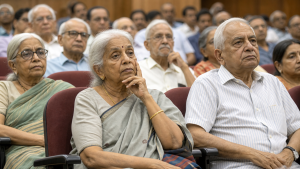
Senior Citizens Day was recently celebrated on August 21, 2026 with renewed focus on India’s fast-ageing population. It highlights how social security, healthcare, and dignity in old age are central public policy concerns as the elderly population expands rapidly.
Ageing in India: a major demographic shift
India is undergoing a rapid demographic transition, with the elderly population (60 years and above) estimated to reach approximately 173 million (over 12% of the population) in 2026, and projected to surge to 230 million (around 15%) by 2036. This transition shifts the demand for healthcare, pensions, and care services, affecting both social policy and public finance. Two patterns shape this transition. First is the “feminisation of ageing”—as female life expectancy at age 60 and 80 exceeds that of males, leading to a rising proportion of elderly women facing widowhood, lack of income, and isolation. Second is the “ruralisation of ageing”, as over 70% of the elderly reside in rural areas with limited specialized services and infrastructure.
| Year | Estimated elderly population (60+) | Share of total population |
| 2026 | 173 million | Over 12% |
| 2036 | 230 million | Around 15% |
Why family-based care is weakening?
For a long time, Indian families provided the main safety net for the elderly. This support is under pressure due to urbanisation, migration, and nuclear households, leaving many older persons dependent on uncertain family support or inadequate pensions. The situation is worse for elderly women, who are often widowed, have no independent income, and lack asset ownership. Lower lifetime participation in the formal workforce means they enter old age without savings, pensions, or household bargaining power.
What are the main social security gaps?
Old-age income support remains one of the weakest parts of India’s social protection. Formal pensions cover only a small section of organised sector workers, while most in the informal economy depend on low-value social pensions. Healthcare is another concern. Ageing increases the need for chronic disease management and mental health support, yet geriatric services are limited, and rural areas face severe shortages of doctors, caregivers, and rehabilitation facilities. Elder abuse—including neglect, financial exploitation, and abandonment within families—is increasingly reported, showing that old age is a question of dignity, safety, and rights enforcement, not just welfare.
What is the policy and legal framework?
The Constitution divides elderly welfare across both State and Concurrent Lists, making it a shared responsibility. States handle ground-level delivery, while the Centre leads legislation, funding, and national standards. The Maintenance and Welfare of Parents and Senior Citizens Act, 2007, legally mandates children and heirs to support their parents and provides a property protection mechanism through district-level tribunals. The Ministry of Social Justice and Empowerment acts as the nodal ministry, administering the ‘Atal Vayo Abhyuday Yojana’ (AVYAY), which provides institutional care, assistive devices, and support services to improve quality of life.
Important support measures
- AB-PMJAY for senior citizens: The Ministry of Health and Family Welfare’s scheme offers free health cover of ₹5 lakh per year to all senior citizens aged 70 and above, regardless of socio-economic status.
- Integrated Programme for Senior Citizens: supports senior citizen homes and day-care services.
- Elderline 14567: offers information, emotional support, and grievance redressal.
- Rashtriya Vayoshri Yojana: provides assistive devices and physical aids.
- SAGE: encourages elder-care services through the emerging silver economy.
How does healthcare and long-term care need to change?
Ageing requires a shift from episodic treatment to continuous care, including screening for non-communicable diseases, dementia, palliative care, and mental health assistance. Long-term care is especially important for those with disability, frailty, or cognitive decline. The Union Budget 2026–27 has increased healthcare allocations for senior citizens, prioritizing mental health infrastructure (such as upgrading national mental health institutes), digital care, and specialized geriatric caregiving training as part of an urgent Long-Term Care (LTC) system, as family-based caregiving alone is insufficient.
Why is digital exclusion a serious barrier?
As banking and welfare delivery move online, digital illiteracy, poor connectivity, and complex interfaces make technology a barrier for many senior citizens, particularly in rural areas. The decentralized approach implemented by the Office of the Pr. CCA, Guwahati, for Senior Citizens Day highlights a practical solution. By organizing Know Your Pension (KYP) Camps across districts and conducting outreach in Gopinath Nagar, Anandnagar, Bakakuchi, and Kharupetia, the administration facilitated easier pension access. Such local outreach is vital for ensuring inclusive social security.
What are the main challenges ahead?
- Large-scale informal employment leaves most elderly people without adequate pension coverage.
- Healthcare costs are rising faster than social pensions and family support.
- Rural areas lack geriatric doctors, care homes, and digital access.
- Older women face greater vulnerability due to widowhood, asset insecurity, and economic dependence.
- Legal remedies exist, but enforcement at the district level remains uneven.
- Online welfare systems can exclude those with low digital literacy.
Way forward
India needs a stronger elder-care ecosystem combining income support, health protection, and community-based care. Social pensions should be expanded and indexed to inflation. Care services must be decentralised, with district-level geriatric care, mobile medical units, and home support. The care economy needs investment. Training caregivers, nurses, and community health workers can reduce the burden on families and improve care quality. Simultaneously, local tribunals, helplines, and awareness programmes must be strengthened to address elder abuse quickly. Ageing policy must recognise diversity. Older women, rural residents, disabled persons, and the poorest elderly need targeted support to protect their dignity, autonomy, and social inclusion.
Practice Questions
- India’s ageing transition is shaped by feminisation and ruralisation. Discuss their social and economic implications and suggest measures for an inclusive support system. (Answer in 250 words)
- Critically examine the existing legal and policy framework for senior citizens in India in ensuring income security, healthcare access and protection from abuse. (Answer in 250 words)
- Digital delivery has improved welfare administration, but it has also deepened exclusion for many elderly citizens. Evaluate the role of decentralised outreach and local institutions in bridging this gap. (Answer in 150 words)
| Related | |
|---|---|