Ancient Indian History
Module – 005-007
Ancient Republics of India In the 6th century B.C., northern India had many independent states. While some were monarchies, many were republics or oligarchies – ruled not by...Module-004
Reasons for emergence of new religions Shift from pastoral to agrarian economy and rise in trade; Vaishyas (third Varna) supported Jainism and Buddhism. Caste rigidity, low status of...Module-003
Aryan Migration Theory and Aryan Migration Theory Aryans moved from Central Asia (~2000 BC) to Afghanistan (Kabul–Peshawar & Kandahar via Bolan Pass), then (~1400 BC) to Swat Valley,...Module-002
ü The Easternmost site of Indus Valley is Alamgirpur in UP Alamgirpur, located in Meerut district, Uttar Pradesh, is the easternmost known site of the Indus Valley Civilization...Module-001
Key Hominids and Their Lithic Periods Hominid Species Time Period Tool Culture / Lithic Period Key Tools & Features Australopithecus afarensis c. 4 – 2.9 million years ago...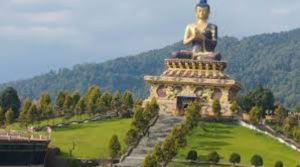
Buddhist Pilgrimage Sites in India
India, the birthplace of Buddhism, is home to numerous pilgrimage sites that hold great significance for Buddhists worldwide. These sites are associated with the life and teachings of...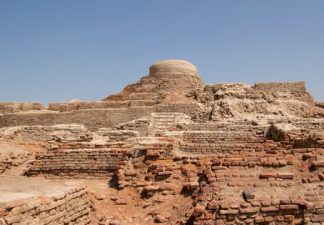
Rakhi Garhi
Rakhi Garhi is a pre- Indus Valley Civilization site located in a village in Haryana. It is a 6,500 BCE site located on the river plain of Ghaggar...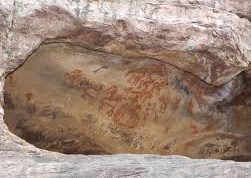
Bhimbetka rock shelters
Bhimbetka rock shelters is a UNESCO World Heritage Site located in Madhya Pradesh. This archaeological site contains evidence of human settlements spanning several periods- Paleolithic, Mesolithic and Chalcolithic....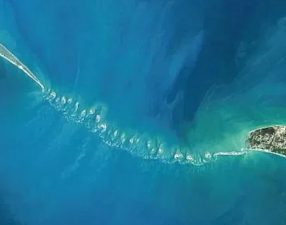
Ram Setu
Ram Setu, also internationally known as Adam’s Bridge, is a continuous chain of limestone shoals, sandbars, and coral reefs stretching across the shallow waters of the Palk Strait....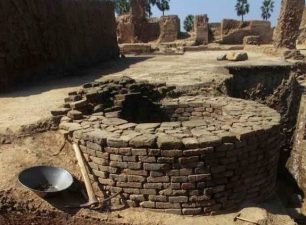
Telhara excavation site
Telhara is an excavation site in Bihar where the remains of an ancient Buddhist university are buried under a 35 ft high mound. The remains also include terracotta...