Agni-VI Missile Signals India’s Strategic Defence Leap
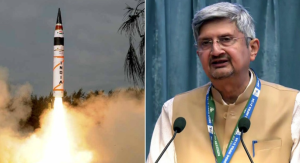
India’s strategic defence capabilities are set to advance significantly as the Defence Research and Development Organisation (DRDO) has expressed full readiness to begin work on the Agni-VI missile programme. The announcement reflects growing momentum in India’s missile development ecosystem, pending formal government approval. The development marks a crucial step in strengthening long-range deterrence and modern warfare preparedness.
DRDO Prepared for Agni-VI Development
DRDO Chairman Samir V Kamat confirmed that the organisation is technically prepared to initiate the Agni-VI project. However, he emphasised that the programme remains subject to a policy decision by the government. The readiness signals that groundwork, research, and technological capabilities required for the next-generation missile are already in place within India’s scientific establishment.
Enhanced Capabilities of Agni-VI
The Agni-VI missile is expected to surpass its predecessors in range and technological sophistication. It is likely to function as an advanced intercontinental ballistic missile (ICBM), offering extended strike capability and improved accuracy. This development would further strengthen India’s strategic deterrence posture, particularly in the context of evolving global security dynamics.
Progress in Hypersonic Weapon Systems
India is also making notable strides in hypersonic weapon technology. The Long-Range Anti-Ship Missile (LR-AShM) based on hypersonic glide vehicle technology is in advanced stages of development. Initial trials are expected soon. Hypersonic glide missiles differ from cruise missiles as they rely on booster rockets for initial velocity and then glide unpowered, whereas cruise missiles use scramjet engines for sustained propulsion.
Important Facts for Exams
- Agni series missiles are India’s primary ballistic missile systems developed by DRDO.
- Hypersonic missiles travel at speeds greater than Mach 5.
- Scramjet engines enable sustained hypersonic cruise missile flight.
- ICBMs typically have a range exceeding 5,500 kilometres.
Conventional Missile Force and Tactical Expansion
Alongside strategic systems, India is considering a conventional missile force comprising short, medium, and long-range ballistic missiles up to 2,000 kilometres. This would include cruise and hypersonic systems for tactical flexibility. The short-range ballistic missile Pralay is nearing induction, indicating progress in enhancing battlefield-level capabilities while some existing systems may be adapted for tactical roles.
| Related | |
|---|---|