The foundation of Madras (now Chennai) was a landmark event in the history of British expansion in India, marking the beginning of one of the earliest and most...
British East India Company was the First among various East India Companies formed and it was granted an English Royal Charter, under the name “Governor and Company of...
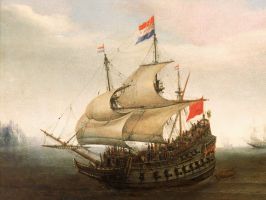
The Dutch East India Company, known as the Vereenigde Oostindische Compagnie (VOC), reached its climax during the seventeenth century, a period often described as the Dutch Golden Age....
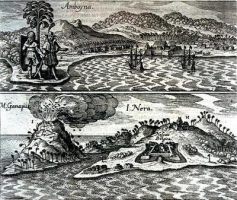
The Amboyna Massacre (1623) was a violent and politically charged incident that took place on the island of Ambon (then called Amboyna) in the Spice Islands of present-day...
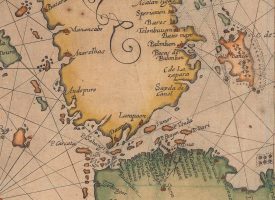
Cornelis de Houtman was the first Dutchman to double the Cape of Good Hope and discover a new sea route from Europe to Indonesia. He reached Sumatra and Bantam in 1596....
The breaking of the Portuguese monopoly refers to the gradual decline of Portuguese dominance over Asian maritime trade routes and colonial possessions between the 16th and 17th centuries....
The rise of the Afghans and their role in the Third Battle of Panipat (1761) mark a defining phase in eighteenth-century Indian history. This period witnessed the resurgence...
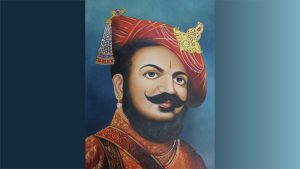
Balaji Baji Rao (1720–1761), also known by the title Nana Saheb, was the Peshwa (Prime Minister) of the Maratha Empire from 1740 to 1761. He was the son...
Baji Rao I (1700–1740 CE) was one of the greatest military generals and statesmen in Indian history, serving as the Peshwa (Prime Minister) of the Maratha Empire under...
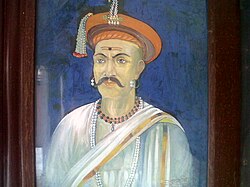
Balaji Vishwanath Bhat (1662–1720) was one of the most influential statesmen in Maratha history and the first hereditary Peshwa (Prime Minister) of the Maratha Empire under Chhatrapati Shahu...
The death of Chhatrapati Shivaji Maharaj in 1680 CE marked the end of one of the most dynamic reigns in Indian history. Shivaji had laid the foundations of...
The Ashta Pradhan was the council of eight ministers instituted by Chhatrapati Shivaji Maharaj, the founder of the Maratha Empire, in the seventeenth century. This administrative body formed...