World War I’s Impact on India
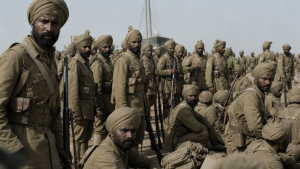
World War I was a turning point in modern Indian history. As a British colony, India was drawn into the conflict and supplied soldiers, money, food, and raw materials on a vast scale.
The war also reshaped Indian politics and society. It accelerated demands for self-government, exposed the weaknesses of colonial rule, and created conditions for a stronger nationalist movement.
Military Mobilization and Global Deployments
- Large-scale deployment: More than 1.3 million Indian soldiers and non-combatants served in the British Indian Army across Mesopotamia, France, Belgium, East Africa, Egypt, and Gallipoli.
- Human cost: Around 74,000 Indian soldiers died during the war, while many others suffered serious physical and psychological wounds.
- Major campaigns: Indian troops took part in the Battle of Neuve Chapelle in France in March 1915, the Gallipoli Campaign in 1915, and the Siege of Kut-al-Amara in Mesopotamia in 1915–1916.
- Military recognition: Indian soldiers received several gallantry awards, including the Victoria Cross. Darwan Singh Negi and Khudadad Khan were among the early Indian recipients of this honour.
Economic Restructuring and Industrial Transition
- War financing: To meet military expenditure, the colonial government restructured taxation, introduced new income taxes, and increased customs import duties.
- Inflationary pressure: Wartime disruption of trade and diversion of resources pushed prices sharply upward. Commodity prices in India nearly doubled between 1914 and 1919.
- Impact on the poor: Inflation hit peasants and urban workers especially hard, increasing distress in both rural and urban areas.
- Industrial stimulus: Reduced British imports created space for Indian industries to expand, as wartime shortages increased demand for locally produced goods.
- TISCO expansion: The Tata Iron and Steel Company expanded rapidly during the war and supplied rails and structural steel for British military needs.
Political Repercussions and Nationalist Upsurge
- Lucknow Pact, 1916: The moderate and extremist sections of the Indian National Congress came together again, while the Congress and the All-India Muslim League agreed on a joint demand for self-government.
- Home Rule Movement: Inspired by the Irish struggle, Bal Gangadhar Tilak and Annie Besant launched the Home Rule Leagues in 1916 to demand self-rule within the British Empire.
- Wartime promises: The Montagu Declaration of August 1917 promised the gradual development of self-governing institutions, which later led to the Government of India Act, 1919.
- Repressive laws: The Defence of India Act, 1915 was used to suppress dissent during the war. Its post-war continuation in spirit was the unpopular Rowlatt Act, 1919.
- Nationalist response: Wartime sacrifice, political repression, and limited British promises deepened dissatisfaction and strengthened anti-colonial politics.
Social and Demographic Shockwaves
- Agrarian distress: Severe crop failures in 1918–1919 produced food shortages, high rents, and widespread unrest in the countryside.
- Influenza pandemic: The 1918 influenza pandemic devastated India, causing an estimated 12 to 20 million deaths.
- Returning soldiers: The movement of troops and people during and after the war helped spread disease further across the country.
- Rise of mass protest: Economic distress, disease, and political disappointment created a strong impulse toward mass nationalism.
- Gandhian phase: These conditions helped prepare the ground for Mahatma Gandhi’s satyagraha campaigns, opposition to the Rowlatt Act, and the protests that followed the Jallianwala Bagh massacre in April 1919.
Key Prelims Takeaways
- Indian participation: Over 1.3 million Indian soldiers and non-combatants served in World War I.
- Casualties: Around 74,000 Indian soldiers died in the war.
- Major fronts: Indian troops fought in Mesopotamia, France, Belgium, East Africa, Egypt, and Gallipoli.
- Economic measures: The colonial government increased taxes, introduced new income taxes, and raised customs duties to finance the war.
- Inflation: Commodity prices in India doubled between 1914 and 1919.
- Political shift: The war intensified demands for self-government and strengthened nationalist unity.
- Legislative legacy: The Defence of India Act, 1915 and the Rowlatt Act, 1919 became symbols of colonial repression.
Current General Studies comprises current-affairs-based, General Studies-rich study material on policies, laws, institutions, economy, science, environment, governance, international relations, and other varied but important topics for UPSC and State PSC Prelims examinations.
Fortnightly PDF compilations: Available here
Originally written on
February 7, 2026
and last modified on
September 4, 2026.
| Related | |
|---|---|